

Maddy summarySenate Resolution SRES 406 designates September 30, 2025, as "Impact Aid Recognition Day" to celebrate the 75th anniversary of the Impact Aid program. The program reimburses school districts near federal properties (such as military bases, Indian lands, and federal facilities) for lost tax revenue, ensuring they can provide quality education. This resolution formally recognizes the program’s role in supporting over 1,100 school districts serving more than 8 million students across 4.7 million acres of federally owned land. It is a ceremonial resolution with no new policy changes or funding.
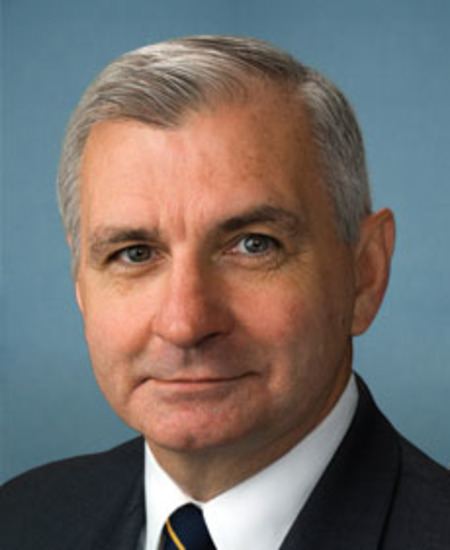
Sen. Jack Reed
Sponsored bills
Maddy summaryThis bill prohibits the U.S. Treasury's Exchange Stabilization Fund from providing financial support to Argentina's government or financial markets. It specifically blocks the use of the fund for currency swaps, purchasing Argentine debt, or any credit instruments intended to bail out Argentina. The restriction applies until December 10, 2027, and requires any existing contracts violating this rule to be terminated within seven days of the bill's enactment. The law directly affects the Treasury Department's use of its financial tools, not Argentina itself.
Maddy summarySRES 428 is a Senate resolution recognizing Hispanic Heritage Month from September 15 to October 15, 2025. It formally acknowledges the cultural heritage, historical contributions, and economic impact of Latino communities across the United States. The resolution urges all Americans to observe the month through programs and activities celebrating Latino achievements. It does not create new laws, funding, or obligations but serves as a symbolic recognition of Latino contributions to U.S. society.
Maddy summaryThis resolution (SRES 418) expresses the U.S. Senate's support for designating September 20-27, 2025, as "National Estuaries Week." It does not create new laws or funding but aims to raise public awareness about the ecological and economic importance of estuaries. The resolution highlights estuaries' role in supporting jobs, economic output, and coastal protection, while acknowledging ongoing threats like pollution and habitat loss. It is a symbolic gesture directed at the public, government officials, and organizations working to protect estuaries.
Maddy summaryS 2927, the Mobile Cancer Screening Act, creates a federal grant program to fund new mobile cancer screening units targeting rural and underserved communities. It provides up to $2 million per grant to eligible entities like community health centers and hospitals for purchasing vehicles, imaging equipment, and digital tools to expand access to screenings - particularly for lung and breast cancer. The program prioritizes areas with high cancer mortality rates, requires a 1:3 matching contribution from recipients, and mandates a report to Congress on screening outcomes by 2031. This directly aims to increase early cancer detection (when 5-year survival rates reach 63%) by addressing low current screening rates (4.5% for lung cancer in 2022).
Maddy summaryS 2919, the PCAOB Enforcement Transparency Act of 2025, requires the Public Company Accounting Oversight Board (PCAOB) to hold public hearings for its enforcement actions unless the Board specifically orders otherwise. This bill directly affects the PCAOB and the public by making enforcement proceedings more transparent. The key change amends the Sarbanes-Oxley Act to mandate open public hearings for PCAOB enforcement actions and clarifies that determinations must be published after any sanction stay is lifted. The bill does not change substantive enforcement rules but increases public access to the process.
Maddy summaryThis bill increases civil penalties for securities law violations across multiple securities laws, including the Securities Act of 1933, Securities Exchange Act of 1934, Investment Company Act of 1940, and Investment Advisers Act of 1940. It raises base penalty amounts for first and second tier violations and establishes a new third tier for violations involving fraud, deceit, manipulation, or reckless disregard of regulations, with penalties capped at $1 million for individuals or $10 million for entities, or 3 times the financial gain, or victim losses. For repeat offenders convicted of securities fraud within the past five years, it creates a "fourth tier" with penalties three times the standard amount. The bill also clarifies that each violation of an injunction or bar is a separate offense, with continuing violations treated as daily offenses.
Maddy summaryS 2913, the Protecting Students with Disabilities Act, prevents federal funding from being used to restructure or eliminate offices within the Department of Education that administer disability-related programs. The bill specifically prohibits using funds to: (1) dismantle or merge offices serving students with disabilities (under IDEA) or adults with disabilities (under the Rehabilitation Act), (2) change staff roles that could undermine these programs, or (3) outsource these services to outside organizations. It directly affects the Department of Education’s disability program offices and the students and adults who rely on their services. The bill maintains existing program structures by restricting how federal funds can be allocated, ensuring compliance with current laws like IDEA and the Rehabilitation Act.
Maddy summaryThis resolution (SRES 400) expresses the U.S. Senate's support for designating September 14-20, 2025, as "National Adult Education and Family Literacy Week." It does not create new laws or allocate funding but aims to raise public awareness about adult education and family literacy programs. The resolution highlights statistics on adult literacy gaps (e.g., 59 million adults lacking basic skills) and encourages broader community support for these programs. It calls on public, private, and nonprofit entities to increase access to adult education and family literacy services. The bill directly affects awareness and advocacy efforts, not policy implementation.
Maddy summaryThe Protect America’s Workforce Act (S 2837) directly affects federal employees and their labor unions by reversing two executive orders that limited their collective bargaining rights. It nullifies Executive Orders 14251 and 14343, which had excluded certain federal workers from labor-management programs, and prohibits federal funding for any efforts to implement those orders. The bill ensures that all existing collective bargaining agreements between federal agencies and employee unions remain fully enforceable through their original terms, as long as they were in effect as of March 26, 2025. This preserves current workplace agreements without creating new obligations or altering existing labor-management processes.