

Maddy summaryS 3754 imposes a tiered tax on investors purchasing single-family homes, targeting those owning significant portfolios: 1% for medium-sized investors (16-25 homes), 3% for large investors (26-100 homes), and 5% for giant investors (over 100 homes). The tax applies to home purchases, excluding new construction unless replacing an existing home on the same site, and exempts nonprofits focused on affordable housing, government entities, and community land trusts. Revenue generated will be allocated 65% to the Housing Trust Fund and 35% to the Capital Magnet Fund to support affordable housing programs. The law takes effect for taxable years beginning after December 31, 2025.
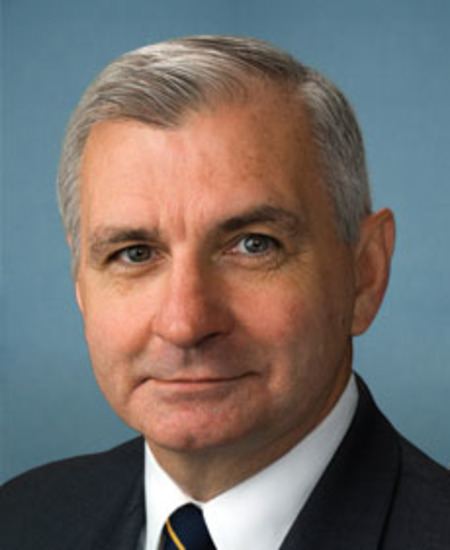
Sen. Jack Reed
Sponsored bills
Maddy summaryThe Preserving Homes and Communities Act of 2026 establishes requirements for selling non-performing single-family mortgage loans insured by the Federal Housing Administration (FHA) and held by Fannie Mae and Freddie Mac. The bill mandates that loss mitigation options be exhausted before sale, requires 90 days written notice to borrowers, and prioritizes government, nonprofit, and Tribal organizations for purchasing these loans. It requires 75% of properties acquired through foreclosure to be sold to owner-occupants, donated to nonprofits, or rented at affordable rates (not exceeding 30% of income) to tenants earning no more than 100% of area median income for a 10-year period. The bill also mandates detailed data reporting on loan sales and performance, including demographic information to monitor fair lending practices.
Maddy summarySRES 593 is a Senate resolution honoring the 67 victims of the January 29, 2025 mid-air collision between a U.S. Army Black Hawk helicopter and American Airlines Flight 5342 over the Potomac River. It specifically recognizes the lives of all victims, including 11 U.S. figure skating athletes, their families, and 3 Army soldiers, as well as the 1,700+ first responders who assisted in the recovery efforts. The resolution offers condolences to affected families, acknowledges the bravery of emergency personnel, and commits the Senate to using safety lessons from the crash to prevent future incidents. As a commemorative resolution, it does not create new laws or provide direct benefits but serves to formally memorialize the tragedy and honor those impacted.
Maddy summaryThe Empowering States' Rights To Protect Consumers Act of 2026 would amend federal consumer credit law to require that annual percentage rates (APRs) for non-mortgage consumer credit - such as credit cards and personal loans - cannot exceed the maximum rate permitted by the state where the consumer resides. This means state laws, not federal limits, would set the cap for these products, directly affecting consumers in states with lower interest rate restrictions and the financial institutions offering these services. The bill adds a new section (140B) to the Truth in Lending Act, explicitly overriding federal APR rules for non-mortgage transactions. It does not apply to residential mortgages.
Maddy summarySRES 585 is a commemorative resolution honoring Ben Nighthorse Campbell, a former U.S. Senator from Colorado and the first Native American to chair the Senate Committee on Indian Affairs. It recognizes his military service, Olympic judo career, legislative work (including authoring the National Museum of the American Indian Act), and advocacy for tribal communities. The resolution has no policy impact - it formally expresses the Senate’s respect for his legacy, requests transmission to his family, and directs a moment of silence. It directly affects Campbell’s legacy and family, not any current policy or population. (Note: This is a procedural resolution, not a bill with legislative provisions.)
Maddy summaryThis bill prohibits using federal funds to reimburse corporations for investments in Venezuela's oil sector. It blocks U.S. taxpayer money from covering "qualified capital expenditures" (like new facilities or permanent property improvements) made by any corporation in Venezuela's oil and gas industry. The law applies to all U.S. and foreign corporations operating in Venezuela's oil sector, preventing federal reimbursement for these specific investments. It does not ban the investments themselves, only the use of public funds to cover them.
Maddy summaryThis bill, S 3631 (PUBLIC SAFETY Act), increases federal funding for local law enforcement programs. It amends the COPS Hiring Program to redirect funds from U.S. Immigration and Customs Enforcement to the Attorney General, extends grant deadlines to 2030, and waives certain requirements for small local governments (under 175 officers) and tribal governments. It also allocates $45 billion for fiscal year 2025 to the Edward Byrne Memorial Justice Assistance Grant (Byrne JAG) Program, which supports state and local crime prevention and justice initiatives. These changes directly affect cities, counties, townships, and tribal governments seeking federal funding to hire officers and support public safety programs.
Maddy summarySJRES 84 is a joint resolution seeking to block a rule issued by the Centers for Medicare & Medicaid Services (CMS) under the Affordable Care Act. The rule, published in the Federal Register on June 25, 2025, aimed to improve affordability and integrity in health insurance marketplaces. If approved, this resolution would invalidate the rule under a federal disapproval process, preventing its implementation. This directly affects how health insurance plans are structured and priced for consumers using ACA marketplaces.
Maddy summaryS 3622, the SERVE Act, prohibits naming or renaming any federal building, land, or asset after a sitting president. It directly affects all federal property currently named for a sitting president and prevents future naming during a president's term. The bill bans using federal funds for such naming and requires reverting any existing presidential-named property to its prior official designation. This applies to all federal assets covered by existing law, without exception.
Maddy summarySRES 570 designates November 2025 as National Lung Cancer Awareness Month, with the first week of November as National Women's Lung Cancer Awareness Week and the second Saturday of November as National Lung Cancer Screening Day. The resolution expresses congressional support for increasing public awareness about lung cancer prevention, early detection, and treatment options. It encourages educational activities to promote understanding of lung cancer screening and research, particularly for high-risk groups including minorities and non-smokers. This is a symbolic resolution with no new funding or policy requirements.