

Maddy summaryThis bill amends the Water Resources Research Act of 1984 to include the "growing artificial intelligence industry" in its definition of private sector collaboration. It authorizes $16 million annually for fiscal years 2026-2029 for water research institutes, with 20% of these funds required for research on interstate water issues. The bill specifies that research must address regional or interstate water problems, align with joint priorities of the Secretary and institutes, or respond to Congress-identified interstate water concerns. It directly affects federal water research institutes, the Department of the Interior (via the Secretary), and federal funding allocations for water-related scientific projects. The changes focus on structuring funding distribution and expanding research scope to include emerging sectors like AI.
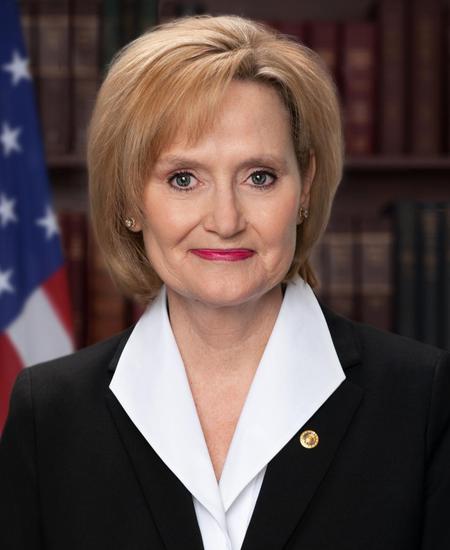
Sen. Cindy Hyde-Smith
Sponsored bills
Maddy summaryThis bill requires all commercial driver's license (CDL) testing - including knowledge tests, entry-level training, and third-party assessments - to be conducted solely in English. It also mandates that new CDL applicants must hold a standard driver's license for at least one year before applying for a CDL, though current CDL holders are exempt. States issuing non-domiciled CDLs (licenses to non-residents) risk losing that authority if they fail to comply with these rules or federal standards. The law directly affects new commercial drivers seeking CDLs and states managing non-domiciled license programs.
Maddy summarySRES 447 designates September 25, 2025, as "National Ataxia Awareness Day" to increase public and medical awareness of ataxia, a rare neurological condition affecting movement coordination. The resolution directly supports individuals with ataxia (affecting fewer than 200,000 people in the U.S.), their families, and researchers working toward treatments and cures. It encourages improved diagnosis, access to care, and accelerated research by raising awareness of ataxia’s causes, symptoms, and challenges. As a symbolic resolution, it does not create new laws or funding but promotes public engagement with the condition.
Maddy summarySRES 446 is a ceremonial Senate resolution commemorating the 250th anniversary of the U.S. Navy's founding on October 13, 1775. It recognizes the Navy's historical role in protecting U.S. interests and acknowledges its current size (over 290 ships, 3,700 aircraft, and 590,000 personnel). The resolution expresses appreciation for the service of Navy personnel past and present and reaffirms Senate support for the Navy as a key national defense force. It has no binding effect or policy changes, serving solely as a symbolic tribute.
Maddy summaryThe Employee Rights Act (S 2984) amends key labor laws to change union representation processes and worker classification. It requires secret ballot elections for collective bargaining (Section 2), prohibits non-lawfully-status employees from voting in union elections (Section 3), and establishes privacy protections for employee information used in organizing efforts (Section 4). The bill also changes how workers are classified as employees versus independent contractors (Section 5) and creates a new "independent negotiating" option for workers who leave unions (Section 7). These changes directly affect union representation processes, employee classification, and privacy protections for workers across various industries.
Maddy summarySRES 437 is a Senate resolution commending military personnel - including pilots, maintainers, analysts, sailors, support crews, and families - for their roles in Operation Midnight Hammer, a June 2025 U.S. military operation targeting Iranian nuclear facilities. The resolution recognizes the mission as the largest B-2 operational strike in U.S. history and emphasizes the personnel's "bravery, technical expertise, and dedication." This is a ceremonial resolution with no policy or legal effect; it does not alter laws, allocate funds, or directly affect any individuals or groups beyond expressing congressional recognition.
Maddy summarySRES 434 is a resolution expressing the U.S. Senate's support for designating October 5-11, 2025, as "National 4-H Week." It recognizes the 4-H youth development program - which serves nearly 6 million young people nationwide through hands-on learning in health, science, and leadership - as a key initiative of the Cooperative Extension System and the Department of Agriculture. The resolution does not create new laws or impose requirements but symbolically acknowledges 4-H's role in empowering youth with leadership skills and community engagement opportunities.
Maddy summarySRES 430 is a ceremonial Senate resolution designating October 4, 2025, as "National Energy Appreciation Day." It honors energy workers across all sectors (including oil, gas, coal, nuclear, hydro, and renewables) who power the U.S. economy and support daily life. The resolution encourages federal, state, local, and private entities to observe the day with educational events highlighting energy's role in economic growth, job creation, and global poverty reduction. This is a symbolic gesture with no new policy or funding; it solely aims to raise awareness of the energy industry's contributions.
Maddy summaryThe SECURE Benefits Act of 2025 creates a new process for issuing temporary Social Security numbers to noncitizens with valid temporary work permits (e.g., H-2A visa holders). It requires the IRS to verify these individuals' active work authorization status before allowing them to claim tax benefits like the Child Tax Credit, Earned Income Credit, or Savers Credit. The bill adds a $5,000 penalty for claiming these credits based on expired or invalid work authorization, with exceptions for reasonable cause. This directly affects noncitizens seeking tax benefits who hold temporary work permits, ensuring only those with current authorization can access these credits.
Maddy summarySRES 429 designates September 2025 as "National Infant Mortality Awareness Month" to raise public awareness about infant mortality rates and support existing efforts to reduce them. The resolution highlights that the U.S. has higher infant mortality rates than most OECD countries, with significant disparities affecting minority communities and areas with limited healthcare access. It calls for educational campaigns and recognizes current federal programs like the Healthy Start initiative and PRAMS survey, but does not create new funding or policies. The bill directly affects the public and communities through awareness efforts during September 2025, without altering existing laws or programs.