

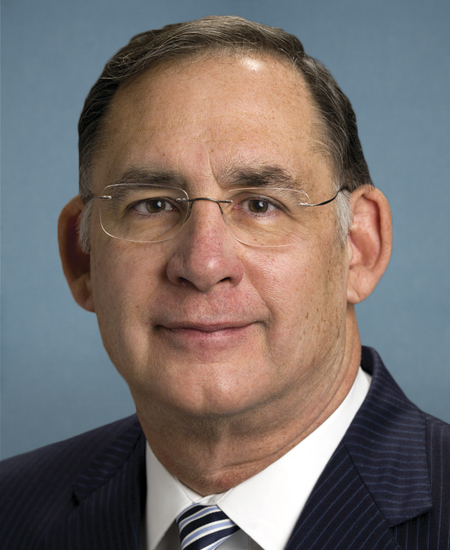
Photo of John Boozman
R United States Senate · Arkansas

Sen. John Boozman

Compare
Total votes
1,037
all sessions
Attendance
100%
3 missed
Higher than 86% of chamber peers
With party
96%
of cast votes
Near the chamber average
Bipartisan score
3%
crosses aisle rarely
Near the chamber average
Sponsored
1,068
bills & resolutions
Lower than 80% of chamber peers
Committees
20
assignments
1,068 bills and resolutions

Sponsored bills

Total
1,068
Primary
64
Co-sponsor
1,004
This page
1,068
matching current filters
Co-sponsor SRES 691
In committee · Nevada Senate · Co-sponsor
A resolution supporting the designation of April 2026 as the "Month of the Military Child".

Maddy summaryThis resolution asks the Senate to recognize April 2026 as the 'Month of the Military Child' to honor the over 1.6 million children connected to the military. It encourages the public to observe this month with ceremonies and activities that show appreciation for these families. The bill does not create any new laws or funding but serves as a symbolic gesture to acknowledge the contributions of military children.

In committee Apr 28, 2026 1 co-sponsor
Co-sponsor S 4395
In committee · Nevada Senate · Co-sponsor
Terrorism Risk Insurance Program Reauthorization Act of 2026

Maddy summaryThe Terrorism Risk Insurance Program Reauthorization Act of 2026 extends the federal terrorism insurance program through 2034, ensuring continued government support for insurance companies facing large losses from terrorist attacks. The bill also updates the schedule for recouping federal funds, shifting the timeline for when insurers must repay taxpayer money to later dates ranging from 2029 to 2036. These changes directly affect insurance carriers and policyholders by maintaining the program's availability for a longer period and adjusting the financial obligations tied to it.

In committee Apr 27, 2026 1 co-sponsor
Co-sponsor S 2378
In committee · Nevada Senate · Co-sponsor
SAFEGUARDS Act of 2025

Maddy summaryThe SAFEGUARDS Act of 2025 ensures that revenue from the 9/11 Security Fee (paid by airline passengers) is used exclusively for aviation security, ending its diversion to other government purposes by 2027. It creates two dedicated funds: the Aviation Security Capital Fund (receiving $250 million annually through 2025, then $500 million annually starting in 2026) for general security improvements, and the Aviation Security Checkpoint Technology Fund (receiving $250 million annually starting in 2026) specifically for security screening technology like baggage scanners and exit lanes. The bill requires the Transportation Security Administration (TSA) to collect sufficient fees to fund these amounts and allows retroactive grants for security technology projects implemented since 2023. This directly affects TSA operations, airports, and passenger fees, with no new taxes or fees imposed.

In committee Apr 14, 2026 1 co-sponsor
Co-sponsor S 4221
In committee · Nevada Senate · Co-sponsor
Ensuring Better Interest Treatment and Deductibility Act (EBITDA)

Maddy summaryThe Ensuring Better Interest Treatment and Deductibility Act modifies how businesses calculate interest expense limits for tax purposes. It removes a specific exception related to adjusted taxable income calculations that was added in previous legislation. This change applies to tax years starting after December 31, 2025, affecting businesses that deduct interest expenses on their federal income tax returns. The bill aims to alter the rules governing Section 163(j) of the Internal Revenue Code without changing the overall cap on deductible interest.

In committee Mar 26, 2026 1 co-sponsor
Co-sponsor S 4233
In committee · Nevada Senate · Co-sponsor
Save Struggling Hospitals Act

Maddy summaryThis bill, known as the Save Struggling Hospitals Act, modifies Medicare reimbursement rules to provide additional financial support to hospitals in low-wage areas. It directly affects hospitals whose geographic area wage index falls below the 25th percentile, increasing their reimbursement rates by half the difference between their current index and the 25th percentile threshold. The adjustment applies to discharges occurring on or after October 1, 2019, and is designed to be budget neutral, meaning the total amount paid out remains unchanged while redistributing funds from higher-wage to lower-wage areas. The law also includes safeguards to prevent hospitals in the 75th percentile or higher from losing funding and ensures no hospital's reimbursement drops below 95 percent of the previous year's rate.

In committee Mar 26, 2026 1 co-sponsor
Co-sponsor S 4249
In committee · Nevada Senate · Co-sponsor
FARM Stability Act

Maddy summaryThe FARM Stability Act proposes changes to wage requirements for H-2A temporary agricultural workers in the United States. It would require the Secretary of Labor to establish a two-tiered wage system based on skill levels, with higher pay for workers who have formal training or significant experience compared to entry-level workers. The bill also mandates that wages account for housing costs by calculating an hourly adjustment factor based on average fair market rent for four-bedroom units, limited to 30 percent of the base wage rate. These provisions would directly affect employers hiring H-2A workers and the workers themselves by modifying how minimum wages are determined and adjusted annually.

In committee Mar 26, 2026 1 co-sponsor
Co-sponsor S 4202
In committee · Nevada Senate · Co-sponsor
Mental Health Access and Provider Support Act of 2026

Maddy summaryThe Mental Health Access and Provider Support Act of 2026 increases Medicare reimbursement rates for psychologists by raising payment percentages from 75 percent to 85 percent of the standard fee schedule. This change directly affects Medicare beneficiaries and psychologists who provide mental health services under the Medicare program. The higher payment rates apply to services furnished on or after January 1, 2027, aiming to improve access to mental health care by increasing provider compensation.

In committee Mar 25, 2026 1 co-sponsor
Primary SRES 656
Passed · Nevada Senate · Lead sponsor
A resolution designating the third week of March 2026 as "National CACFP Week".

Maddy summaryThis resolution designates the third week of March 2026 as National CACFP Week to raise awareness of the Child and Adult Care Food Program. The bill directly affects child care centers, family day care homes, emergency shelters, after-school programs, and adult day care facilities across the United States. It recognizes the program's role in providing nutritious meals and snacks to over 4.5 million children and 120,000 adults while promoting nutrition education and supporting small businesses in child care. The resolution highlights how the program helps improve health outcomes and supports working families through public-private partnerships with state agencies and nonprofit organizations.

Passed Mar 22, 2026 0 co-sponsors
Co-sponsor SRES 653
Passed · Nevada Senate · Co-sponsor
A resolution designating March 21, 2026, as "National Women in Agriculture Day".

Maddy summaryThis resolution designates March 21, 2026, as "National Women in Agriculture Day" to recognize the contributions of women in the agricultural sector. The bill directly affects women working in farming, research, education, and related industries by formally acknowledging their roles as producers, leaders, and mentors. It highlights that women represent over one-third of U.S. agricultural producers and generated $222 billion in agricultural sales in 2022. The designation encourages citizens to celebrate and support women in agriculture during National Ag Week, which coincides with the date. This is a commemorative measure rather than a policy change that alters laws or programs.

Passed Mar 19, 2026 1 co-sponsor
Co-sponsor S 2903
In committee · Nevada Senate · Co-sponsor
Safe Step Act

Maddy summaryS 2903, the Safe Step Act, requires health insurance plans and employers offering health coverage to establish a clear, timely process for patients or doctors to request exceptions when step therapy protocols (where insurers require trying cheaper drugs first) would harm a patient. It mandates approval for exceptions if prior drugs failed, delay would cause severe harm, a drug is unsafe, or a patient is stable on their current medication. Plans must respond to requests within 72 hours (or 24 hours in emergencies) and cover the requested drug without extra cost-sharing. The bill also requires annual reports to the government on exception requests, approvals, denials, and trends by medical condition or specialty. This directly affects patients on health plans with step therapy, their doctors, and the insurers managing those plans.

In committee Mar 19, 2026 1 co-sponsor
Showing 41 to 50 of 1,068 bills
Previous 1 4 5 6 107 Next