

Charlotte Woodward Organ Transplant Discrimination Prevention Act This bill expressly prohibits health care providers and other entities involved in matching donated organs with recipients from denying or restricting an individual's access to organ transplants solely on the basis of the individual's disability, except in limited circumstances. Specifically, these entities may consider an individual's disability when making decisions about transplants only if a physician finds, based on an individualized evaluation, that the individual's physical or mental disability is medically significant to the provision of the transplant. A disability shall not be considered medically significant if the individual has an adequate support system in place to comply with transplant-related medical requirements. These entities must also make reasonable changes to their policies to make transplants and related care more available to individuals with disabilities. Aggrieved individuals may bring claims of discrimination to the Office of Civil Rights of the Department of Health and Human Services or before a federal court. The bill provides for expedited resolutions of these claims.
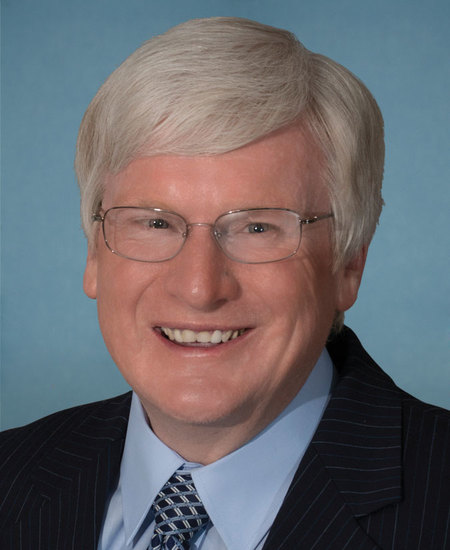
Rep. Glenn Grothman
Sponsored bills
This bill authorizes the President to award the Medal of Honor to James Megellas for acts of valor on January 28, 1945, during the Battle of the Bulge in World War II.
Managing Predators Act This bill gives states the authority to manage the populations of gray wolves and to determine if the wolves are endangered or threatened species. Specifically, the bill permanently removes the populations of gray wolf in Wisconsin, Michigan, Minnesota, and Wyoming from the federal endangered and threatened species list. In addition, the bill revises requirements for the gray wolf in any state other than Wisconsin, Michigan, Minnesota, and Wyoming. If the population of the gray wolf, as estimated by such state, is at or above a population goal established by the state, then the Department of the Interior may not make a determination that the wolf in such state is an endangered or threatened species.
Improving Confidence in Veterans' Care Act This bill prescribes oversight requirements for the Department of Veterans Affairs (VA) regarding health care professionals at VA medical centers. Specifically, the bill requires the VA to ensure each VA medical center consistently compiles, verifies, and reviews specified documentation for each VA health care professional (including contractors). The VA shall ensure that specified health care professionals hold an active Drug Enforcement Administration registration. Each VA medical center must implement (1) monitoring of the performance and quality of the health care delivered by each health care professional at the center, and (2) reviews of such care if an individual notifies the VA of any potential concerns relating to a failure to meet generally accepted standards of clinical practice. The bill imposes notification requirements in situations where the VA substantiates a concern relating to the clinical competency of, or quality of care delivered by, a current or former VA health care professional. The VA is prohibited from entering into a settlement agreement relating to an adverse action against a VA health care professional if such agreement includes terms that require the VA to conceal certain information from the employee's personnel file. Such prohibition does not apply to adverse actions determined to be prohibited personnel practices. The VA must provide mandatory training, at least biannually, to employees of each medical center who are responsible for specified tasks (e.g., those who are responsible for compiling, validating, or reviewing the credentials of VA health care professionals).
This resolution requests that the President transmit to the House of Representatives documents related to the amount of funding that was provided in specified laws regarding COVID-19 (i.e., coronavirus disease 2019) and is currently unspent. The specified laws include the Coronavirus Preparedness and Response Supplemental Appropriations Act, 2020; the Families First Coronavirus Response Act; the Coronavirus Aid, Relief, and Economic Security Act (CARES Act); the Paycheck Protection Program and Health Care Enhancement Act; and Division N of the Consolidated Appropriations Act, 2021.
This resolution recognizes the benefits of vitamin D to the immune system and the correlation between vitamin D deficiencies and poor COVID-19 (i.e., coronavirus disease 2019) outcomes. It also encourages federal agencies to issue guidance on vitamin D intake during the COVID-19 pandemic.
This joint resolution nullifies the action of the District of Columbia Council in approving the Minor Consent for Vaccinations Amendment Act of 2020, enacted by the council on December 23, 2020, and transmitted on February 1, 2021, to Congress pursuant to the District of Columbia Home Rule Act. The act authorizes a minor, 11 years of age or older, to consent to receive a vaccine if the minor is capable of meeting the informed consent standard and the vaccine is recommended by the United States Advisory Committee on Immunization Practices and will be provided in accordance with its recommended immunization schedule.
This resolution urges the U.S. Postal Service to take steps to ensure the continuation of its six-day mail delivery service.
This resolution acknowledges the importance of the U.S.-Egypt partnership and Egypt's role in the fight against terrorism and violent extremism. It also urges the Egyptian government to (1) enact serious and legitimate reforms to ensure that Coptic Christians have the same rights and opportunities as other Egyptian citizens, (2) complete the process of church certification, and (3) take steps to end the culture of impunity for attacks on Christians.
No taxpayer funding for United Nations Human Rights Council Act This bill prohibits the Department of State from making contributions to the United Nations Human Rights Council, either as a percentage of the U.S. contribution to the regular budget of the United Nations or as a voluntary contribution to the council.