

Maddy summaryHR 4398, the Veteran Burial Timeliness and Death Certificate Accountability Act, requires Veterans Affairs (VA) physicians or nurse practitioners to certify the death of a veteran who dies of natural causes within 48 hours of learning of the death. This directly affects veterans' families, who previously faced delays of up to eight weeks in burial and access to survivor benefits due to slow death certifications. The bill mandates annual reports to Congress on VA compliance with the 48-hour rule, including statistics on delays and their causes. The key change is establishing a strict timeline for death certification to prevent unnecessary delays in honoring veterans' final arrangements.
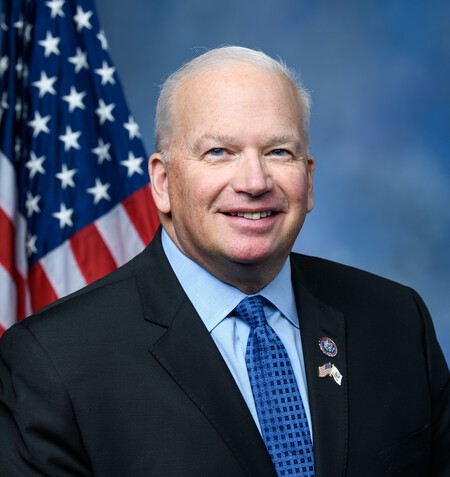
Rep. Scott Fitzgerald
Sponsored bills
Maddy summaryThe Working Families Home Construction Act of 2026 allows Fannie Mae and Freddie Mac to buy and securitize specific construction loans designed to help build owner-occupied homes. These loans, which can cover costs like land acquisition and construction, are limited to $100,000 per unit and $2.4 million per project, and must be issued by approved lenders to builders who contribute at least 10% of the project's capital. To qualify, projects must receive local government approval and be sold to families earning between 90% and 130% of the area median income, with buyers required to live in the home for at least one year. The bill also directs that 22% of the available capital for these enterprises be allocated specifically to purchasing these qualifying construction loans.
Maddy summaryThe Sustainable Homeownership Act modifies the rules for Freddie Mac and Fannie Mae to limit their purchase of high-risk mortgages while introducing stricter insurance requirements for loans with high loan-to-value ratios. It mandates that private insurers guarantee specific portions of unpaid mortgage balances, with higher coverage percentages required for riskier loans, though it includes exceptions for refinancing, state programs, and low-income borrowers. The bill also establishes new financial oversight measures, such as setting a return on equity range between 9 and 13 percent and requiring enterprises to remit excess earnings to the Treasury if they exceed that range. Additionally, the legislation outlines a plan to eventually convert the government-sponsored enterprises' preferred stock into common equity and prepare for their exit from federal conservatorship.
Maddy summaryThis bill, known as the Home Affordability Through Mortgage Simplification Act, aims to simplify rules for mortgage lenders and reduce costs for borrowers by updating regulations under the Truth in Lending Act. It introduces a new standard that allows closing costs to vary by up to $500 or 5 percent of third-party fees without penalty, while protecting borrowers from increases in interest rates, loan types, or origination charges. The legislation also permits lenders to issue up to two revised loan estimates for minor changes and allows borrowers to waive the mandatory three-day waiting period for corrected disclosures if they choose. Additionally, it limits lender liability for errors made by settlement agents if the lender exercised reasonable oversight and provides a one-time opportunity for lenders to fix violations without facing civil penalties.
Maddy summaryHR 2978, the GUARD Act, allows state, local, and tribal law enforcement agencies to use existing federal grant funds for investigating elder financial fraud, "pig butchering" investment scams, and general financial fraud. The bill directs these funds toward hiring specialized staff, training on blockchain tools and transnational fraud, purchasing investigative software, improving data collection, and creating financial sector liaisons to coordinate with banks. It requires annual reports from law enforcement on fund usage and outcomes, and mandates federal agencies to submit comprehensive reports to Congress on scam statistics, enforcement actions, and funding allocation. The legislation directly affects law enforcement agencies and aims to strengthen efforts against fraud targeting vulnerable populations, particularly elderly individuals.
Maddy summaryThe REAL Butter Act requires food manufacturers to clearly label products made from lab-created milkfat as "lab-created butter" on their packaging. This rule applies to any item marketed as butter that uses non-agricultural sources for its milkfat instead of traditional dairy. The law defines these products specifically as those that do not meet the existing federal standard of identity for butter. By mandating this specific wording on labels, the bill aims to ensure consumers can easily distinguish between traditional butter and synthesized alternatives.
Maddy summaryThe Foreign Adversary Patent Disclosure Act requires inventors to reveal specific ties to five designated foreign nations, including China, Russia, Iran, Cuba, and North Korea, when filing patent applications. Under this law, applicants must disclose if anyone with an ownership interest in the invention was employed by an entity controlled by these countries, received funding from state-affiliated programs, or obtained financial incentives related to the patent within the five years prior to submission. The bill also allows patent officials to request supporting documents for these disclosures while keeping them confidential, but it exempts small businesses that already report foreign ownership under existing Small Business Act rules.
Maddy summaryThis bill prohibits the U.S. Patent and Trademark Office from issuing or enforcing patents for inventions created by individuals or companies identified as threats to national security. Specifically, it bars patents for entities listed on the Chinese Military-Industrial Complex Companies List, designated Chinese military companies, or those providing equipment on the FCC's untrusted networks list. While the law prevents these entities from receiving or enforcing patents, it does not stop them from submitting patent applications, and it includes a provision allowing the President to grant temporary waivers if national security interests do not require the prohibition.
Maddy summaryThe BRIDGE Act directs the U.S. government to create a unified strategy to counter China's Belt and Road Initiative, which the bill defines as a global infrastructure project aimed at expanding Chinese influence. It requires the Secretary of State, along with other federal leaders, to submit a detailed report within 180 days outlining how China uses this initiative to challenge the U.S.-led international order and proposing a coordinated plan to respond. The legislation mandates that this strategy include specific goals, a timeline for execution, and a roadmap for aligning U.S. efforts with allies, particularly in the Indo-Pacific region. Additionally, the act requires a follow-up implementation plan within one year that sets clear metrics and evaluation methods to track progress against these objectives.
Maddy summaryThis bill, known as the Thwarting Regional Adversary Investments Now Act, aims to help governments in South and Central Asia better understand the risks associated with accepting investments from foreign adversaries. It requires the U.S. Secretary of State to provide training to officials in these countries on how to analyze and mitigate legal and financial dangers posed by such external investments. Additionally, the legislation mandates that the Secretary submit annual reports to Congress detailing the training provided and reviewing specific agreements between these nations and foreign adversaries. The law defines "foreign adversary" as entities with a history of actions harmful to U.S. national security and requires the State Department to consult with various federal agencies when carrying out these duties.