

This bill reduces the required aggregate market value of voting and non-voting common equity shares for an issuer of securities to qualify as a well-known seasoned issuer. A well-known seasoned issuer is allowed to make expedited public offerings of securities through automatic shelf registrations.
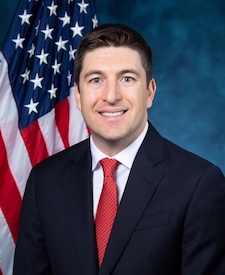
Rep. Bryan Steil
Sponsored bills
Give Kids a Chance Act of 2025 This bill expands the Food and Drug Administration’s (FDA’s) authority with respect to research on rare pediatric diseases, including by permitting the FDA to take enforcement action against drug sponsors that fail to satisfy pediatric study requirements and by reauthorizing programs that support pediatric research. Specifically, the bill modifies requirements relating to molecularly targeted pediatric cancer investigations to permit research on new drugs in combination with active ingredients that have already been approved, provided certain conditions are met; permits the FDA to take enforcement action against drug sponsors that fail to comply with pediatric study requirements, if such sponsors demonstrated a lack of due diligence in satisfying the requirement; renews the FDA’s authority to award priority review vouchers to sponsors of new products intended to treat rare pediatric diseases through September 30, 2029; and reauthorizes through FY2027 certain funding for the National Institutes of Health to support priority pediatric research. The bill also provides statutory authority for the FDA’s interpretation of the orphan drug exclusivity period. The bill specifies, consistent with FDA regulations, that the seven-year market exclusivity period for drugs for rare diseases or conditions (i.e., orphan drugs) prohibits the approval of the same drug for the same approved use or indication with respect to the disease or condition. (In Catalyst Pharmaceuticals, Inc. v. Becerra , a court rejected the FDA’s interpretation and held that orphan drug exclusivity extends to all uses or indications for the disease or condition.)
Maddy summaryThis House resolution (HRES 907) honors the six victims of the November 21, 2021, Waukesha, Wisconsin, Christmas parade attack - Wilhelm Hospel, Virginia Sorenson, LeAnna Owen, Tamara Durand, Jane Kulich, and Jackson Sparks - and extends condolences to their families. It recognizes the community’s healing efforts, including existing memorials like the 2023 parade memorial and 2025 park sculpture, while applauding first responders and the "Waukesha Strong" resilience. The resolution has no policy or funding provisions - it is purely ceremonial, acknowledging past tragedy and community response without creating new government action.
Maddy summaryHR 6256, the Floodplain Enhancement and Recovery Act, simplifies regulatory processes for communities and landowners undertaking projects to restore natural floodplain functions. It exempts such projects from standard flood insurance map change fees and allows limited increases in flood levels (up to 1 foot) in designated floodways, provided projects don’t harm critical infrastructure and communities submit post-completion analysis within 180 days. The bill amends existing flood insurance law to prioritize ecosystem restoration by adjusting fee and approval requirements, directly affecting local governments managing floodplains and developers working on restoration projects.
Maddy summaryThis bill renames a U.S. Postal Service facility at 202 South Chestnut Avenue in Marshfield, Wisconsin, as the "Army Corporal Gordon 'Gordy' Richard Schmoll Post Office Building." It directly affects the postal facility and all official U.S. government documents referencing it. The key provision updates all federal references - such as laws, maps, and records - to use the new name. This is a commemorative designation honoring Army Corporal Gordon Schmoll, with no policy changes beyond the building name.
Maddy summaryThis resolution (HRES 869) commemorates the 50th anniversary of the November 10, 1975, sinking of the Great Lakes freighter S.S. Edmund Fitzgerald, which resulted in the loss of all 29 crew members. It honors the memory of the 29 crew members who died in the tragedy and recognizes the enduring contributions of Great Lakes shipping to the U.S. economy and cultural heritage. The resolution also acknowledges efforts by historians, museums, and communities to preserve the ship's legacy and promote maritime education. As a commemorative resolution, it has no binding policy impact and serves solely to mark this historical event.
Maddy summaryHR 5907 authorizes the U.S. Department of Housing and Urban Development (HUD) to award grants to local governments, tribal entities, and municipal organizations to select pre-approved construction plans for mixed-income housing structures. These structures include duplexes, cottage courts, and other small-scale developments (up to 25 units) designed to promote affordability, with a specific requirement that 10% of annual funding must support rural areas. The bill mandates grantees to report on housing impacts, permits issued using the approved designs, and units built, while requiring the return of funds if selected designs aren’t adopted within five years. It focuses on streamlining housing approvals through pre-reviewed plans, not construction funding, to increase affordable housing supply.
Maddy summaryHR 5924, the Pay Our Capitol Police Act, ensures that U.S. Capitol Police officers, civilian staff, and supporting contractors continue receiving pay and benefits during a funding gap for fiscal year 2026. It appropriates temporary funds for salaries, overtime, hazard pay, health benefits, retirement contributions, and contractor payments if regular appropriations aren't enacted by September 30, 2026. These funds are charged to future appropriations once regular funding is approved, preventing pay delays for Capitol Police personnel. The bill directly affects Capitol Police members classified as excepted employees or performing emergency work, along with their supporting staff and contractors. It applies specifically to the Capitol Police during the fiscal year 2026 funding period.
Maddy summaryThe Shutdown Fairness Act ensures that certain federal employees performing essential work during government funding gaps receive their regular pay. It applies directly to "excepted employees" (such as border security personnel, air traffic controllers, and military members on active duty) who must work when appropriations lapse. The bill appropriates funds from the Treasury to cover their standard pay, benefits, and allowances during these periods, without requiring new annual appropriations. These payments are later charged to the agency’s regular budget when funding is restored, ensuring no additional costs to Congress. The law takes effect retroactively from September 30, 2025.
Maddy summaryThis bill would require all states to recognize valid concealed carry permits issued by other states, allowing permit holders to carry concealed handguns (excluding machine guns) in any state that either issues such permits or doesn't prohibit concealed carry. It directly affects law-abiding gun owners with valid permits from their home state, ensuring they can carry in states with similar permit systems or no prohibitions. Key provisions include treating valid permit documents as proof of legal carry (reducing officer stops), shifting the burden of proof to prosecutors if challenged, and allowing civil lawsuits for violations with attorney's fee awards. The bill does not override state laws restricting firearms on private property or government land, nor does it affect federal gun restrictions like those in section 922(q).