

Maddy summaryHR 5643 designates the Department of Veterans Affairs medical center in Northport, New York, as the "Navy (SEAL) Lieutenant Michael P. Murphy VA Medical Center." This naming resolution honors Lieutenant Michael P. Murphy, a Navy SEAL who posthumously received the Medal of Honor for his actions during Operation Red Wings in Afghanistan. The bill does not alter medical services or policies but officially renames the facility to commemorate his sacrifice and legacy, located approximately ten miles from his birthplace in Patchogue, New York.
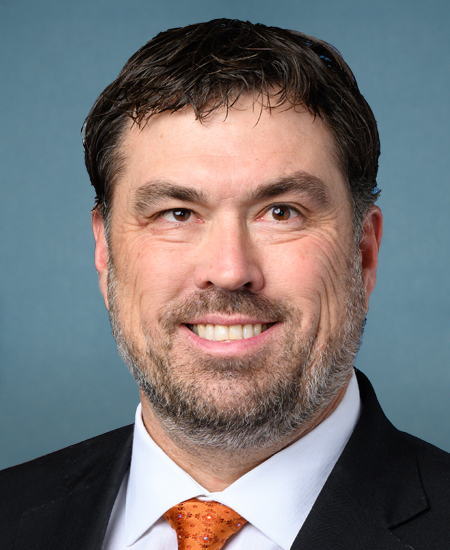
Rep. Morgan Luttrell
Sponsored bills
Maddy summaryHR 5569, the PILOT Act, requires the Secretary of Defense to submit a report within 180 days of enactment on traumatic brain injuries (TBIs) among active-duty military pilots. The report must study whether repetitive flight activities like high-speed maneuvers and catapult launches cause TBIs, summarize current Department of Defense policies for identifying and treating pilot TBIs, propose a strategy to improve care, and recommend regulatory or legislative changes. This bill directly affects active-duty military pilots by mandating a comprehensive review of their TBI risks and care protocols. The legislation focuses on gathering data and improving health outcomes, without changing existing laws or funding.
Maddy summaryHR 4057, the CBP Canine Home Kenneling Pilot Act, creates a two-year pilot program to test housing U.S. Customs and Border Protection (CBP) canine teams at their handlers' homes instead of centralized kennels. The program requires at least 10 ports of entry (including urban and rural locations) to participate voluntarily, with handlers responsible for the dogs' daily care, exercise, and medical needs. CBP must provide training for handlers and report to Congress on findings, including cost-benefit analysis, performance, and health impacts compared to current centralized kenneling. The bill directly affects CBP canine handlers and their working dogs, aiming to assess if home housing improves welfare or operational outcomes before deciding on permanent adoption.
Maddy summaryThe SAVES Act (HR 2605) creates a 5-year pilot program where the Department of Veterans Affairs (VA) awards competitive grants to nonprofit organizations to provide service dogs to veterans with specific disabilities. It directly affects veterans with covered conditions like blindness, mobility impairments, PTSD, traumatic brain injury, or other disabilities deemed appropriate for service dog assistance by the VA. Key provisions include: grants capped at $2 million per nonprofit (with $10 million annually authorized), no fees charged to veterans, VA-provided lifetime veterinary insurance for the dogs, and requirements for nonprofits to train veterans and maintain humane animal standards. The program aims to expand access to service dogs as a support tool for veterans managing qualifying disabilities.
Maddy summaryHRES 719 is a House resolution honoring Charles "Charlie" James Kirk, the founder of Turning Point USA who was assassinated on September 10, 2025. The resolution condemns his assassination and all political violence, extends condolences to his family, and calls on Americans to reject violence while promoting civil discourse. It specifically recognizes Kirk's legacy as a defender of constitutional principles and his role in inspiring youth through free speech and faith-based civic engagement. As a commemorative resolution, it does not enact policy changes but formally expresses the House's stance on honoring his life and legacy.
Maddy summaryHRES 744 is a non-binding House resolution supporting the designation of September 21-27, 2025, as "Gold Star Families Remembrance Week." It honors families who lost members in military service (Gold Star Families) and families of veterans, recognizing their sacrifices. The resolution encourages Americans to observe the week through community service and by celebrating the lives of those who died defending the U.S. It does not create new laws or policies but formally recognizes these families annually. This is a commemorative measure, not a legislative change.
Maddy summaryHRES 742 is a ceremonial resolution recognizing the 250th anniversary of the U.S. Navy's founding on October 13, 1775, when the Continental Congress established the first U.S. naval force. It formally acknowledges the Navy's historical role in protecting American interests and its current global presence (over 290 ships, 3,700 aircraft, and 500,000 personnel). The resolution expresses appreciation for Navy personnel past and present and reaffirms congressional support for the Navy as a key element of national defense and global stability. As a commemorative resolution, it has no policy or funding impact - it serves only to honor the Navy's legacy.
Maddy summaryHR 5401, the Pay Our Troops Act of 2026, ensures military personnel, civilian Defense workers, and supporting contractors receive pay during government funding gaps in fiscal year 2026. It appropriates emergency funds for active-duty service members, reserves, and their supporting personnel (including Coast Guard staff under DHS) if regular appropriations aren't enacted by the end of the fiscal year. The bill provides necessary pay and allowances during any period when full-year funding is unavailable, covering both active service and support roles. Funding expires when regular appropriations are passed, a funding resolution is enacted, or January 1, 2027, whichever comes first. This is a procedural measure to prevent pay delays for military and support staff during fiscal year 2026 funding lapses.
Maddy summaryHJRES 116 is a ceremonial resolution honoring 13 U.S. service members who died in the August 26, 2021, Abbey Gate bombing at Kabul's airport. It designates a National Day of Remembrance for those who perished during the Afghanistan withdrawal, expresses condolences to their families, and commemorates their service. The resolution does not create new policies or funding but formally recognizes their sacrifice and the role they played in saving lives during the evacuation. It directly affects the Gold Star families of the named service members and the broader public through this national acknowledgment.
Maddy summaryHR 4762, the Medical Supply Sanctions Act of 2025, prohibits the U.S. President from allowing the export of any FDA-approved drug or medical device (like prosthetics that replace or improve body parts) to Russia. This directly affects U.S. pharmaceutical and medical device companies that export these products. The ban remains in effect until the Secretary of State certifies to Congress that Russia has stopped military operations in Ukraine and withdrawn its forces. The law aims to restrict medical supplies to Russia as part of broader sanctions related to the Ukraine conflict.