

Sanctioning Russia Act of 2025 This bill imposes penalties on certain persons (individuals and entities) if the President determines that the Russian government or a person acting at Russia's direction is involved with (1) refusing to negotiate a peace agreement with Ukraine; (2) violating a negotiated peace agreement; (3) initiating another invasion of Ukraine; or (4) overthrowing, dismantling, or seeking to subvert the Ukrainian government. If the President makes such a determination, the bill requires certain actions including the President must impose visa- and property-blocking sanctions on specified persons such as the Russian president, certain Russian military commanders, and any foreign person that knowingly provides defense items to the Russian armed forces; the President must increase the rate of duty on all goods and services imported from Russia into the United States to at least 500% relative to the value of such goods and services; the President must increase the rate of duty on all goods and services imported into the United States from countries that knowingly engage in the exchange of Russian-origin uranium and petroleum products to at least 500% relative to the value of such goods and services; the Department of the Treasury must impose property-blocking sanctions on any financial institution organized under Russian law and owned wholly or partly by Russia, and any financial institution that engages in transactions with those entities; and the Department of Commerce must prohibit the export, reexport, or in-country transfer to or in Russia of any U.S.-produced energy or energy product.
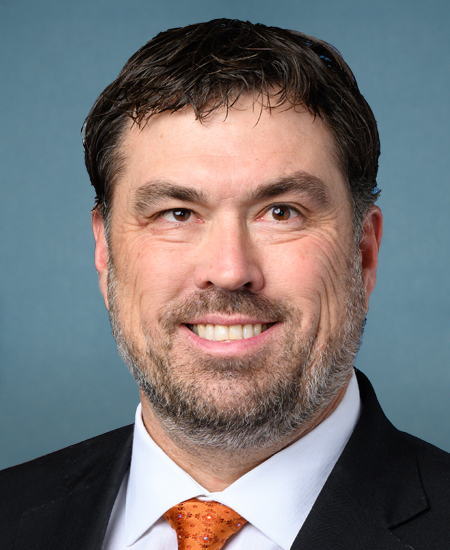
Rep. Morgan Luttrell
Sponsored bills
Maddy summaryHRES 254 is a non-binding resolution recognizing the 250th anniversary of the United States Marine Corps, to be observed on November 10, 2025. The resolution honors the Corps' founding at Tun Tavern in Philadelphia on November 10, 1775, its history of service in major conflicts, and its values of honor, courage, and commitment. It encourages public participation in commemorative events and local recognition of Marines' contributions to national defense.
Maddy summaryHR 2138, the Veterans’ Compensation Cost-of-Living Adjustment Act of 2025, requires the Department of Veterans Affairs to increase disability compensation and survivor benefits for veterans and their families on December 1, 2025. It directly affects veterans receiving disability compensation (including wartime rates), dependents, and survivors (spouses and children) who currently qualify for benefits under specific provisions of Title 38, U.S. Code. The bill mandates that these payments increase by the same percentage as the annual cost-of-living adjustment (COLA) for Social Security benefits effective December 2025. This ensures veterans' benefits rise with inflation, aligning with Social Security’s automatic adjustment mechanism.
Maddy summaryHR 2273, the UPRISERS Act, would require the revocation of student visas for international students on F-1, J-1, or M-1 visas who are convicted of assaulting a police officer or committing specific riot-related offenses. These offenses include inciting riots, organizing or participating in riots, committing violence during riots, or aiding others in such acts. The bill adds these convictions as automatic grounds for deportation under existing immigration law. It directly affects international students holding these specific visa types who face criminal convictions for the listed violent or disruptive conduct. The policy change would make visa revocation and deportation mandatory for these offenses, rather than leaving it to discretionary enforcement.
Maddy summaryHR 2128, the Reimbursing Border Communities Act of 2025, creates a federal grant program to reimburse eligible local governments within 200 miles of the U.S.-Mexico land border for costs related to border security measures, such as additional law enforcement wages. To qualify, communities must be local governments (not sanctuary jurisdictions), submit applications to the DHS Secretary, and cannot use funds for legal aid, housing, healthcare, or other services for immigrants. Grants are capped at $500,000 per community per year, with $25 million authorized annually from 2026-2036. The program requires annual reports to Congress detailing grant usage and implementation, including recommendations for future funding adjustments.
Maddy summaryHR 2033, the Military Spouse Hiring Act, expands the Work Opportunity Tax Credit to include spouses of active-duty military personnel. It adds "qualified military spouse" as an eligible category for the tax credit, meaning employers who hire such spouses can claim the credit. A "qualified military spouse" is defined as someone certified by a local agency as married to an active-duty service member at the time of hire. The credit applies to hires occurring after the bill's enactment date. This directly affects military spouses seeking employment and employers hiring them, providing a tax incentive to encourage their hiring.
Maddy summaryThis bill requires the U.S. Customs and Border Protection (CBP) to develop a detailed plan within 180 days of enactment, outlining how it will identify, integrate, and deploy emerging technologies like AI, advanced sensors, and automated systems to enhance border security operations. The plan must assess privacy impacts, evaluate CBP Innovation Teams' work, identify technologies used by other agencies, and detail how new systems will replace outdated legacy programs. It also mandates annual reporting to Congress on technology pilots, transition progress to operational programs, and metrics for measuring effectiveness. The bill directly affects CBP and the Department of Homeland Security, focusing on concrete procedural requirements for technology adoption rather than specific policy outcomes.
Maddy summaryHR 708, the SHIELD Against CCP Act, establishes a DHS working group to coordinate efforts against security threats posed by the Chinese Communist Party. The working group examines DHS programs targeting terrorism, cyber threats, border security, and transportation security, specifically focusing on the CCP's nontraditional tactics (like identity theft and visa exploitation), predatory economic practices, fentanyl trafficking, and illicit financial activity. It requires annual reports to Congress on these threats, identifies gaps in current responses, and ensures privacy compliance and coordination with federal and local partners. The working group expires seven years after its creation.
Maddy summaryThis bill amends the 2023 National Defense Authorization Act to require the Department of Homeland Security to submit annual reports on counter-illicit tunnel operations, replacing a one-time reporting requirement with ongoing updates. It directly affects DHS officials responsible for border security operations and Congress, which receives these reports for oversight. The key mechanism is the annual reporting mandate, ensuring continuous assessment of tunnel threats rather than a single strategic plan development.
This bill designates the facility of the United States Postal Service located at 620 East Pecan Boulevard in McAllen, Texas, as the "Agent Raul H. Gonzalez Jr. Memorial Post Office Building".