

Maddy summaryHR 1232, the National Right-to-Work Act, would make union membership voluntary for workers in most private-sector jobs by removing legal requirements for employees to join a union or pay dues as a condition of employment. It directly affects workers in unionized workplaces covered by the National Labor Relations Act (including most private employers) and railroad workers covered by the Railway Labor Act. The key change eliminates provisions that allowed "union security agreements" (requiring dues or membership), meaning workers could no longer be forced to pay union fees to keep their jobs. This bill does not change other labor rights or create new programs - it only modifies existing laws to allow workers to opt out of union membership and financial obligations.
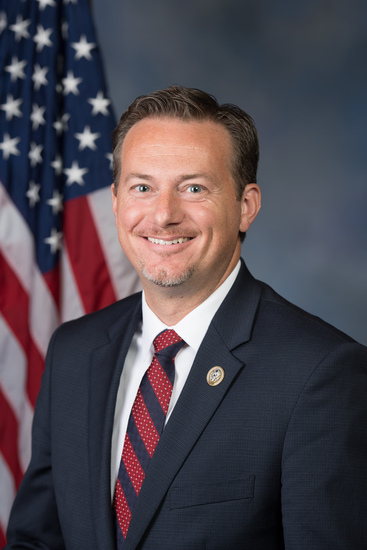
Rep. Michael Cloud
Sponsored bills
Security And Fairness Enhancement for America Act of 2025 or SAFE for America Act of 2025 This bill eliminates the diversity visa program. This program provides up to 55,000 visas annually to individuals from countries with low rates of immigration to the United States.
Maddy summaryThis bill designates the Department of Veterans Affairs community-based outpatient clinic in Lubbock, Texas, as the "General Bernie Mittemeyer VA Clinic" upon enactment. It updates all official references in federal laws, documents, and records to reflect this new name. The bill does not alter services, funding, or operations at the clinic - its sole purpose is to honor General Bernie Mittemeyer through a ceremonial naming designation. This change affects only the clinic's official identification within federal systems.
Maddy summaryThis bill, titled "Emergency Border Control Resolution," is actually a budget resolution establishing fiscal year 2025-2034 budget levels for the U.S. government. It sets detailed revenue, spending, and deficit targets across various government functions, including defense, health, and social programs. The resolution includes reconciliation instructions for committees to adjust laws within their jurisdictions to meet deficit targets. The title appears to be a political label rather than an accurate description of the bill's content, as it contains no actual border control provisions.
Maddy summaryHR 1137, the "No Kill Switches in Cars Act," repeals Section 24220 of the Infrastructure Investment and Jobs Act (Public Law 117-58), which previously required vehicle manufacturers to implement advanced impaired driving technology. This bill directly affects car manufacturers by removing a mandate to integrate specific safety technology designed to detect driver impairment. The key provision is the repeal itself, eliminating the requirement without creating new obligations or altering existing vehicle safety standards.
Maddy summaryHR 1040, the Senior Citizens Tax Elimination Act, would stop taxing Social Security benefits for seniors by repealing the current tax rule that includes some benefits in gross income. It directly affects senior citizens who currently pay federal income tax on portions of their Social Security payments. The bill adds a provision stating Section 86 of the tax code (which taxes Social Security benefits) no longer applies after enactment. To offset the lost tax revenue, the bill requires the government to appropriate funds to the Social Security and Railroad Retirement trust funds, ensuring they remain fully funded without requiring tax increases.
Maddy summaryHR 992, the PATROL Act, prohibits the federal Attorney General from suing states that build border barriers (like walls or fences) to prevent illegal entry or protect state territory. It specifically blocks civil lawsuits under existing border laws (33 U.S.C. 401/403) against states for such barrier projects. The bill defines key terms like "barrier" (including walls or fences) and "immigration laws" to clarify its scope. This directly affects states constructing border infrastructure and limits federal legal actions against those efforts. The bill does not create new border policies but changes the legal landscape for state-led border security measures.
Maddy summaryHR 991, the Cost Estimates Improvement Act, requires the Congressional Budget Office (CBO) and Joint Committee on Taxation (JCT) to include debt servicing costs (interest payments on the national debt) in their budget estimates "to the extent practicable." This change directly affects how Congress evaluates the fiscal impact of proposed legislation, as these estimates determine whether bills qualify for budget reconciliation and influence funding decisions. The key mechanism amends the 1974 Congressional Budget Act to mandate this inclusion within existing cost estimation processes. The bill does not alter spending or tax policy but aims to make budget scoring more comprehensive by accounting for ongoing interest costs.
Fair Access to Banking Act This bill places restrictions on certain banks, credit unions, and payment card networks if they refuse to do business with a person who complies with the law. Restrictions include prohibiting the use of electronic funds transfer systems and lending programs, termination of an institution's depository insurance, and specified civil penalties. Banks and other specified financial institutions are allowed to deny financial services to a person only if the denial is justified by a documented failure of that person to meet quantitative, impartial, risk-based standards established in advance by the institution. This justification may not be based upon reputational risks to the institution. The bill establishes the right for a person to bring a civil action for a violation of this bill.
Maddy summaryHR 925, the "Dismantle DEI Act of 2025," would eliminate diversity, equity, and inclusion (DEI) programs across federal government operations. The bill requires federal agencies to close DEI offices, rescind related executive orders, and prohibit the use of federal funds for DEI training, offices, or initiatives. It defines "prohibited diversity, equity, or inclusion practice" as any activity that discriminates based on race, ethnicity, religion, biological sex, or national origin, or requires employees to complete training asserting that certain groups are inherently superior or inferior. The legislation also prohibits requiring employees to sign statements about race, ethnicity, or gender, and establishes private lawsuits for violations with potential damages of $1,000 per violation per day. This bill would directly affect federal agencies, contractors, grantees, and advisory committees receiving federal funding.