

Maddy summaryHRES 925 is a non-binding resolution condemning the Iranian government's ongoing persecution of the Baha'i religious minority. It directly affects Baha'is in Iran, who face systemic discrimination, imprisonment, denial of education and employment, and violence due to their faith. The resolution calls on Iran to immediately release Baha'i prisoners, end hate propaganda targeting them, and reverse policies banning their access to education and jobs. It also urges the U.S. President and Secretary of State to demand Iran's compliance and use existing sanctions authorities against officials responsible for human rights abuses against Baha'is.
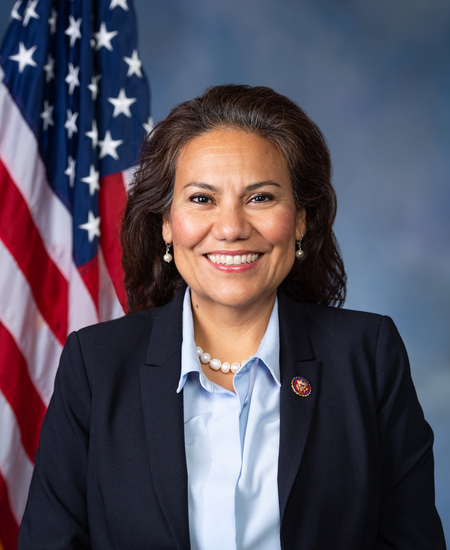
Rep. Veronica Escobar
Sponsored bills
Maddy summaryHR 6383, the Brandon Act Training and Protocol Act, requires the Department of Defense to create a strategic plan addressing mental health and suicide prevention among military members. The plan mandates uniform protocols for members seeking mental health help on their own and standardized training for commanders, medical staff, and enlisted leaders on recognizing distress, supporting referrals, and responding appropriately. It also establishes a certification process to confirm personnel complete required training. This bill directly affects all members of the Armed Forces through improved mental health access and support, while requiring commanders and medical personnel to implement new protocols. The focus is on concrete policy changes to standardize mental health services within the military.
Give Kids a Chance Act of 2025 This bill expands the Food and Drug Administration’s (FDA’s) authority with respect to research on rare pediatric diseases, including by permitting the FDA to take enforcement action against drug sponsors that fail to satisfy pediatric study requirements and by reauthorizing programs that support pediatric research. Specifically, the bill modifies requirements relating to molecularly targeted pediatric cancer investigations to permit research on new drugs in combination with active ingredients that have already been approved, provided certain conditions are met; permits the FDA to take enforcement action against drug sponsors that fail to comply with pediatric study requirements, if such sponsors demonstrated a lack of due diligence in satisfying the requirement; renews the FDA’s authority to award priority review vouchers to sponsors of new products intended to treat rare pediatric diseases through September 30, 2029; and reauthorizes through FY2027 certain funding for the National Institutes of Health to support priority pediatric research. The bill also provides statutory authority for the FDA’s interpretation of the orphan drug exclusivity period. The bill specifies, consistent with FDA regulations, that the seven-year market exclusivity period for drugs for rare diseases or conditions (i.e., orphan drugs) prohibits the approval of the same drug for the same approved use or indication with respect to the disease or condition. (In Catalyst Pharmaceuticals, Inc. v. Becerra , a court rejected the FDA’s interpretation and held that orphan drug exclusivity extends to all uses or indications for the disease or condition.)
Maddy summaryThis bill allows workers aged 50 or older to directly roll over employer retirement contributions (from 401(k) plans) into an individual retirement annuity without triggering immediate taxes or penalties. It requires retirement plan administrators to provide clear, plain-language written explanations about rollover rules, including a 30-day review period, tax implications (like the 10% early withdrawal penalty), and what types of distributions cannot be rolled over (such as required minimum distributions). The rules apply to taxable years starting after December 31, 2025, and aim to simplify the process for older workers changing jobs or managing retirement funds. It directly affects workers aged 50+ and retirement plan administrators who must comply with the new disclosure standards.
Maddy summaryThis bill, the Disarm Hate Act (HR 6258), bars individuals convicted of a hate-motivated misdemeanor crime or who received an enhanced sentence for such a crime from purchasing, possessing, shipping, or transporting firearms under federal law. It directly affects people convicted in any court of a misdemeanor that involved hate or bias (based on race, religion, sexual orientation, gender identity, or disability) and included physical force, threats, or credible safety threats. The bill amends existing federal gun laws (Section 922(d) and 922(g)) to add these new prohibitions, preventing gun sales to and possession by these individuals. It does not apply to expunged convictions, pardons, or cases where legal rights were properly waived.
Maddy summaryThe PLAY Act establishes a federal task force led by the Health and Human Services and Interior Departments to coordinate efforts improving access to safe, community-based play spaces for children under 18. The task force will identify barriers to playground access, develop recommendations for agencies to collaborate on child wellness infrastructure (like playgrounds and outdoor learning areas), and report findings to Congress within one year. It does not fund new playgrounds but focuses on interagency coordination and evidence-based strategies to promote physical activity and health through existing public lands and community spaces. This bill directly affects federal agencies with jurisdiction over public lands, parks, and community health programs.
Maddy summaryHR 6185 authorizes U.S. sanctions against foreign individuals and entities that significantly worsen climate change or harm the environment, specifically targeting those causing excessive greenhouse gas emissions (like new fossil fuel projects), engaging in illegal deforestation (especially in the Amazon), or threatening environmental defenders. It directs the President to impose sanctions such as visa bans, asset blocking, or other penalties on foreign actors meeting these criteria, using existing Global Magnitsky authorities. The bill applies only to foreign persons, not U.S. entities, and requires credible evidence of violations tied to scientific pathways for limiting warming to 1.5°C. It emphasizes these sanctions are one tool within a broader climate strategy, not a standalone solution, and excludes intelligence activities and UN-related travel. The legislation aims to hold foreign actors accountable for climate-damaging actions that undermine global efforts like the Paris Agreement.
Maddy summaryHR 6212, the Good Samaritan Menstrual Products Act, protects donors and nonprofits from liability when providing menstrual products in good faith. It shields people, manufacturers, distributors, and nonprofits from civil or criminal liability for the condition of "apparently usable" donated products (those meeting all safety standards but not necessarily marketable). The law applies to products like tampons, cups, and liners distributed to individuals in need through nonprofits. Liability protection does not apply if gross negligence or intentional misconduct causes injury or death.
Maddy summaryHR 6231 extends and enhances the Work Opportunity Tax Credit (WOTC), a federal tax credit for employers hiring from specific target groups like veterans, SNAP recipients, and summer youth workers. The bill extends the program through 2030 (from 2025), increases the credit rate to 50% for certain wages (up from 40%), adds automatic inflation adjustments to the $6,000 wage cap, and expands eligibility to include military spouses and removes age limits for SNAP recipients. Key provisions also modify credit calculations for veterans, agricultural workers, and long-term assistance recipients, while requiring federal agencies to promote hiring from target groups in critical sectors like healthcare and construction. This bill directly affects employers who hire from these designated groups, making the tax credit more valuable and accessible.
Maddy summaryHRES 581 is a procedural resolution that establishes rules for the House to consider H.R. 185, the Epstein Files Transparency Act. It waives all points of order against the bill, adopts a specific amendment (the full text of the Epstein Files Transparency Act), and limits debate to one hour equally divided between the Judiciary Committee's chair and ranking minority member. The resolution also requires the Attorney General to release unclassified DOJ records related to Jeffrey Epstein within 30 days, with limited exceptions for privacy or national security.