

Maddy summaryThis bill permanently establishes the Coordinator for Afghan Relocation Efforts (CARE) within the State Department, expanding their role to prioritize family reunification for U.S. military personnel and veterans with Afghan allies. It mandates the Coordinator to collect detailed data on Afghan applicants (including special immigrant visa seekers, refugees, and parolees), vetting timelines, and pending family reunification cases into a centralized database. The Coordinator must report this data to Congress every 90 days to ensure transparency and inform policy decisions. The law directly affects Afghan allies and their families seeking U.S. relocation, particularly those connected to U.S. military service.
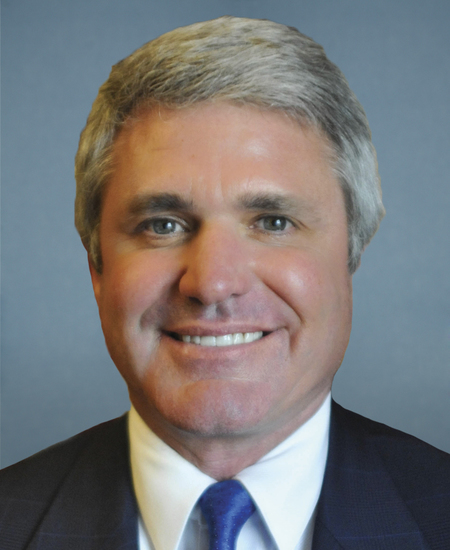
Rep. Michael T. McCaul
Sponsored bills
Maddy summaryThis bill creates a federal database identifying state or local governments that conflict with immigration enforcement laws. It prohibits federal funding for any jurisdiction listed in this database, which includes entities that block cooperation with immigration detainers, restrict arrests of certain immigrants, or prevent officials from interviewing incarcerated individuals about immigration status. The database must be updated quarterly and made public within 90 days of the bill's enactment. This directly affects local governments that have policies limiting collaboration with federal immigration authorities.
Maddy summaryThe CLEAN Pacific Act of 2025 establishes a U.S. program to assist 16 Pacific Island nations - including Fiji, Palau, and Samoa - in combating drug trafficking by improving their capacity to seize, destroy, and manage chemicals used in illicit drug production and related hazardous waste. The program requires the U.S. Secretary of State to create a 5-year implementation plan for each country, including specific goals for clearing chemical backlogs, preventing re-entry into drug production, and reducing environmental harm, with annual progress reports to Congress. It mandates funding from existing foreign aid budgets to support law enforcement training, shared equipment, and infrastructure upgrades in beneficiary countries. The initiative directly affects U.S. agencies (State, Defense, Justice) and the listed Pacific nations through concrete policy actions focused on counternarcotics operations and environmental safety.
Maddy summaryThis resolution (HRES 618) formally commends the U.S. Coast Guard, specifically Air Station Corpus Christi and the crew of helicopter CG-6553 (including Lt. Ian Hopper, Lt. Blair Ogujiofor, AMT3 Seth Reeves, and AST3 Scott Ruskan) for their rescue efforts during the July 4, 2025, catastrophic flooding in Texas. The bill highlights their actions in saving 165 lives and evacuating 15 people amid rapidly rising rivers and severe weather, including 3 aborted landing attempts due to poor conditions. It recognizes their response as one of the most consequential rescue operations in U.S. history, emphasizing Coast Guard professionalism during the disaster. As a commemorative resolution, it does not enact policy but serves as a formal expression of gratitude to the Coast Guard personnel and all first responders.
Maddy summaryHRES 614 is a non-binding resolution honoring Dr. Edwin J. Feulner, former President of the Heritage Foundation and Executive Director of the Republican Study Committee, following his death on July 18, 2025. The resolution commemorates his founding of the Heritage Foundation in 1973, his 36-year leadership as its president, and his role in establishing the Republican Study Committee. It specifically calls for the House to mourn his passing, honor his legacy, and recommend he receive the Presidential Medal of Freedom posthumously. This resolution does not create new law or affect any policies, as it is purely commemorative.
Maddy summaryThis bill (HR 4677) renames a U.S. Postal Service facility in Amarillo, Texas (located at 505 East 9th Avenue) as the "Mayor Jerry H. Hodge Post Office Building" to honor the late mayor. It updates all official U.S. government references to the building to reflect this new name. The bill has no policy impact beyond this ceremonial designation and affects no specific legislation or funding.
Maddy summaryHR 4704, the ROTOR Act, requires the Defense Health Agency to study cancer rates among military helicopter pilots and aviation support personnel. It directly affects service members who served as rotary-wing aircrew (pilots or support staff) since 1961 and receive VA healthcare. The bill mandates a two-phase study: first, comparing cancer prevalence/mortality for 12 specific cancers (like lung, prostate, and breast cancer) between these service members and the general population; second, if increased rates are found, investigating potential causes like aircraft toxins, radiation exposure, or other service-related hazards. The study will use existing VA and cancer registry data, with findings reported to Congress within two years.
Maddy summaryThis bill establishes state-level judicial threat intelligence centers to improve safety for judges and court staff. It defines "eligible organizations" (nonprofits with judicial security expertise) and requires the State Justice Institute to fund these centers to provide security training, threat monitoring, coordinate with law enforcement, and develop standardized reporting systems. The centers will create resources for judicial officer safety, conduct security assessments, and track threats through a national database. State Justice Institute must submit annual reports detailing threat types and severity to congressional committees. The bill directly affects state and local judges, court staff, and the nonprofit organizations operating these centers.
Maddy summaryHR 4335, the Abraham Accords Defense Against Terror Act, streamlines U.S. defense exports to countries that have normalized relations with Israel (via the Abraham Accords) and cooperate with the U.S. on countering Iran and Iran-aligned threats in the Middle East and North Africa. The bill authorizes the Secretary of State to identify qualifying countries and fast-tracks approval for military sales, leases, or transfers to them, requiring a 15-day congressional notification with specific safeguards. Key safeguards include ensuring sensitive U.S. technology isn’t shared with China or Russia and mandating regular strategy reports to Congress on implementation, threat assessments, and pending defense deals over $25 million. This directly affects participating Middle Eastern nations and U.S. defense export processes, aiming to accelerate security cooperation without altering Israel’s military edge. The bill focuses on procedural changes to expedite defense cooperation, not on new funding or policy outcomes.
Maddy summaryHR 4140, the Burma GAP Act, requires the U.S. to prioritize accountability for genocide and crimes against humanity committed against Rohingya in Myanmar. It establishes a U.S. Special Representative for Burma to coordinate international sanctions, support Rohingya protection efforts, and advance transitional justice, with specific funding authorizations of $5 million annually for atrocity investigations and $4 million for evidence collection. The bill directs the State Department to support Rohingya refugees in Bangladesh through humanitarian aid, gender-based violence prevention, education, and legal assistance, while promoting durable solutions like safe repatriation and citizenship rights. It mandates annual reports to Congress on U.S. efforts to address atrocity risks, document crimes, and advance accountability, directly affecting Rohingya communities, the Burmese military junta, and U.S. foreign assistance programs.