

Maddy summaryHR 434, the Service Restoration Act, protects military service members and academy cadets/midshipmen who refused a COVID-19 vaccine and were involuntarily separated. It prohibits using federal funds to mandate the vaccine, bans adverse actions (like separation or demotion) for refusal, and requires the military to reinstate affected individuals to their previous rank and grade with back pay. The bill also mandates that any separation for vaccine refusal be retroactively reclassified as an "honorable discharge" and removes all related records from service files. This applies specifically to those separated solely for vaccine refusal between 2021 and the bill's enactment.
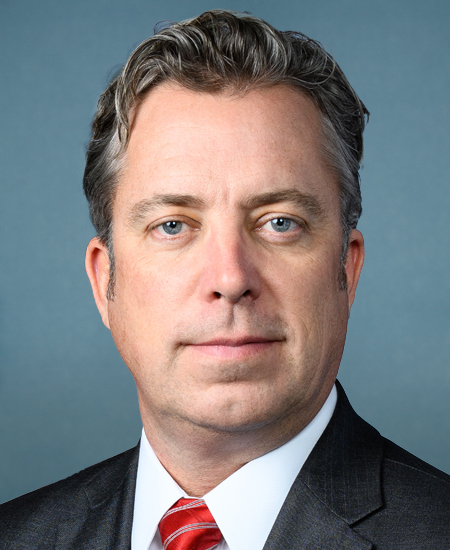
Rep. Andrew Ogles
Sponsored bills
Life at Conception Act This bill declares that the right to life guaranteed by the Constitution is vested in each human being at all stages of life, including the moment of fertilization, cloning, or other moment at which an individual comes into being. Nothing in this bill shall be construed to authorize the prosecution of any woman for the death of her unborn child.
Maddy summaryHR 145, the "RUSH WAS RIGHT Act of 2023," prohibits the Federal Communications Commission (FCC) from ever reinstating the Fairness Doctrine. The bill amends the Communications Act to explicitly block the FCC from creating rules requiring broadcasters to present opposing viewpoints on controversial issues - a requirement that was repealed in 1985. This directly affects radio and television broadcasters by preventing the FCC from imposing such a policy. The key provision is a new section (303A) stating the FCC lacks authority to revive this doctrine, regardless of future rulemaking efforts.
This joint resolution proposes a constitutional amendment prohibiting total outlays for a fiscal year from exceeding total receipts for that fiscal year unless (1) Congress authorizes the excess by a three-fifths vote of each chamber, and (2) total outlays do not exceed a specified percentage of the estimated gross domestic product of the United States. The prohibition excludes outlays for repayment of debt principal and receipts derived from borrowing. The amendment requires a three-fifths vote of each chamber of Congress to increase revenue or increase the limit on the debt of the United States. The amendment also requires the President to submit an annual budget in which total outlays do not exceed total receipts. The President's budget must also include justifications and specified details regarding funding proposed for departments and agencies. Congress may waive the requirements due to a declaration of war, a military conflict, an event that causes an imminent and serious military threat to national security, or a natural disaster.
No Taxpayer Funding for the World Health Organization Act This bill prohibits the United States from providing any assessed or voluntary contributions to the World Health Organization.
Maddy summaryThe GAS Act (HR 337) prohibits any federal agency from banning the sale or use of gas-burning stoves in the United States. This applies to all agencies defined under federal law, including the Environmental Protection Agency and Consumer Product Safety Commission. The bill directly blocks agencies from enacting new regulations that would restrict gas stoves, preventing future regulatory actions. It does not affect existing stove sales or current agency authority but sets a clear restriction on future rulemaking.
Securing America's Land from Foreign Interference Act This bill requires the President to take actions as necessary to prohibit members of the Chinese Communist Party (and entities owned, controlled, or influenced by the party) from purchasing real estate located in the United States.
Maddy summaryHJRES 8 proposes a constitutional amendment to permanently set the Supreme Court's size at nine justices. The bill would require any future changes to the Court's composition to follow this specific number, locking in the current structure. It does not alter the existing Court size (which has been nine since 1869) but aims to prevent future adjustments through legislative action. The amendment must be ratified by three-fourths of state legislatures within seven years to take effect. This is a procedural proposal focused on constitutional structure, not a direct policy affecting citizens or programs.
Maddy summaryHR 24, the Federal Reserve Transparency Act of 2023, requires a comprehensive audit of the Federal Reserve System's Board of Governors and Federal Reserve banks within 12 months of the bill's enactment. The Congressional auditor (Comptroller General) must then submit a detailed report to Congress within 90 days, including findings, conclusions, and recommendations for improving transparency. This bill directly affects the Federal Reserve System by mandating greater oversight of its operations and financial activities. The key provision repeals a prior limitation that prevented audits of certain Fed programs, aiming to clarify which activities are subject to audit under existing law.
Maddy summaryHR 100, the No SmartPay for Anti-2A Companies Act, prohibits the federal government from awarding new contracts under the SmartPay Program for payment systems that use payment processors with a merchant category code designated for gun retailers. This means government agencies cannot contract with payment processors that categorize gun stores as a business type for processing transactions. The bill only applies to new contracts; existing agreements remain unaffected. It directly impacts payment processing companies that use such codes and federal agencies utilizing the SmartPay Program for future procurement.