

Maddy summaryThis bill requires federal agencies to analyze indirect economic costs on small businesses when creating new rules, including costs affecting businesses that interact with regulated entities (like suppliers or partners). It creates a new process allowing small businesses to petition the Small Business Administration's Chief Counsel to review agency certifications claiming a rule won't significantly impact them. Agencies must then provide detailed cost analyses, publish guidance online for small business feedback, and face penalties if they fail to cooperate with reviews. The bill does not change existing regulations but adds new review steps for small business input.
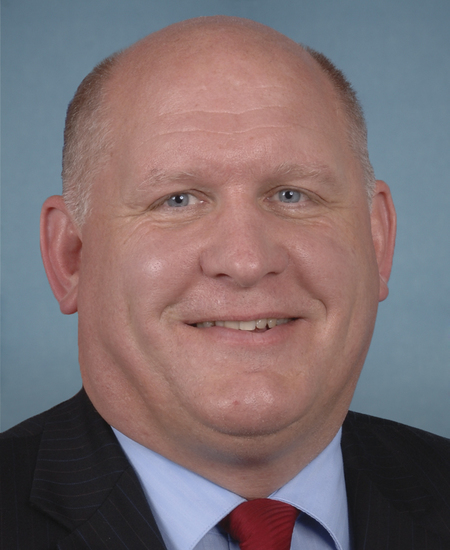
Rep. Glenn Thompson
Sponsored bills
Maddy summaryThe Save America's Family Forests Act of 2026 provides tax incentives to encourage landowners to replant forests damaged by natural disasters. It increases the standard tax deduction for routine reforestation projects from $10,000 to $30,000 per property and adjusts these amounts annually for inflation. Additionally, the bill allows a special deduction of up to $1 million for expenses related to replanting trees destroyed by federally declared disasters, with specific rules to prevent double-dipping with other tax benefits. These financial benefits are designed to help taxpayers recover costs and promote forest regeneration without changing the underlying laws governing disaster relief or timber management.
Maddy summaryThe DAIRY PRIDE Act aims to amend the Federal Food, Drug, and Cosmetic Act to establish a specific definition for "dairy product." This bill directly affects food manufacturers and consumers by regulating how certain food names can be used. It defines a "dairy product" as food that is, contains as a primary ingredient, or is derived from, the lacteal secretion of hooved mammals. The act prohibits foods that do not meet this definition, or the requirements for an imitation food, from using names for standardized dairy products (like milk, yogurt, and cheese) in interstate commerce. Additionally, it requires the FDA to issue guidance on enforcement of these provisions and report to Congress on actions taken.
Maddy summaryThe ESA Amendments Act of 2025 makes significant changes to the Endangered Species Act of 1973 to streamline conservation efforts and reduce regulatory burdens. It establishes a national listing work plan with priority classifications for species to better allocate resources, and creates "Candidate Conservation Agreements with Assurances" that provide private landowners with regulatory certainty in exchange for conservation actions. The bill also requires the government to publish the basis for listings online, streamlines permitting processes for projects that comply with conservation measures, and modifies critical habitat designation to better accommodate existing conservation plans on private lands. These changes aim to improve conservation outcomes while reducing delays for landowners, developers, and federal agencies working with listed species.
Maddy summaryThis bill establishes the Endless Mountains National Heritage Area in Pennsylvania, covering Bradford, Sullivan, Susquehanna, and Wyoming counties, with potential expansion based on a feasibility study. It designates the Endless Mountains Heritage Region, Inc. as the local coordinating entity responsible for managing the area and requires a management plan to be submitted to the Secretary of the Interior within three years. Federal assistance for the heritage area would be available for 15 years after the bill's enactment, after which the Secretary's authority to provide support ends.
Maddy summaryThis bill requires owners and operators of gas distribution pipelines to evaluate their systems for the presence of Aldyl-A polyethylene plastic within three years of enactment. The law mandates that pipeline companies report the total mileage of any identified Aldyl-A piping to the Secretary but does not require digging or excavation to find it. Additionally, the bill updates federal safety regulations to include historic plastics with known safety issues alongside cast iron and bare steel pipelines in risk assessment and integrity management programs. The legislation applies to all gas distribution pipeline facilities in the United States and aims to improve safety oversight without mandating immediate physical inspection or replacement.
Maddy summaryHR 556, the Protecting Access for Hunters and Anglers Act, prevents federal agencies from banning lead ammunition or tackle on public lands and waters managed for hunting or fishing. It directly affects hunters and anglers using federal lands (like national wildlife refuges, public forests, and BLM lands) by blocking nationwide restrictions on lead products. The bill allows limited exceptions only for specific locations where wildlife decline is directly linked to lead use, and the restriction must align with state law or get approval from the state wildlife agency. This changes how federal land managers can regulate lead, requiring state coordination for any local restrictions.
Maddy summaryThis bill, known as the All Children are Equal Act, changes how federal education funds are distributed to local school districts under Title I of the Elementary and Secondary Education Act. It directly affects school districts that receive targeted grants and education finance incentive grants by adjusting the formula used to calculate how much money each district receives. The key change is that starting in fiscal year 2026, the bill will use only percentage-based weighting instead of the current dual system that also considers the absolute number of students, which the bill argues better targets funding to districts with high concentrations of economically disadvantaged students regardless of district size. This shift aims to ensure smaller districts with high poverty rates receive adequate funding without being disadvantaged by having fewer total students.
Enhanced Iran Sanctions Act of 2025 This bill imposes sanctions on certain foreign persons (individuals and entities) that are involved in Iran's petroleum sector as well as certain associated persons. The bill also requires or authorizes actions to facilitate the enforcement of sanctions on Iran. Specifically, the bill requires the President to impose visa- and property-blocking sanctions on any foreign person that, after the bill's enactment, knowingly engages in any transaction related to the processing, export, or sale of oil, condensates, gas, liquefied natural gas, or other petrochemical products in whole or in part from Iran. The President must also impose sanctions on certain foreign persons associated with a sanctioned individual or entity. For example, the President must sanction the subsidiaries and corporate officers of a sanctioned business. The bill provides certain exceptions to these sanctions, including specifying that sanctions do not apply to the importation of goods or to conducting or facilitating transactions for humanitarian assistance. The Department of State must establish an interagency working group that shall seek to establish a multilateral contact group to coordinate international efforts to enforce sanctions on Iran. The bill expands the State Department rewards program to authorize a reward payment to any individual who furnishes information leading to the identification of a person (1) subject to sanctions under this bill, or (2) that has attempted or is attempting to evade sanctions under this bill.
Maddy summaryThis bill directs the U.S. Secretary of Education to create a pilot program that awards competitive grants to partnerships between colleges and employers to integrate cybersecurity training into postsecondary career and technical education programs. The grants, up to $500,000 each, are intended to help prepare workers for critical infrastructure sectors like energy, water, and transportation by teaching cybersecurity skills aligned with national workforce standards. To receive funding, partnerships must include at least one college and two or more employers in a critical infrastructure sector, and they must submit detailed plans covering curriculum development, workforce needs, diversity goals, and how they will sustain the programs after the grant period ends. The bill also requires recipients to report annually on how funds were used, student outcomes, and employment results, with a total funding authorization of $10 million.