

This bill designates the facility of the United States Postal Service located at 86-014 Farrington Highway in Wai'anae, Hawai'i, as the "U.S Representative Colleen Hanabusa Post Office Building".
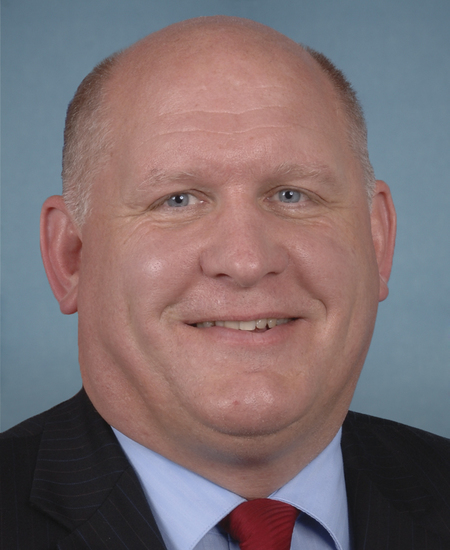
Rep. Glenn Thompson
Sponsored bills
Maddy summaryThe Supporting Grandfamilies Act of 2026 authorizes $10 million in federal funding to establish a National Technical Assistance Center focused on grandfamilies and kinship families. This center will provide training, resources, and coordination support to organizations serving families where the primary caregiver is age 55 or older, or where a child has a disability. The legislation requires the center to be run by a nonprofit organization with proven expertise in child welfare and experience engaging these families in program design. Funding is intended to help community groups and government programs improve services for children, caregivers, and parents within these family structures.
Maddy summaryThis bill establishes a temporary funding mechanism for the United States Victims of State Sponsored Terrorism Fund by requiring the Treasury Department to loan $3 billion annually to the fund for fiscal years 2027, 2028, and 2029. The borrowed money must be distributed immediately to victims as part of the annual payment and cannot be saved for future use. Interest on these loans will be set by the Treasury based on market rates and will be repaid only from future fines and penalties collected from state sponsors of terrorism after the fund ends. The authority to make these loans expires on September 30, 2029, and the funds are treated as direct spending rather than new appropriations.
Maddy summaryThis bill reauthorizes and updates the American Battlefield Protection Program through 2036, extending funding for battlefield preservation grants. It increases the maximum grant percentage for battlefield interpretation projects from 50% to 75% and sets $2 million annually for battlefield restoration grants through 2036. The bill also requires the National Park Service to study French and Indian War (1754-1763) and Mexican-American War (1846-1848) sites across the U.S., assessing their significance, threats, and preservation options. These studies must involve state governors, tribal governments, local officials, and historic preservation groups, with a final report due to Congress within two years of funding. The program directly affects federal, state, tribal, and local entities managing historic battlefields.
Maddy summaryHR 6213, the Heat Workforce Standards Act of 2025, prohibits the U.S. Department of Labor from finalizing, implementing, or enforcing OSHA's proposed "Heat Injury and Illness Prevention" standard (published August 30, 2024). This bill directly blocks the specific regulatory proposal targeting heat safety in both outdoor and indoor work settings. It does not create new requirements or affect workers; it solely prevents the implementation of the existing OSHA proposal. The bill is procedural, focusing on halting a regulatory action rather than establishing new policy.
Maddy summaryThis bill requires Medicare to create separate payment codes for ultralightweight manual wheelchairs based on their frame material (specifically titanium or carbon fiber vs. other materials), starting in 2026. It ensures Medicare pays the standard rate for titanium/carbon fiber wheelchairs regardless of material, while allowing suppliers to charge beneficiaries the difference between Medicare's payment and their actual cost. Beneficiaries must receive a notice about potential additional costs before purchasing or renting such wheelchairs. The bill directly affects Medicare beneficiaries needing these specialized wheelchairs and the suppliers who provide them.
Maddy summaryThe Essential Caregivers Act of 2026 requires nursing homes, long-term care hospitals, rehabilitation facilities, and intermediate care facilities to allow two chosen family members or friends to visit residents during times when regular visitation is suspended. These essential caregivers must agree to follow the facility's existing safety and infection control rules, which are no more restrictive than those applied to staff. While facilities can limit access for the first seven days of a suspension or deny entry if a caregiver shows symptoms of a serious infectious disease, they cannot block visits for end-of-life care. Additionally, the bill mandates that complaints about denied access to essential caregivers be investigated and resolved within three days.
Maddy summaryHR 5880, the "Fight Illicit Pill Presses Act," requires manufacturers and distributors of pill-making machines (like tableting machines) and their critical parts (such as punches and dies) to affix permanent serial numbers to these items. It mandates that these businesses report transactions involving such machines to the Attorney General and maintain records of the serial numbers. The law prohibits tampering with or knowingly distributing machines with removed or altered serial numbers. This directly affects manufacturers, distributors, and sellers of these specific pill-production machines and parts, aiming to improve tracking of equipment used in illicit drug manufacturing.
Maddy summaryThis bill requires Medicare Advantage plans to implement electronic pre-approval systems for medical services by 2028 and meet transparency reporting standards starting in 2027. Plans must publicly report data on approval/denial rates, appeal outcomes, response times, and technology use for pre-approval requests, including details on how denials relate to clinical criteria. It establishes a 24-hour response timeframe for certain requests and mandates annual reviews of pre-approval requirements based on data and input from seniors and providers. The law directly affects Medicare Advantage plans, seniors enrolled in these plans, and healthcare providers who submit pre-approval requests. These changes aim to make the pre-approval process faster, more transparent, and more accountable for seniors seeking covered medical services.
Maddy summaryThe BUSES Act establishes a national minimum standard requiring that restrictions on bus engine idling cannot last for less than 15 minutes, applying to both over-the-road and school buses. This rule prevents states and local governments from enforcing shorter idling limits through their existing air quality plans. Additionally, the legislation prohibits private citizens from suing bus owners or operators for violating these idling rules and bans state programs that pay individuals for reporting such violations.