

Maddy summaryThis resolution (HRES 847) is a symbolic gesture recognizing November as "National Bread Month" and celebrating bread's role as a nutritious, affordable, and culturally significant food. It highlights bread's health benefits - such as providing dietary fiber, essential vitamins (like folate and B vitamins), and minerals - and notes its accessibility in combating food insecurity. The resolution specifically commends the baking industry for offering diverse, affordable grain products and encourages Americans to explore bread varieties during November. As a non-binding resolution, it does not create new laws or affect any specific group directly.
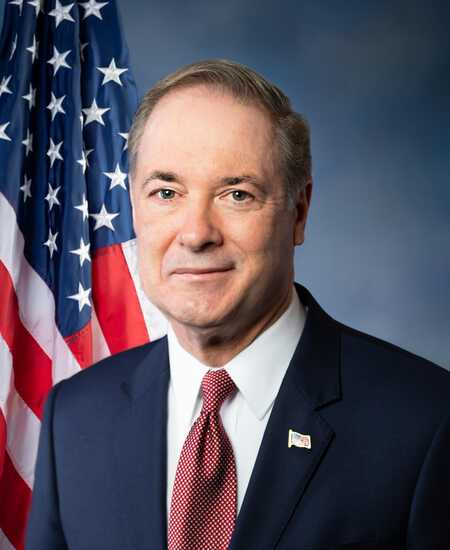
Rep. John Joyce
Sponsored bills
Maddy summaryThis bill ensures that critical firearm-related government operations continue during federal shutdowns. It designates background checks (via the FBI's National Instant Criminal Background Check System), Bureau of Alcohol, Tobacco, Firearms and Explosives enforcement, and firearm export licensing (handled by Commerce and State Departments) as essential services that must remain operational. These functions would be treated as "excepted" under federal law, meaning their employees would continue working even if other government services halt. The bill affects how background checks and firearm export licenses are processed during shutdowns but does not change gun ownership laws or eligibility.
Prevent Government Shutdowns Act This bill provides continuing appropriations to prevent a government shutdown if the appropriations bills for a fiscal year have not been enacted before the fiscal year begins and continuing appropriations are not in effect. Specifically, the bill provides appropriations at the rate of operations that was provided for the prior fiscal year to continue programs, projects, and activities that were funded in the preceding fiscal year. The bill also limits official travel, congressional recesses or adjournments, and the consideration of legislation that is unrelated to appropriations after the beginning of a fiscal year if the appropriations process has not been completed.
Maddy summaryThis bill adds Medicare coverage for multi-cancer early detection screening tests (blood or biological tests analyzing cell-free DNA) starting January 1, 2028. It directly affects Medicare beneficiaries aged 68 and older (starting in 2028, with the age limit increasing by 1 year annually), requiring tests to be FDA-cleared and deemed reasonable/necessary by the Secretary for early cancer detection across multiple organ sites. Payment will initially match current stool DNA test rates before 2031, then shift to a lower rate or new payment system after 2031, with limits preventing more than one test per year. The bill explicitly states it does not alter coverage for existing cancer screenings like breast, colorectal, or prostate cancer tests.
Maddy summaryThis bill would require all states to recognize valid concealed carry permits issued by other states, allowing permit holders to carry concealed handguns (excluding machine guns) in any state that either issues such permits or doesn't prohibit concealed carry. It directly affects law-abiding gun owners with valid permits from their home state, ensuring they can carry in states with similar permit systems or no prohibitions. Key provisions include treating valid permit documents as proof of legal carry (reducing officer stops), shifting the burden of proof to prosecutors if challenged, and allowing civil lawsuits for violations with attorney's fee awards. The bill does not override state laws restricting firearms on private property or government land, nor does it affect federal gun restrictions like those in section 922(q).
Maddy summaryH.J.Res. 128 proposes a constitutional amendment to withhold salaries from members of Congress during government shutdowns. A government shutdown is defined as a period when federal agencies lack funding due to Congress failing to pass an appropriations bill or continuing resolution. The amendment would require Congress to pass implementing legislation to enforce this pay suspension. This policy would directly affect all current House and Senate members by stopping their regular salaries during any shutdown period.
Maddy summaryHR 5636, the *Protect Consumers from Reallocation Costs Act of 2025*, prevents the Environmental Protection Agency from shifting renewable fuel obligations from small refineries with extended exemptions to other companies. It directly affects small refineries that have received extended exemptions under the Clean Air Act. The bill requires the EPA to include gasoline or diesel refined by these exempt refineries in the total fuel volume calculations for the year, rather than excluding it or reallocating the obligation. This change ensures small refineries’ production is counted toward overall fuel volume, preventing other entities from bearing their renewable fuel requirements. The law modifies Section 211(o)(9) of the Clean Air Act (42 U.S.C. 7545(o)(9)).
Maddy summaryHRES 719 is a House resolution honoring Charles "Charlie" James Kirk, the founder of Turning Point USA who was assassinated on September 10, 2025. The resolution condemns his assassination and all political violence, extends condolences to his family, and calls on Americans to reject violence while promoting civil discourse. It specifically recognizes Kirk's legacy as a defender of constitutional principles and his role in inspiring youth through free speech and faith-based civic engagement. As a commemorative resolution, it does not enact policy changes but formally expresses the House's stance on honoring his life and legacy.
Maddy summaryThis bill requires health plans and insurers to create a clear, timely process for patients or doctors to request exceptions when step therapy protocols (which force patients to try cheaper drugs first) might harm them. It mandates approval for exceptions in six specific cases, such as when prior treatments failed, delaying care risks severe harm, or the required drug causes adverse reactions. Plans must respond within 72 hours (24 hours for emergencies) and cover the requested drug for at least one year if approved. Additionally, health plans must report annual data on exception requests, approvals, denials, and reasons to the government for transparency.
Maddy summaryHR 3062 creates a new federal approval process for cross-border energy infrastructure projects, such as oil/gas pipelines and electricity transmission lines between the U.S. and Canada or Mexico. It requires the Federal Energy Regulatory Commission (for oil/gas pipelines) or the Secretary of Energy (for electricity lines) to issue a "certificate of crossing" within 120 days, unless the project is deemed not in the U.S. public interest. The bill also speeds up natural gas import/export approvals to 30 days for Canada/Mexico and removes the need for Presidential permits for most new projects, while protecting existing permits from revocation. This directly affects energy companies planning or operating cross-border infrastructure, streamlining approvals but maintaining environmental and reliability standards.