Credit Union Board Modernization Act This bill revises the frequency of meetings required to be held by a credit union's board of directors. Specifically, the bill requires monthly meetings for new credit unions during their first five years and for credit unions with a low soundness rating. All other credit unions must hold at least six meetings annually, with at least one meeting held during each fiscal quarter. Currently, all credit union boards must meet at least once a month.
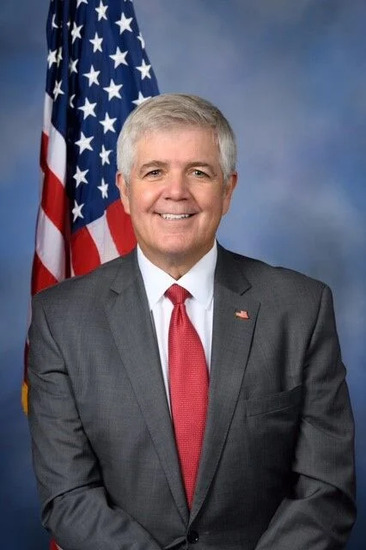
Rep. Cliff Bentz
Sponsored bills
This bill designates the facility of the United States Postal Service located at 3900 Crown Road Southwest in Atlanta, Georgia, as the John R. Lewis Post Office Building.
Endangered Species Transparency and Reasonableness Act of 2022 This bill revises requirements concerning determinations on whether a species is a threatened or endangered species under the Endangered Species Act of 1973 (ESA) and caps attorney's fees to prevailing parties in ESA citizen suits. The U.S. Fish and Wildlife Service (USFWS) and the National Marine Fisheries Service (NMFS) must publish online, subject to privacy or administrative limitations, the best scientific and commercial data available that are the basis for each determination. The bill states that the term best scientific and commercial data available includes all data submitted by a state, tribal, or county government. Thus, the USFWS and NMFS would no longer consider whether data from those sources are the best scientific and commercial data available. Instead, the data would be automatically deemed the best scientific and commercial data available regardless of the quality of the data. Before making a determination on whether a species is an endangered or threatened species, the USFWS and NMFS must provide affected states with all of the data that is the basis of the determination. The Department of the Interior must also publish and maintain an online searchable database that discloses federal expenditures related to litigation under the ESA.
Maddy summaryThis bill designates the Department of Veterans Affairs clinic in Mishawaka, Indiana, as the "Jackie Walorski VA Clinic" to honor former U.S. Representative Jackie Walorski, who served on the House Committee on Veterans' Affairs and advocated for veterans. The law requires all federal references - including laws, documents, and maps - to use the new name for the clinic, effective upon enactment. It does not change the clinic’s services, funding, or operations, as it is a purely commemorative naming resolution.
Japanese American World War II History Network Act This bill directs the Department of the Interior to establish the Japanese American World War II History Network within the National Park Service. In carrying out the network, Interior shall review studies and reports to complement and not duplicate studies of Japanese American World War II history and Japanese American experiences during World War II, including studies related to relocation centers and confinement sites; and produce and disseminate appropriate educational materials, such as handbooks, maps, interpretive guides, or electronic information relating to Japanese American World War II history and Japanese American experiences during that war.
Patient Advocate Tracker Act This act requires the Office of Patient Advocacy within the Veterans Health Administration to establish an information technology system that allows veterans or their representatives to electronically file a complaint with a patient advocate and review the status of a filed complaint.
Veteran Recruitment Act This bill requires the Department of State and the U.S. Agency for Global Media to develop and implement plans to ensure that veterans receive priority hiring recruitment. The bill also requires the State Department to align Foreign Service positions with military ranks and to expand outreach efforts in recruiting veterans for the Foreign Service.
Access to Safe Contraception Act of 2022 This bill prohibits states from banning any form of contraception that is approved by the Food and Drug Administration. The bill does not preempt state laws that protect the right of any entity to opt out of providing contraception due to the entity's religious or moral beliefs.
Advancing Human Rights-Centered International Conservation Act of 2022 This bill requires the U.S. Fish and Wildlife Service (USFWS) to take actions to ensure that the international financial assistance it provides does not go to any foreign security force unit (e.g., a military or paramilitary unit) where there is a reasonable belief that the unit has committed a gross violation of internationally recognized human rights. The USFWS must conduct risk analysis to ensure that a recipient (or subrecipient) of a grant does not fund or support any such unit. The prohibition against providing funding to such a unit shall not apply if the applicable government is taking effective steps to (1) bring the responsible members of the unit to justice, and (2) prevent gross violations of internationally recognized human rights by the unit in the future. The USFWS must take other actions to prevent funding such a unit, such as (1) coordinating with the Department of State on procedures for vetting potential assistance recipients, (2) publicly identifying units that are barred from receiving assistance, (3) requiring assistance recipients to provide certain information and to implement a safeguards plan, and (4) requiring periodic financial and programmatic audits of assistance recipients. The bill also requires (1) a grant recipient to report credible information about possible human rights violations involving a grant to the USFWS and the relevant diplomatic or consular post, (2) the program awarding the grant to investigate such allegations, and (3) the Office of the Inspector General of the Department of the Interior to investigate certain cases referred by the USFWS.

This joint resolution nullifies the final rule issued by the Council on Environmental Quality titled National Environmental Policy Act Implementing Regulations Revisions and published on April 20, 2022. The rule restores regulatory provisions issued under the National Environmental Policy Act of 1969 (NEPA) that were in effect before being modified in 2020 by the Update to the Regulations Implementing the Procedural Provisions of the National Environmental Policy Act rule.