

Maddy summaryThis concurrent resolution formally recognizes the persistent wage gap between Black women and white, non-Hispanic men in the United States. It highlights data showing that Black women earn significantly less than their male counterparts and reaffirms Congress's support for existing laws that prohibit pay discrimination based on sex or race. The document does not create new laws or change policy but serves as a symbolic statement to raise awareness about the economic disparities faced by Black women.
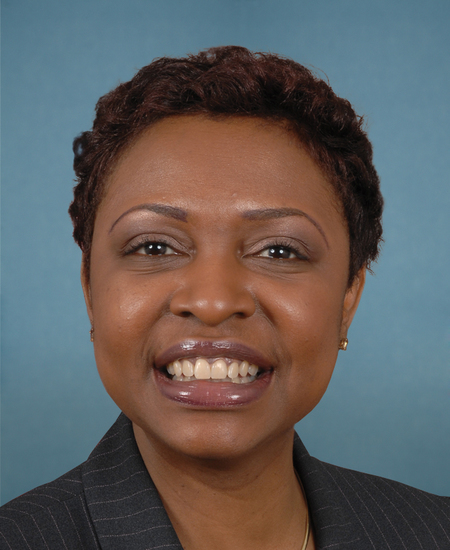
Rep. Yvette D. Clarke
Sponsored bills
Maddy summaryThe Justice for Incarcerated Moms Act aims to improve maternal health outcomes for pregnant and postpartum individuals in the criminal justice system by restricting financial incentives for states that use restraints on pregnant inmates. Under the bill, states receiving federal justice grants would face a 25 percent funding penalty if they fail to implement laws limiting the use of shackles on pregnant individuals, with those withheld funds redirected to compliant states. The legislation also directs the Bureau of Prisons and the Department of Justice to create and fund programs in at least six federal facilities and across various state and local prisons that provide specialized prenatal care, mental health support, and reentry assistance. These programs are designed to address specific health disparities, particularly for racial and ethnic minority groups, by offering culturally competent care, nutrition counseling, and opportunities to maintain contact with newborn children. Additionally, the act requires an independent oversight organization to monitor program implementation and mandates a Government Accountability Office report to analyze maternal and infant health data within the correctional system.
Maddy summaryThe MOMMIES Act expands Medicaid and CHIP coverage for low-income pregnant and postpartum individuals by extending continuous benefits for one year after childbirth and mandating full coverage of oral health services. To support these changes, the bill includes maintenance of effort provisions that prevent states from restricting eligibility or reducing benefits for this population, alongside a temporary 100 percent federal funding match for states that increase spending on these services. Additionally, the legislation establishes a five-year demonstration project to fund maternity care home models that integrate medical and social support services, while also requiring studies and guidance on improving access to doula services and telehealth for maternity care.
Maddy summaryThe Protecting Immigrants From Legal Exploitation Act of 2026 aims to combat fraud by increasing criminal penalties for individuals who falsely represent themselves as immigration lawyers or provide fraudulent services. It requires non-lawyer immigration service providers to identify themselves on applications and allows victims of unauthorized practice of law to withdraw and resubmit their immigration forms without penalty. The bill also empowers the Attorney General to issue civil injunctions against fraudulent providers and mandates that convicted fraudsters reimburse their clients for services rendered. To support legitimate legal aid, the legislation authorizes funding for outreach programs and grants to nonprofit organizations that provide direct legal assistance to immigrants.
Maddy summaryHR 1266, the Combating Illicit Xylazine Act, adds xylazine - a veterinary sedative increasingly found in illicit drug mixtures - to Schedule III of the Controlled Substances Act, regulating its use and trafficking. It directly affects veterinarians, animal owners, and manufacturers by allowing xylazine to be legally dispensed for animal use under specific veterinary prescriptions, while prohibiting non-veterinary human use. The bill includes transition periods (60 days for practitioners, 1 year for labeling) to ease compliance for manufacturers and practitioners, and requires the DEA and FDA to expedite necessary applications. It also mandates two congressional reports on xylazine's illicit use and trafficking patterns, and directs the Sentencing Commission to review penalties for offenses involving xylazine.
Maddy summaryThe Save MEDICARE Act of 2026 aims to improve the Medicare Advantage program by starting in 2028 with several changes to how health plans are paid and monitored. It requires the government to exclude diagnoses from chart reviews when calculating payments to prevent plans from inflating costs based on questionable data. The bill also speeds up audits and appeals to ensure faster resolution of coding disputes and introduces a new penalty system to recover overpayments from plans. Additionally, the law allows states to enforce Medicare rules within their borders and bans financial incentives for doctors based on how they code patient records. Finally, it establishes a mechanism for the Department of Veterans Affairs to recover costs when Medicare Advantage plans cover care that should have been paid for by the VA.
Maddy summaryThe SWIFT Act of 2026 modifies Social Security rules to improve benefits for widows, widowers, and surviving divorced spouses. It allows these individuals to receive full survivor benefits at any age if they have a disability, removing previous age restrictions and ensuring their benefits are not reduced if they remarry. The law also raises the age limit for children receiving benefits based on a parent's work record from 16 to 18, or 19 for full-time students. Additionally, the bill increases the maximum amount survivors can receive by offering financial incentives for delaying their claim until full retirement age. To help people understand these changes, the Social Security Administration will publish and mail a new information booklet to affected families.
Maddy summaryThis bill establishes a new independent council within the executive branch called the United States Interagency Council on Housing Affordability and Preservation to coordinate federal efforts on affordable housing. The council will be composed of heads from twenty-one different federal agencies, including HUD, the Department of Justice, and the Department of Labor, who will meet at least four times a year to develop a national strategic plan and review housing programs. Its main duties involve creating a unified strategy to increase affordable housing supply, providing technical assistance to states and local governments, and reporting annually to the President and Congress on housing needs and federal actions. The legislation also encourages states to form their own interagency councils and authorizes $4.8 million per year through 2031 to fund the council's operations.
Maddy summaryThis resolution asks the President and the Secretary of Health and Human Services to provide the House of Representatives with specific documents regarding a freeze on federal payments to five states. The requested materials include communications about how the payment freeze was decided, records of the tweet that announced it, and details on funding drawdowns, disciplinary actions, and data sharing plans related to those states. The bill specifically targets documents concerning Temporary Assistance for Needy Families, Child Care, and Social Services Block Grant programs in California, Colorado, Illinois, Minnesota, and New York. If the agencies possess the records, they must submit them to Congress within 14 days of the resolution's adoption.
Maddy summaryThe Drug Deal Disclosure Act requires the Department of Health and Human Services to publicly release records of specific agreements between the federal government and major drug manufacturers starting in 2025. These agreements must include provisions such as offering lower drug prices based on international rates, providing discounts through government platforms like TrumpRx, or receiving special exemptions from import duties and regulatory reviews. While the bill mandates that most documents be made available in a searchable format, it allows the government to withhold only specific confidential pricing details if legally required by foreign laws or court orders, provided a justification is published. Additionally, the law directs the Congressional Budget Office and the Government Accountability Office to analyze the economic and budgetary impacts of these deals, including effects on Medicare, Medicaid, and drug competition.