

Maddy summaryThe Momnibus Act is a comprehensive legislative bill designed to improve maternal health outcomes across the United States by addressing social determinants of health, expanding access to care, and reducing disparities among pregnant and postpartum individuals. The bill establishes a federal task force to coordinate efforts between agencies and stakeholders to eliminate preventable maternal mortality and severe morbidity, while providing sustained funding to community-based organizations to address nonclinical factors like housing, nutrition, and transportation. Key provisions include extending WIC eligibility to 24 months postpartum, creating grants to grow and diversify the perinatal workforce, implementing respectful maternity care training for all healthcare employees, and establishing compliance programs to track and address bias in maternity care settings. The legislation also includes specific measures for incarcerated mothers, veterans, and vulnerable populations affected by climate change, alongside funding for maternal mental health services and technology-enabled care models to expand access in underserved areas.
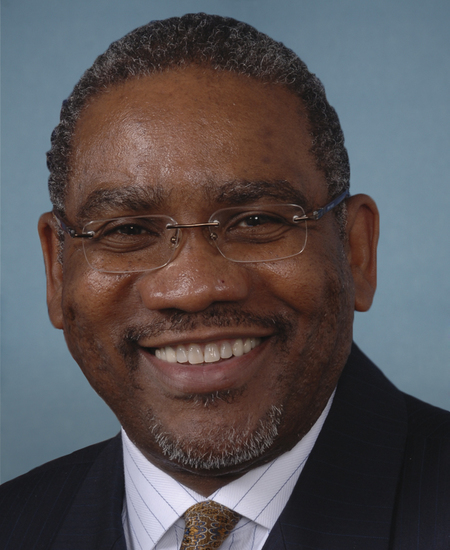
Rep. Gregory W. Meeks
Sponsored bills
Maddy summaryThis House Resolution supports designating the week of April 11 through April 17, 2026, as "Black Maternal Health Week." The resolution aims to bring national attention to the maternal and reproductive health crisis in the United States, specifically highlighting the importance of reducing maternal mortality and morbidity among Black women and birthing people.
Maddy summaryThis concurrent resolution (HCONRES 40) directs the President to remove U.S. military forces from hostilities with Iran, as required by the War Powers Resolution. It applies directly to U.S. Armed Forces deployed in conflict with Iran, except for forces needed to defend the U.S. or allies from imminent attack. The bill mandates removal unless the President complies with War Powers Resolution reporting requirements for self-defense actions, without needing new congressional authorization. As a procedural resolution, it does not create new law but compels executive action under existing legal framework.
Maddy summaryThis bill mandates that the U.S. Secretaries of State and Treasury jointly review the Rapid Support Forces (RSF) of Sudan within 90 days to determine if they meet the criteria for a global terrorist organization. If the RSF is affirmatively designated, the President must impose sanctions, which include freezing their assets within U.S. jurisdiction and preventing associated individuals from entering the United States. The bill provides exceptions for humanitarian assistance, U.S. national security activities, and allows for a waiver of sanctions if it's deemed important for U.S. national security interests. Concurrently, the Secretary of State must submit a report to Congress detailing the designation decision, foreign support to the RSF, and the implications of the designation.
Maddy summaryThis bill prohibits the sale and delivery of Russian crude oil and petroleum products that were loaded onto vessels after March 5, 2026, and bans future Treasury licenses for such transactions. It requires the President to impose sanctions within 30 days on Russian individuals and entities involved in oil and gas extraction, refinement, or maritime transportation, including blocking their U.S.-based assets and revoking their U.S. visas. The legislation includes exceptions for humanitarian goods like food and medicine, as well as intelligence and national security activities. Additionally, the bill mandates regular reports to Congress on Russian oil export volumes, revenues, and any involvement of Russian energy companies in the abduction of Ukrainian children.
Maddy summaryThis concurrent resolution formally recognizes the ongoing disparity between wages paid to men and women in the United States and reaffirms Congress's commitment to supporting equal pay. It highlights statistical data showing that women earn approximately 81 cents for every dollar earned by men, with significant variations across racial and ethnic groups, and notes that the gender wage gap has widened over the past two years. The document also identifies contributing factors such as occupational segregation, lack of family-friendly workplace policies, and workplace harassment, while emphasizing the economic impact on women's retirement security and family incomes.
Maddy summaryThis bill prohibits the use of federal funds for military force in or against Cuba from its enactment until December 31, 2026, unless Congress declares war or passes specific statutory authorization. The restriction applies to all government funds and prevents military actions without congressional approval under the War Powers Resolution. An exception allows military force consistent with the War Powers Resolution's provisions for urgent situations requiring immediate action. The legislation directly affects the U.S. Department of Defense and federal budget processes by limiting how funds can be used for military operations targeting Cuba.
Maddy summaryHR 7669, the "Rejecting the Erasure of Afghan Women and Girls Act," requires the U.S. Secretary of State to submit a report within 180 days of enactment. The report must detail Taliban-imposed restrictions on Afghan women and girls since August 2021 and determine whether these restrictions constitute crimes against humanity, torture under the Convention against Torture, or gross human rights violations under U.S. law. This bill directly addresses the situation of Afghan women and girls under Taliban rule by mandating a formal U.S. government assessment of those restrictions. The legislation focuses on establishing a factual basis for potential policy responses through this required report.
Maddy summaryThe Strategic Subsea Cables Act of 2026 establishes a new interagency committee to coordinate federal efforts for protecting undersea cables and pipelines, which carry global data and energy supplies. The bill requires the State Department to hire additional staff focused on cable security and mandates regular reports on sabotage incidents, particularly those involving China and Russia. It authorizes the President to impose sanctions on foreign entities that sabotage or support sabotage of critical undersea infrastructure, including blocking their assets and revoking their visas. The legislation also creates formal procedures for sharing classified and unclassified information between government agencies and private cable operators to improve threat detection and response.
Maddy summaryThe Energy Bills Relief Act aims to lower household energy costs and accelerate the development of low-cost, clean energy by modifying federal tax credits, expanding weatherization programs, and streamlining permitting processes. Key provisions include restoring tax incentives for renewable energy projects, increasing funding for low-income heating assistance, and requiring federal agencies to treat wind, solar, and storage projects with the same procedural fairness as oil and gas projects. The bill also establishes new incentives for upgrading the electricity grid, such as tax credits for transmission lines and grants for wildfire prevention measures, while creating mechanisms to ensure utilities serve public interests and protect consumers from price volatility.