

Maddy summaryThe SUPPLY Act establishes a federal program to insure second loans (additional financing) for building accessory dwelling units (ADUs) on single-family properties. This insurance, administered by the Department of Housing and Urban Development, covers up to 30% of a standard one-unit home loan amount or 100% of the property value after construction (with potential increases based on 50% of projected rental income). Homeowners seeking to add ADUs - such as backyard cottages, converted basements, or detached units - can use this insurance to secure financing, with a government premium of up to 1% annually. The bill also requires Fannie Mae and Freddie Mac to purchase and securitize these insured loans, potentially expanding access to ADU financing.
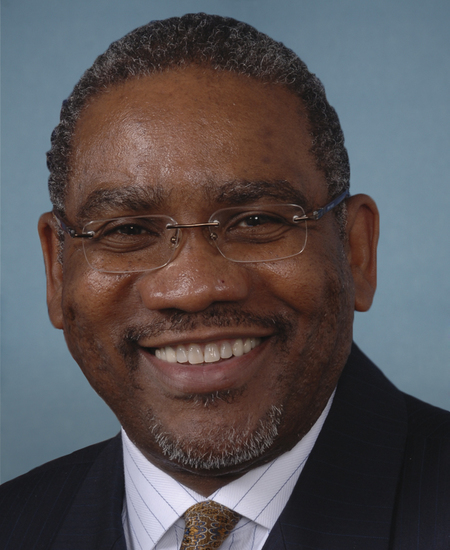
Rep. Gregory W. Meeks
Sponsored bills
Maddy summaryHRES 462 is a procedural resolution that sets rules for the House to vote on H.J. Res. 91, which challenges President Biden's April 2, 2025, declaration of a national emergency. It removes procedural barriers to allow immediate debate and voting on H.J. Res. 91, with one hour of debate equally split between the committee chair and ranking minority member. The resolution also waives objections to the content of H.J. Res. 91 and requires the House to transmit its passage to the Senate within a week. This procedural step directly affects House members by enabling them to vote on the resolution that would end the declared national emergency.
Maddy summaryHR 4516, the Saving Lives and Taxpayer Dollars Act, prohibits the U.S. government or its aid partners from destroying food, medicine, vaccines, or other foreign assistance commodities before they expire, requiring these items to be redirected to intended beneficiaries instead. The bill mandates that agencies like USAID, State, and Agriculture must make every effort to donate or sell expired aid items to those in need before disposal. It also requires annual reports to Congress detailing any expired, spoiled, or destroyed aid items, including reasons for not redirecting them and associated costs. This directly affects U.S. foreign aid agencies and their global partners, ensuring aid reaches people facing hunger, disease, or health crises rather than being wasted.
Maddy summaryThis bill requires all federal agencies to set specific equity goals in their strategic and performance plans, mandating at least one goal or 20% of total goals focused on improving services for underserved communities and individuals. It establishes an "Agency Equity Advisory Team" with 10+ agency roles (including civil rights, data, and human capital leaders) and creates an "Equity Subcommittee" to coordinate across agencies on equitable practices. The bill also updates data officer responsibilities to prioritize equitable data collection, use, and sharing, including collaboration with community groups and state/local governments. It directly affects all federal agencies and aims to reshape how government services are delivered to populations systematically excluded from economic, social, and civic opportunities.
Maddy summaryHR 4539, the Texture Positive Act of 2025, provides federal grants to states to fund subgrants for eligible entities (like minority- or women-owned businesses with 5+ years of experience) to integrate textured hair care training into cosmetology school curricula. The bill requires these entities to teach students specific techniques for shampooing, deep conditioning, braiding, twisting, and styling naturally coiled, curly, or wavy hair. It directly affects cosmetology schools, their students, and approved training providers by mandating this specialized education as part of their curriculum. The law includes reporting requirements to track how funds are used and the number of students and instructors trained.
Maddy summaryHRES 587 is a non-binding House resolution encouraging all U.S. public, private, and charter high schools, colleges, and universities to establish and support girls' flag football programs. It highlights flag football's growth as a low-contact, accessible sport that builds life skills like teamwork and leadership, noting over 100 colleges already have women's varsity programs. The resolution expresses support for expanding such programs to benefit girls, schools, and communities, without creating new laws or funding requirements. As a symbolic measure, it does not mandate action or allocate resources.
Maddy summaryHR 4396, the Uterine Cancer Study Act of 2025, mandates a study by the Department of Health and Human Services (HHS) into the potential link between chemical hair straighteners and uterine cancer, with a specific focus on higher incidence rates among women of color. The study will review existing research, examine impacts across all racial and ethnic groups, analyze different hair straightener types (including those with dyes or bleach), and assess whether the FDA should require additional safety testing for these products. HHS must submit its study methodology within 45 days of the bill's enactment, begin the study within 180 days, and deliver a final report to Congress within two years. This bill does not create new regulations but directs a specific research effort to gather evidence on a potential health concern. The study directly affects women, particularly women of color, who use hair straightening products and may face elevated uterine cancer risks.
Maddy summaryThis bill directs the Department of Health and Human Services to significantly increase federal research funding for uterine fibroids ($30 million annually from 2026-2030), expand coordination of NIH research, and establish a Medicaid data system to track treatment access and costs. It mandates public education on fibroid symptoms, prevalence (especially among Black women, who face higher risk and severity), and non-hysterectomy treatment options. The bill also requires disseminating evidence-based provider resources on managing fibroids while preserving fertility. These provisions directly affect the estimated 26 million U.S. women with fibroids - particularly women of color - and aim to address the current lack of research and treatment data.
Maddy summaryHCONRES 42 is a symbolic congressional resolution recognizing the persistent wage gap between Black women and White, non-Hispanic men in the U.S. It highlights that Black women earn 66 cents for every dollar earned by White, non-Hispanic men working full-time year-round, with the gap taking over 200 years to close at current rates. The resolution emphasizes how this disparity - rooted in both racial and gender discrimination - impacts Black women’s ability to afford essentials like education, childcare, and housing. It does not create new laws or policies but formally acknowledges the issue on Black Women’s Equal Pay Day (July 10, 2025) and reaffirms support for equal pay.
Maddy summaryThis bill (HR 4286) requires the U.S. State Department to develop a comprehensive strategy within 90 days to address Haiti's security crisis, focusing on strengthening Haitian security forces, countering gang violence, and expanding economic opportunities through programs like Haiti HOPE/HELP. The strategy must assess international coordination, arms trafficking, sanctions impacts on aid, and gang reintegration, while prioritizing Haitian-led solutions. It mandates annual reports to Congress for five years tracking progress on security, governance, and humanitarian efforts, with specific metrics for evaluating U.S. support. The bill directly affects U.S. foreign policy implementation in Haiti and Haitian civil society, security forces, and international partners.