

Maddy summaryThe Freedom from Unfair Gun Taxes Act of 2025 would prohibit states and local governments from imposing taxes on the sale of firearms, ammunition, or firearm parts during interstate or foreign commerce. This bill directly affects state tax policies and manufacturers or dealers selling these items across state lines. It explicitly states that the bill does not change the existing federal tax on firearms and ammunition that funds wildlife conservation programs. The key provision bans state-level taxes for these sales in interstate transactions while preserving current federal funding mechanisms.
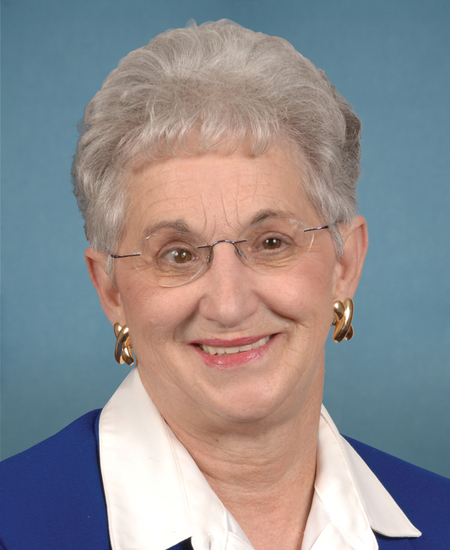
Rep. Virginia Foxx
Sponsored bills
Maddy summaryHR 2360 permanently exempts school bus drivers from the engine compartment inspection requirement during their commercial driver's license skills test, which was previously granted as a temporary measure in a 2024 federal notice. This affects school bus drivers in states that choose to participate in the exemption program. For six years after the bill's enactment, participating states must submit annual reports to the Transportation Secretary detailing how many drivers use this exemption. The exemption maintains the specific conditions established in the 2024 notice.
Maddy summaryHR 2382, the First Responders Retirement Parity Act, clarifies that government retirement plans may include firefighters, emergency medical technicians (EMTs), and paramedics without losing their "governmental plan" status under federal tax and retirement laws. The bill amends the Internal Revenue Code and the Employee Retirement Income Security Act to specifically allow public safety agencies (contracted with local governments) to cover these workers - whose primary duties involve firefighting or out-of-hospital emergency medical services - as part of their retirement plans. This change directly affects first responders employed by local public safety agencies, ensuring their retirement benefits remain eligible for the same tax advantages as other government employees. The key mechanism updates legal definitions to prevent plans covering these roles from being disqualified under current rules.
Maddy summaryThis bill, HR 2364 (Helene Small Business Recovery Act), allows the President to waive federal rules blocking duplicate disaster aid for small businesses affected by Hurricane Helene (a 2023 major disaster). It enables businesses to receive additional assistance without being denied due to prior aid, provided the President approves a waiver within 45 days of a state governor's request. The waiver process requires consideration of cost-effectiveness, equity, and prevents income limits or labeling loans as "duplicate" if funds cover disaster-related losses. It directly helps small businesses and entities suffering losses from the 2023-2024 disasters.
Maddy summaryHRES 242 is a procedural resolution that sets the rules for the House to consider three specific legislative items: two resolutions (H.J. Res. 24 and H.J. Res. 75) seeking to block Department of Energy energy efficiency rules for commercial refrigeration equipment (walk-in coolers/freezers and commercial refrigerators/freezers), and a bill (H.R. 1048) to amend the Higher Education Act regarding foreign gifts and contracts. It establishes one hour of debate for each measure, waives objections to their consideration, and specifies voting procedures. The resolution itself does not change policy but enables the House to vote on these underlying bills. This procedural step affects only the legislative process, not the final outcome of the bills.
Maddy summaryHR 2217, the Down East Remembrance Act, designates six specific creeks in North Carolina with new names honoring individuals, using precise geographic coordinates for each location. The bill updates all official federal references (including maps, laws, and documents) to these creeks to reflect their new names. This is a commemorative measure with no policy changes, directly affecting only the designated geographic areas and federal records referencing them.
Maddy summaryThe FOCA Act of 2025 prohibits federal agencies from requiring or banning contractors from using union agreements in construction project bids or contracts. It directly affects federal agencies, contractors, and subcontractors working on federally funded or assisted construction projects (like buildings or infrastructure). The law requires bid documents to not favor or penalize contractors based on whether they have union agreements, aiming to promote open competition and prevent discrimination. This changes how agencies structure bids but does not affect union agreements themselves. The bill applies to all new contracts and subcontracts after enactment, with limited exemptions only for public health/safety emergencies or national security.
Maddy summaryThis bill changes how individual investors in mutual funds (regulated investment companies) are taxed on certain dividends. It allows investors to defer paying tax on capital gain dividends that are automatically reinvested in additional fund shares through a dividend reinvestment plan. The deferred tax is recognized later when the investor sells shares or upon their death. It also establishes that shares acquired through this reinvestment are treated as held for over one year from the start, potentially qualifying for long-term capital gains rates. The rule applies only to individual investors (not estates, trusts, or dependents claimed by others).
Maddy summaryThe Disclose GIFT Act (HR 1999) requires eligible colleges and universities to implement policies for faculty and staff to disclose foreign gifts and contracts above certain thresholds. It mandates institutions to maintain a publicly searchable database of these disclosures (excluding personal information) and develop plans to manage potential security risks from foreign connections. The requirements apply to institutions receiving significant federal research funding (over $50 million in the previous five years) or participating in specific federal aid programs. Violations could result in civil actions by the government and fines up to $500,000 for repeated offenses, with severe consequences including loss of federal aid eligibility after three violations. The bill establishes clear definitions for "foreign country of concern" and "foreign entity of concern" to guide enforcement.
Maddy summaryThe SPEED for BEAD Act (HR 1870) amends the federal broadband deployment program (BEAD) to accelerate network expansion. It defines "gigabit-level broadband" as 1,000 Mbps download speeds, requires unused funds to be returned to the Treasury instead of reallocated, and allows states to remove high-cost locations from project areas. The bill prohibits grant conditions related to labor practices (e.g., union requirements), diversity initiatives, climate policies, or network management rules, while ensuring all broadband technologies meeting speed standards are eligible. It also explicitly bans government regulation of broadband pricing, directly affecting states administering BEAD funds and the internet providers they fund.