

Maddy summaryHR 1137, the "No Kill Switches in Cars Act," repeals Section 24220 of the Infrastructure Investment and Jobs Act (Public Law 117-58), which previously required vehicle manufacturers to implement advanced impaired driving technology. This bill directly affects car manufacturers by removing a mandate to integrate specific safety technology designed to detect driver impairment. The key provision is the repeal itself, eliminating the requirement without creating new obligations or altering existing vehicle safety standards.
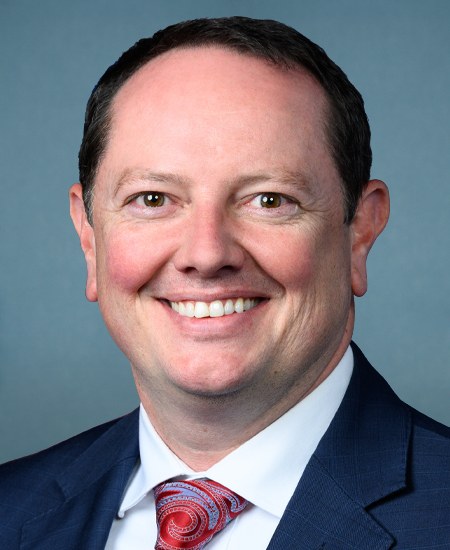
Rep. Eric Burlison
Sponsored bills
Maddy summaryHR 1040, the Senior Citizens Tax Elimination Act, would stop taxing Social Security benefits for seniors by repealing the current tax rule that includes some benefits in gross income. It directly affects senior citizens who currently pay federal income tax on portions of their Social Security payments. The bill adds a provision stating Section 86 of the tax code (which taxes Social Security benefits) no longer applies after enactment. To offset the lost tax revenue, the bill requires the government to appropriate funds to the Social Security and Railroad Retirement trust funds, ensuring they remain fully funded without requiring tax increases.
Maddy summaryHR 1052, the UNPLUG EVs Act, rescinds unobligated federal funds from two electric vehicle infrastructure programs. It targets unused balances from the National Electric Vehicle Infrastructure Formula Program (established by the Infrastructure Investment and Jobs Act) and charging/fueling grant programs under federal highway law. These rescinded funds will be deposited into the U.S. Treasury's general fund to reduce the federal deficit. The bill does not alter existing program requirements or affect current EV infrastructure projects, only redirecting unspent allocated funds.
Maddy summaryHRES 110 prohibits the distribution of Chinese Communist Party-controlled publications, such as *China Daily*, within House facilities like the Capitol building and House office buildings. It requires the Chief Administrative Officer to immediately stop accepting, distributing, or using internal mail systems for these materials, which are defined as publications registered under the Foreign Agents Registration Act and controlled by the CCP. The resolution does not restrict private receipt of such publications by Members or staff, access through public libraries, or the Library of Congress’s collection. This policy change applies immediately to all House-owned or operated facilities.
Fair Access to Banking Act This bill places restrictions on certain banks, credit unions, and payment card networks if they refuse to do business with a person who complies with the law. Restrictions include prohibiting the use of electronic funds transfer systems and lending programs, termination of an institution's depository insurance, and specified civil penalties. Banks and other specified financial institutions are allowed to deny financial services to a person only if the denial is justified by a documented failure of that person to meet quantitative, impartial, risk-based standards established in advance by the institution. This justification may not be based upon reputational risks to the institution. The bill establishes the right for a person to bring a civil action for a violation of this bill.
Maddy summaryHR 925, the "Dismantle DEI Act of 2025," would eliminate diversity, equity, and inclusion (DEI) programs across federal government operations. The bill requires federal agencies to close DEI offices, rescind related executive orders, and prohibit the use of federal funds for DEI training, offices, or initiatives. It defines "prohibited diversity, equity, or inclusion practice" as any activity that discriminates based on race, ethnicity, religion, biological sex, or national origin, or requires employees to complete training asserting that certain groups are inherently superior or inferior. The legislation also prohibits requiring employees to sign statements about race, ethnicity, or gender, and establishes private lawsuits for violations with potential damages of $1,000 per violation per day. This bill would directly affect federal agencies, contractors, grantees, and advisory committees receiving federal funding.
Maddy summaryHR 895 requires the Attorney General to investigate whether the 2022 discovery of five baby remains in Washington, DC, violated the existing Partial-Birth Abortion Ban Act of 2003, with a report due within six months. It mandates that healthcare workers must immediately report suspected violations of the ban to law enforcement and requires annual reports from the Attorney General detailing enforcement efforts, violations, and prosecutions over the past decade. The bill also directs the GAO to review enforcement actions from 2004-2024 and submit recommendations. This legislation focuses on strengthening enforcement of the existing 2003 ban, directly affecting healthcare providers, law enforcement, and the Department of Justice.
Maddy summaryHR 833 creates a federal tax credit for individuals and corporations that contribute to scholarship granting organizations (SGOs) providing scholarships for elementary and secondary education. The credit allows taxpayers to deduct up to 10% of their adjusted gross income or $5,000 (whichever is less) for contributions to SGOs serving students from households with income up to 300% of the area median income. The bill establishes a $10 billion annual cap on the tax credit program, requires SGOs to verify student eligibility and maintain separate accounts, and prohibits government control over SGOs or private schools. It ensures scholarships can be used at public, private, or religious schools without discrimination based on religious character. The tax credit would be available for contributions made after December 31, 2025, with annual volume cap increases based on usage.
Maddy summaryHR 899 would end the U.S. Department of Education by December 31, 2026, terminating its federal agency status. This bill directly affects all federal education programs and operations currently managed by the Department, such as student aid and school funding. The key mechanism is a fixed termination date, requiring the transfer of the Department's responsibilities to other federal agencies without specifying new administrative structures. The bill focuses solely on ending the agency's existence, not altering education policy or funding mechanisms.
Maddy summaryThe ACE Act (HR 750) expands 529 education savings plans to cover K-12 expenses, allowing families to use these accounts for tuition, curriculum materials, books, online learning, approved tutoring, standardized tests, and educational therapies for students with disabilities. It doubles the annual distribution limit from $10,000 to $20,000 for elementary and secondary expenses and increases gift tax exclusions for 529 contributions by up to $20,000 per year. The bill also requires states to implement school choice programs (like vouchers or education savings accounts) to qualify for tax-exempt school bonds, with specific eligibility thresholds for states. This directly affects families using 529 plans for K-12 education, homeschoolers, and states seeking tax-exempt bond funding for schools.