

National Law Enforcement Officers Remembrance, Support and Community Outreach Act. [ sic ] This bill temporarily directs the Department of the Interior to award a grant to the National Law Enforcement Officers Memorial Fund for the expenses associated with operating and enhancing the community outreach, public education, and officer safety and wellness programs of the National Law Enforcement Museum.
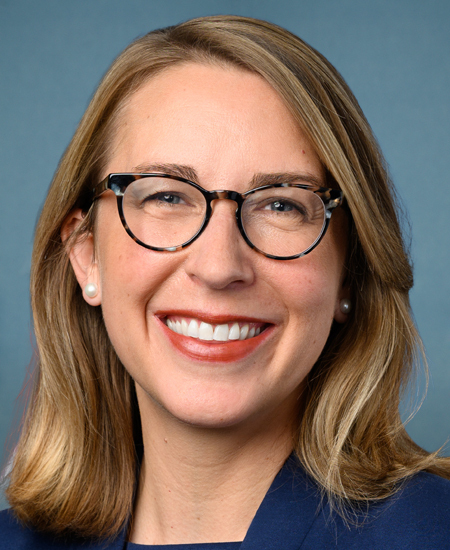
Rep. Hillary J. Scholten
Sponsored bills
Maddy summaryThe Data Center Resource Disclosure Act requires operators of data centers in the United States to voluntarily report their annual energy and water usage to the Assistant Secretary of Commerce. These operators must submit the data within 180 days of the law's enactment and every year thereafter. The government will then publish the results on an interactive map, identify facilities that did not provide information, and share feedback from public interest groups. Additionally, the Assistant Secretary must coordinate with other federal agencies and submit a report to Congress with recommendations for improving data center transparency.
Maddy summaryThe Defending Our Energy and Water Act directs the Administrator of the Office of Electronic Government to update minimum requirements for new federal data centers, mandating the use of the most water-efficient cooling systems. This update must be completed within 180 days of the bill's enactment. Additionally, the legislation extends a previous deadline for reviewing data center standards from 2026 to 2031 and requires the Department of Defense to identify and integrate water efficiency technologies to protect water resources. These changes apply specifically to federal data centers and aim to minimize their operational impact on water supplies.
Maddy summaryThis bill designates the United States Postal Service facility at 117 West Lovett Street in Charlotte, Michigan, as the "Francis C. Flaherty Post Office Building." It directly affects the specific postal location by officially changing its name in federal records and documents. The key provision ensures that all future legal and official references to this building will use the new name. This is a commemorative measure that honors an individual without altering operational policies or funding.
This bill designates the facility of the United States Postal Service located at 324 Washington Avenue, Suite 1 in Grand Haven, Michigan, as the "Ell Thomas Simantz Post Office Building".
Maddy summaryThis concurrent resolution formally recognizes the persistent wage gap between Black women and white, non-Hispanic men in the United States. It highlights data showing that Black women earn significantly less than their male counterparts and reaffirms Congress's support for existing laws that prohibit pay discrimination based on sex or race. The document does not create new laws or change policy but serves as a symbolic statement to raise awareness about the economic disparities faced by Black women.
Maddy summaryThe Women's Business Centers Improvement Act of 2026 updates the Small Business Administration's Women's Business Center Program by establishing a new Office of Women's Business Ownership and defining specific rules for how these centers are funded and operated. The bill allows eligible organizations, such as nonprofits and state economic development groups, to receive up to $300,000 annually in grants to provide counseling and training on business formation, finance, and marketing specifically for women entrepreneurs. To receive these funds, organizations must secure matching contributions from non-federal sources, undergo regular financial and programmatic reviews, and adhere to new accreditation standards that will be implemented within 270 days of the bill's enactment. Additionally, the legislation mandates an annual report detailing the number of participants, jobs created, and capital secured by the centers to ensure transparency and measure program effectiveness.
Maddy summaryHR 2821, the FDA Modernization Act 3.0, requires the FDA to update regulatory language within one year of enactment. It directs the agency to replace all references to "animal tests" with "nonclinical tests" in 22 specific sections of the Code of Federal Regulations related to drug development and approval processes. The bill also adds a definition for "nonclinical test" into relevant FDA regulations to align with prior legislative changes. This update applies directly to pharmaceutical manufacturers and FDA reviewers who follow these regulatory guidelines during drug development. The changes aim to modernize terminology without altering current testing requirements.
Maddy summaryHR 1266, the Combating Illicit Xylazine Act, adds xylazine - a veterinary sedative increasingly found in illicit drug mixtures - to Schedule III of the Controlled Substances Act, regulating its use and trafficking. It directly affects veterinarians, animal owners, and manufacturers by allowing xylazine to be legally dispensed for animal use under specific veterinary prescriptions, while prohibiting non-veterinary human use. The bill includes transition periods (60 days for practitioners, 1 year for labeling) to ease compliance for manufacturers and practitioners, and requires the DEA and FDA to expedite necessary applications. It also mandates two congressional reports on xylazine's illicit use and trafficking patterns, and directs the Sentencing Commission to review penalties for offenses involving xylazine.
Maddy summaryThe Stop CHEATERS Act directs the Internal Revenue Service to increase its enforcement efforts against high-income individuals and large corporations by allocating billions of dollars in additional funding for tax audits, criminal investigations, and taxpayer services through fiscal year 2031. A significant portion of this funding is designated for modernizing the IRS's technology and business systems to improve its ability to detect fraud and noncompliance. The legislation also requires the IRS Commissioner to submit regular reports to Congress detailing plans to shift auditing resources toward wealthy taxpayers and analyzing how much unpaid tax is owed by different income groups.