

Savings Opportunity and Affordable Repayment Act This bill creates a new income-driven repayment plan for student loans called the Savings Opportunity and Affordable Repayment (SOAR) plan. The SOAR plan has similar provisions to, but further expands on, the Department of Education's (ED's) final rule published on July 10, 2023, that created the Saving on a Valuable Education (SAVE) plan. The SAVE plan was blocked by federal courts. The bill directs ED to carry out a SOAR plan program that complies with specified requirements. The bill allows all federal student loan types to be eligible for repayment under the SOAR plan, including Parent PLUS Loans and Federal Family Education Loans. Under the SOAR plan, a federal student loan borrower whose income is at or below 250% of the federal poverty level (FPL) has $0 monthly payments. A borrower whose income is over 250% of the FPL pays 5% of their discretionary income on loans obtained for undergraduate study and 10% of their discretionary income for all other outstanding loans (e.g., loans obtained for graduate study). Additionally, under the SOAR plan, holders of eligible federal student loans (e.g., ED or private lenders) must apply 50% of the borrower's monthly payment toward outstanding principal. The other 50% must be applied in the following order: (1) accrued charges and collection costs on the loan, (2) outstanding interest, and (3) outstanding principal. ED must forgive any loan balance that remains outstanding after a specified maximum repayment period (e.g., 10 years or 15 years).
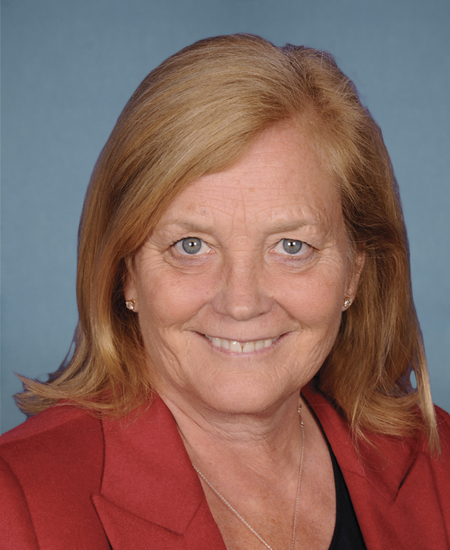
Rep. Chellie Pingree
Sponsored bills
Maddy summaryThis bill modernizes housing assistance programs for Native American tribes and Native Hawaiians by streamlining environmental reviews, extending funding authorization through 2032, and expanding loan guarantee options. Key provisions include consolidating environmental review requirements to reduce paperwork for tribes, allowing 99-year leasehold interests on trust lands for housing, and creating new rental assistance specifically for homeless or at-risk Native American veterans. The legislation also clarifies rent rules, waives certain housing counseling certifications for tribal entities, exempts tribal housing projects from some federal civil rights and Buy America requirements, and establishes a direct loan guarantee process for tribal housing projects.
Maddy summaryHouse Resolution 1208 expresses the House of Representatives' support for honoring Earth Day and its historical role in promoting environmental protection and action. It encourages American citizens to engage in environmental stewardship and urges the President and the U.S. Government to take immediate action to address climate change, environmental injustices, and rejoin international climate agreements.
Maddy summaryThis bill, the Federal and State Food Safety Information Sharing Act of 2026, authorizes the Food and Drug Administration (FDA) to share unredacted food safety information with State, local, Tribal, and Territorial public health authorities. This directly affects the FDA and these various state and local entities involved in protecting public health from foodborne hazards. The shared information can include details like foodborne illness surveillance data, laboratory testing results, inspection findings, recall distribution lists, and consumer complaints, to be shared as soon as reasonably practical. While recipient authorities generally need FDA permission for further disclosure, they may do so without permission if necessary to contain an outbreak, carry out a recall, or for other state enforcement activities. Additionally, the bill extends the duration of certain federal grants for enhancing food safety from three to five years and ties subsequent grant funding to successful program evaluations.
Maddy summaryThe STAR Act (HR 8399) aims to remove certain restrictions on how federal transit funds can be used. Specifically, it amends sections of title 49, United States Code, related to federal transit programs. The bill strikes provisions that currently prohibit the use of federal funds for acquiring transit rolling stock manufactured outside the United States and for constructing bus revenue vehicles by manufacturers not established in the U
Maddy summaryThis bill establishes a grant program to help vulnerable mothers and babies in areas with high climate-related health risks, such as extreme heat and air pollution. It directs the Department of Health and Human Services to award up to $105 million over four years to community groups, healthcare providers, and local organizations for initiatives that provide cooling resources, health education, and support services. The program prioritizes areas with high rates of maternal and infant health disparities and requires grantees to address racial and ethnic inequities. Additionally, the bill creates a research consortium at the National Institutes of Health to study climate impacts on birth outcomes and funds training programs for health profession schools to better prepare providers for these risks.
Maddy summaryThe Momnibus Act is a comprehensive legislative bill designed to improve maternal health outcomes across the United States by addressing social determinants of health, expanding access to care, and reducing disparities among pregnant and postpartum individuals. The bill establishes a federal task force to coordinate efforts between agencies and stakeholders to eliminate preventable maternal mortality and severe morbidity, while providing sustained funding to community-based organizations to address nonclinical factors like housing, nutrition, and transportation. Key provisions include extending WIC eligibility to 24 months postpartum, creating grants to grow and diversify the perinatal workforce, implementing respectful maternity care training for all healthcare employees, and establishing compliance programs to track and address bias in maternity care settings. The legislation also includes specific measures for incarcerated mothers, veterans, and vulnerable populations affected by climate change, alongside funding for maternal mental health services and technology-enabled care models to expand access in underserved areas.
Maddy summaryThis resolution expresses the sense of the House of Representatives that former President Donald Trump, his Special Envoy Steven Witkoff, and all federal officials must comply with the Constitution's Foreign Emoluments Clause. It specifically calls for them to immediately turn over to the Department of the Treasury any payments received from the United Arab Emirates or other foreign states. Furthermore, the resolution urges them to divest from all business interests linked to foreign governments, including those tied to United Arab Emirates officials.
Maddy summaryThis resolution expresses the House of Representatives' opinion that the Department of Justice and other federal agencies should not administratively settle legal claims for money filed against the United States by a sitting President, specifically referencing President Donald Trump. The House believes that such settlements would violate the Domestic Emoluments Clause of the Constitution, which prevents a President from receiving payments from the government beyond their official salary. Therefore, the resolution advises the Department of Justice to refuse any administrative settlement of these claims, while clarifying that a President can still pursue lawsuits in independent courts. This position directly affects how the Department of Justice would handle such claims from a President.
Maddy summaryThis concurrent resolution (HCONRES 40) directs the President to remove U.S. military forces from hostilities with Iran, as required by the War Powers Resolution. It applies directly to U.S. Armed Forces deployed in conflict with Iran, except for forces needed to defend the U.S. or allies from imminent attack. The bill mandates removal unless the President complies with War Powers Resolution reporting requirements for self-defense actions, without needing new congressional authorization. As a procedural resolution, it does not create new law but compels executive action under existing legal framework.