

Maddy summaryHRES 539 is a formal House resolution censuring Representative LaMonica McIver (D-NJ) and removing her from the Committee on Homeland Security. It follows her federal indictment for allegedly assaulting and interfering with Homeland Security Investigations (HSI) officers at a Newark immigration facility on May 9, 2025. The resolution cites House Rule XXIII requiring members to "behave in a manner that shall reflect creditably on the House" and states her continued committee service would create a conflict of interest. The censure requires her to appear in the House well for the formal reading of the resolution. This is a disciplinary measure, not a policy change, based on pending criminal charges.
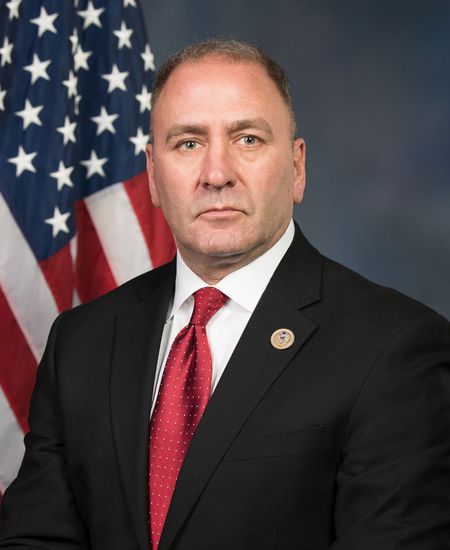
Rep. Clay Higgins
Sponsored bills
Maddy summaryHR 5108 prohibits U.S. states from receiving federal Edward Byrne Memorial Justice Assistance Grant Program funds if they issue driver licenses to individuals without proof of U.S. citizenship or lawful presence, or if they restrict government entities from sharing immigration enforcement data with Homeland Security. States violating these rules must return unspent federal grant funds within 30 days and remain ineligible for future grants until they pass laws requiring driver license eligibility proof and permitting immigration data sharing. The bill directly affects states that currently issue licenses to undocumented immigrants or block information sharing with federal immigration authorities. It imposes concrete financial penalties rather than altering driver licensing rules themselves.
Maddy summaryHR 5116, the "Empower Parents to Protect their Kids Act," requires all K-12 schools receiving federal funds to obtain parental consent before accommodating a student's gender identity that differs from their sex assigned at birth. The bill prohibits schools from changing student names/pronouns, facilitating gender transition, hiding such information from parents, or encouraging gender transition without parental involvement. Schools must publicly post policies ensuring compliance and provide written policies to families. Parents or the Attorney General can sue schools for violations, seeking injunctions, fees, or compensation for harm caused by unconsented gender transition efforts.
Maddy summaryHRES 664 is a non-binding resolution observing the 20th anniversary of Hurricanes Katrina and Rita's 2005 Gulf Coast devastation. It recognizes the progress made in rebuilding affected communities across Louisiana, Mississippi, Alabama, Florida, Texas, and Georgia, citing statistics on population recovery and tourism growth. The resolution expresses support for victims, commends recovery efforts, and reaffirms commitment to the Gulf Coast region. It does not create new laws, allocate funding, or change policy - its sole purpose is commemorative recognition.
Maddy summaryHR 5054 amends federal law to clarify that using threats or violence to interfere with commerce (including labor disputes) is a crime, but exempts peaceful picketing and minor incidents during labor disputes. The bill specifically states that minor bodily injury, property damage, or threats related to such activities - when not part of coordinated violence - do not violate the law. It also specifies that state and local authorities, not federal prosecutors, handle cases involving these exempted activities. The law explicitly preserves existing labor protections under the National Labor Relations Act and other federal statutes.
Maddy summaryHR 5015 amends the District of Columbia Home Rule Act to extend the emergency period during which the President can control the Metropolitan Police Department, changing the timeframe from 30 days to 180 days for both new and existing emergencies. This bill directly affects the President's authority to manage DC's police during declared emergencies and applies retroactively to emergencies already in place before the bill's enactment. The key change modifies specific provisions in Section 740 of the Act, replacing all references to "thirty days" with "180 days" to allow for longer presidential oversight.
Maddy summaryHR 5016, the "Keep Offenders Off Our Streets Act," requires that anyone charged with a crime in the District of Columbia must post a secured bail bond with reliable third parties (not just promise to appear) before being released before trial. This bill directly affects individuals facing pretrial release decisions in DC courts by eliminating the option of release on personal recognizance. The key mechanism replaces existing rules with a requirement that defendants execute a bail bond in an amount reasonably needed to ensure their court appearance. The law applies to all defendants appearing before a DC judicial officer, both before and after the bill's enactment.
Maddy summaryThis bill creates a federal database identifying state or local governments that conflict with immigration enforcement laws. It prohibits federal funding for any jurisdiction listed in this database, which includes entities that block cooperation with immigration detainers, restrict arrests of certain immigrants, or prevent officials from interviewing incarcerated individuals about immigration status. The database must be updated quarterly and made public within 90 days of the bill's enactment. This directly affects local governments that have policies limiting collaboration with federal immigration authorities.
Maddy summaryHR 1569, the CATCH Fentanyl Act, establishes a 5-year pilot program to test nonintrusive inspection technologies at U.S. border ports of entry. The bill requires U.S. Customs and Border Protection (CBP) to evaluate at least five technology enhancements - including AI, machine learning, and quantum sensing - to improve detection of contraband, drugs, weapons, and threats while reducing inspection wait times. Pilot projects must prioritize cost-effective solutions that integrate with existing systems, adhere to privacy protections, and report findings on performance metrics like detection rates and throughput. The program mandates detailed reports to Congress on effectiveness, implementation plans, and privacy impacts, using existing funding without new appropriations.
Maddy summaryHRES 631 is a symbolic House resolution (not a law) declaring that the U.S. national debt - citing $36.2 trillion in public debt as of January 2025 - is a threat to national security. It references debt-to-GDP ratios, interest expenses, and warnings from former defense officials like James Mattis and Dan Coats to support this stance. The resolution calls for restoring budget process reforms and addressing fiscal challenges but contains no binding policy changes or new spending rules. It affects no specific groups, as it is a formal congressional declaration without legislative effect.