

Maddy summaryHRES 269 is a non-binding resolution passed by the U.S. House of Representatives on March 30, 2023. It recognizes the federal government's duty to develop and implement a Transgender Bill of Rights to protect transgender and nonbinary people. The resolution outlines key provisions, including ensuring access to gender-affirming medical care, ending discrimination in employment and housing, and improving legal recognition of gender identity on government documents. It also calls for addressing systemic barriers in education, safety, and economic security faced by transgender and nonbinary individuals.
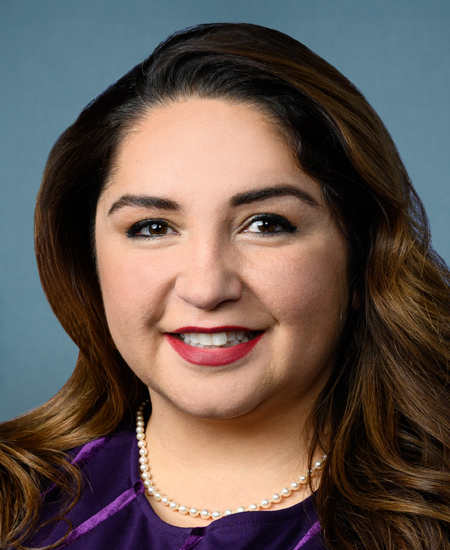
Rep. Delia C. Ramirez
Sponsored bills
Maddy summaryHR 2725, the "Do No Harm Act," amends the Religious Freedom Restoration Act (RFRA) to clarify that RFRA does not apply when federal laws protect against discrimination or promote equal opportunity. It specifically exempts protections under the Civil Rights Act, Americans with Disabilities Act, workplace benefits like leave, child labor safeguards, and healthcare access from RFRA challenges. The bill also clarifies that RFRA does not block private lawsuits between individuals, applying only to cases involving government entities. This amendment ensures that existing federal civil rights and workplace protections remain enforceable under RFRA.
Maddy summaryThe Latonya Reeves Freedom Act of 2023 strengthens the Americans with Disabilities Act's requirement that individuals with disabilities receive long-term services and supports in community settings rather than institutions. It defines "community-based" services to include specific housing options where individuals with disabilities can live independently with maximum control over their lives, including access to integrated housing, employment, and community participation. The bill requires states to develop transition plans to move people from institutional settings to community-based services within 12 years, with measurable annual targets for reducing institutionalization. It establishes enforcement mechanisms through the Department of Justice and Department of Health and Human Services to ensure compliance with these requirements.
Maddy summaryThe Puppy Protection Act of 2023 sets new standards for businesses that sell dogs (dealers), directly affecting pet stores and breeders operating under the Animal Welfare Act. It requires specific housing with space allowances based on dog size (e.g., 12-30 square feet per dog), temperature control (45-85°F), clean food twice daily, and daily exercise or socialization with humans/dogs for at least 30 minutes. The bill also mandates annual veterinary exams including dental care, strict breeding limits (e.g., age restrictions, maximum 2 litters in 18 months), and efforts to place retired breeding dogs in homes instead of selling them to other breeders. Regulations must be finalized within 18 months of enactment.
Maddy summaryThis bill authorizes $210 million annually (2024-2029) for the Bureau of Prisons to expand vocational training and occupational education programs for incarcerated individuals. It also allocates $10 million, $70 million, and $20 million annually for related programs under the Omnibus Crime Control Act, Second Chance Act, and new vocational grants. The law requires annual public reports starting in 2026 to evaluate program effectiveness in teaching job skills and improving post-release employment prospects. It directly affects incarcerated people in federal facilities by increasing access to work-based training programs.
Maddy summaryHR 2665 delays Medicaid payment reductions for safety net hospitals by two years, changing the effective date from 2024 to 2026 under Section 1923(f)(7)(A) of the Social Security Act. This bill directly affects hospitals that serve high numbers of low-income and uninsured patients, providing them with additional time before facing reduced federal Medicaid payments. The key mechanism is a technical amendment to existing law, postponing an already scheduled payment adjustment without altering funding levels or eligibility. As a procedural bill, it does not create new programs or change hospital requirements.
Maddy summaryThe Fairness to Freedom Act of 2023 guarantees the right to government-funded legal counsel for immigrants facing removal, exclusion, deportation, or bond proceedings who cannot afford private representation. It establishes the Office of Immigration Representation to oversee this system, with Local Boards in each region managing appointments and ensuring quality representation through public defender organizations, community defender organizations, and attorney panels. The bill requires counsel to be appointed within 24 hours for detained individuals, ensures continuous representation through all proceedings, mandates minimum funding based on a prosecution-defense ratio, and prohibits using appointed counsel as a basis for public charge determinations.
Maddy summaryThis bill allows the Department of Veterans Affairs (VA) to use existing funds more flexibly to assist homeless veterans and veterans in HUD housing programs. It authorizes the VA to provide immediate needs like food, shelter, transportation for appointments, and communication devices (e.g., phones, tablets) to support veterans' stability and health. The law expands how VA funds can be applied beyond traditional housing assistance, focusing on urgent, practical support. It directly affects homeless veterans and those in HUD's housing assistance program by enabling faster, more adaptable aid. The bill amends existing VA law to improve responsiveness to veterans' immediate survival and health needs.
Maddy summaryHR 2441, the Servicemembers and Veterans Empowerment and Support Act of 2023, improves support for veterans who experienced military sexual trauma by reforming disability claims processing and expanding access to mental health care. The bill establishes new standards for evaluating claims involving military sexual trauma, requiring specialized VA teams to process these claims and creating clearer guidelines for evidence and communication with veterans. It expands eligibility for counseling and treatment to include all former reserve members and creates a pilot program providing interim mental health care when veterans face wait times exceeding 14 days for residential treatment. The legislation also mandates a Comptroller General study on access to care and requires the VA to provide better communication and support throughout the claims process.
Maddy summaryHR 2413, the Dental Care for Veterans Act, reclassifies dental care as standard medical services under the VA's existing benefits structure, eliminating prior restrictions that treated dental care separately. It modifies how dental appliances are procured and establishes a phased eligibility timeline: veterans already eligible for dental benefits gain immediate access, while others qualify over 1-4 years based on their current benefit status. The bill affects all veterans currently covered under VA dental programs, changing their access to care without creating new funding. Key provisions streamline dental service delivery under Title 38, aligning it with other medical benefits.