

Maddy summaryHR 4229 would require Congress to approve each civil action brought by the Comptroller General under the Impoundment Control Act of 1974. Specifically, it mandates that Congress must pass a concurrent resolution authorizing such actions before the Comptroller General can pursue a lawsuit regarding government budget impoundments. This change directly affects the Comptroller General (who leads the Government Accountability Office) by adding a new procedural step to their enforcement process. The bill does not alter the Act's core purpose but modifies the mechanism for initiating legal challenges.
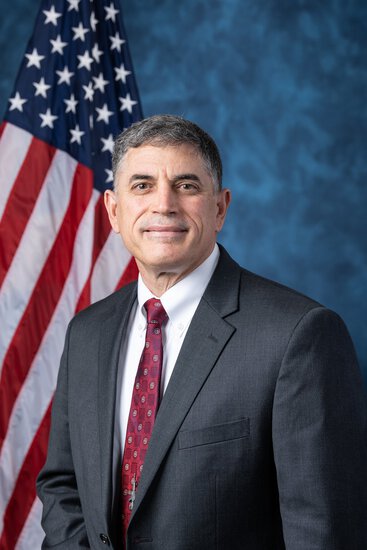
Rep. Andrew S. Clyde
Sponsored bills
Maddy summaryThis bill mandates a 90-day government review to determine if CAIR (Council on American-Islamic Relations) meets criteria for designation as a foreign terrorist organization under U.S. law. The review, led by the Secretary of State with input from the Attorney General and Treasury Secretary, would assess CAIR's ties to terrorism based on findings cited in the bill, including alleged connections to Hamas, the Holy Land Foundation, and individuals convicted of terrorism-related offenses. The bill does not immediately designate CAIR as a terrorist group but requires a formal evaluation and a congressional report on the outcome. This process directly affects CAIR by triggering an official government assessment of its status, though no immediate action is taken by the bill itself.
Maddy summaryHR 4117, the Fuel Emissions Freedom Act, would repeal all federal and state fuel emissions standards for motor vehicles. It specifically targets Clean Air Act sections 202 and 209, as well as Corporate Average Fuel Economy (CAFE) standards under 49 U.S.C. 32902-32918, and nullifies all existing regulations under these provisions. The bill prohibits both the federal government and states from establishing or enforcing any future fuel emission standards for vehicles. This would directly affect automobile manufacturers, who would no longer need to comply with emissions regulations, and states, which would lose authority to set their own standards. The bill’s key mechanism is the complete removal of regulatory requirements related to vehicle emissions.
Maddy summaryThis bill amends federal law to block Community Development Block Grants (CDBG) from going to local governments that qualify as "sanctuary jurisdictions." A sanctuary jurisdiction is defined as a city or county that restricts sharing immigration status information with federal authorities or refuses to comply with certain immigration detainer requests. The law requires grant recipients to certify they are not sanctuary jurisdictions during the grant period. This directly affects cities and counties with policies limiting cooperation on immigration enforcement, potentially withholding federal funds for housing, infrastructure, and community programs. The exception for jurisdictions not sharing information when victims or witnesses of crimes come forward is included.
Maddy summaryHR 589, the FACE Act Repeal Act of 2025, would repeal a federal law (Section 248 of Title 18, U.S. Code) that prohibited obstructing access to reproductive health care facilities through physical means, intimidation, or violence. This repeal would eliminate the federal criminal penalty for such conduct, meaning federal prosecutors could no longer charge individuals under this specific law. The bill applies to all pending or future federal prosecutions related to these actions. It does not affect state laws that may still regulate access to reproductive health care facilities.
Maddy summaryThe Restoring American Freedom Act (HR 3719) prohibits the U.S. Department of State and entities receiving federal funds from it from censoring U.S. citizens' First Amendment-protected speech. It bans using federal funds to create or distribute "censorship tools" without safeguards and prohibits "advertising blacklists" that target citizens based on their speech content. The bill requires the Department to monitor for censorship, correct past misconduct, and notify Congress and affected citizens when such violations occur. This law directly affects Department of State operations and organizations receiving State Department grants or contracts.
Maddy summaryHJRES 98 is a non-binding joint resolution designating June as "Life Month" to promote awareness of the value of human life. It expresses support for protecting unborn life, references the Dobbs v. Jackson decision, and urges policymakers to defend "the sanctity of human life" through legislation. The resolution does not create new laws, alter funding, or impose requirements - its purpose is solely symbolic recognition. It was introduced by multiple representatives and referred to relevant committees for consideration.
Maddy summaryThis resolution (HRES 433) is a symbolic congressional statement condemning former FBI Director James Comey for a social media post described in the bill as inciting violence against President Trump. It claims Comey's post - featuring the phrase "86-47" with "cool shell formation" - seemed to call for eliminating the president, jeopardizing his security during a foreign trip. The resolution formally condemns this as "indefensible," urges barring Comey from future federal employment, and requests a DOJ investigation into his post. As a non-binding resolution, it does not change laws but reflects the sponsors' position on the matter. The bill focuses on the stated claims within its text, not on verified facts about the post or Comey's intent.
Maddy summaryHR 513, the Offshore Lands Authorities Act of 2025, reverses multiple existing presidential protections that blocked oil and gas leasing on offshore federal lands. It nullifies 8 specific presidential withdrawals (including areas in the Arctic, Atlantic, Gulf of Mexico, and Pacific) and restricts future presidential actions by limiting withdrawals to 150,000 acres per action, capping them at 20 years, and requiring Congressional approval for cumulative withdrawals exceeding 500,000 acres. The bill mandates that before any withdrawal, the Secretary must complete four assessments covering mineral resources, economic/energy value, revenue impacts, and national security. It also establishes a fast-track process for Congress to disapprove withdrawals within 20 days, with limited debate (10 hours) on the resolution.
Maddy summaryHR 3406, the "Readiness Over Wokeness Act," prohibits individuals with a current diagnosis, history, or symptoms of gender dysphoria, or a history of gender-affirming care (like hormone therapy or surgery), from serving in the U.S. Armed Forces. It requires the military to administratively discharge affected service members, with the key provision that they won’t need to repay educational benefits or fulfill remaining service obligations. The bill also mandates security clearance reinvestigations for those discharged who previously held access to classified information. This policy directly affects transgender and gender-diverse service members who have sought gender-affirming care or received a gender dysphoria diagnosis. The bill focuses on altering military medical standards for service eligibility, not on broader societal or policy changes.