

Maddy summaryH.J.Res. 118 is a symbolic resolution proposing that September 12, 2025, be designated as "The Day of the Bible" in the U.S. It does not create new laws or affect specific groups. The resolution asks Congress to express support for the designation and encourages schools, civic groups, and communities to hold educational activities about the Bible's historical role. It also requires the President to issue an annual proclamation for this day, recognizing the 1782 approval of the Aitken Bible as a milestone in American history. The bill is purely ceremonial with no legal obligations.
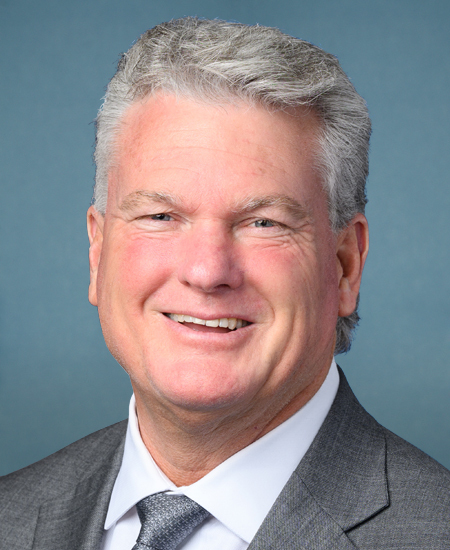
Rep. Mike Collins
Sponsored bills
Maddy summaryHR 5014 would make Executive Order 14331 (titled "Guaranteeing Fair Banking for All Americans") legally binding by codifying it into law. This order, published in the Federal Register on August 12, 2025, directs federal agencies to implement fair banking practices. The bill directly affects federal agencies responsible for banking regulations, requiring them to follow the order's requirements. It converts an existing executive directive into a permanent legal standard without creating new rules or altering existing laws.
Maddy summaryHR 5026, the ALCATRAZ Act, establishes a federal grant program to reimburse state and local governments for costs related to detaining migrants at facilities within their jurisdictions, starting January 20, 2025. Eligible states or localities must apply to the DHS Secretary for reimbursement, with funding coming from redirected FEMA shelter funds. The bill requires DHS to submit a 90-day report detailing plans for rapidly building new detention facilities and identifying underused federal or state funds that could support the program. This legislation directly affects state and local governments operating migrant detention facilities by providing financial support for their detention costs.
Maddy summaryHRES 652 is a ceremonial resolution recognizing six Fort Stewart, Georgia, soldiers for their actions during an August 6, 2025, shooting incident. It specifically honors First Sgt. Joshua Arnold, Master Sgt. Justin Thomas, Staff Sgt. Melissa Taylor, Staff Sgt. Robert Pacheco, Sgt. Aaron Turner, and Sgt. Eve Rodarte for subduing a gunman and preventing further harm. The resolution expresses gratitude for their actions, extends well-wishes to the injured, and acknowledges their service. As a non-binding resolution, it does not create new laws or policies but serves as a formal tribute.
Maddy summaryHR 4873 would make Executive Order 14319 - which prohibits the use of "woke AI" in federal government operations - legally binding as a law, rather than relying on presidential directive. This requires all federal agencies using artificial intelligence systems to comply with the order's restrictions as a mandatory legal requirement. The bill directly affects federal departments and agencies that develop or deploy AI tools, ensuring they adhere to the policy without needing repeated executive action. By codifying the order, the bill provides a permanent legal basis for the policy, removing reliance on future executive decisions.
Maddy summaryThis bill modifies the U.S. census process to count only U.S. citizens for apportioning House seats and electoral votes, requiring census forms to include a citizenship checkbox. It mandates that voters present both government-issued photo ID and proof of U.S. citizenship (like a birth certificate or passport) to vote in person or by mail for federal offices, starting with the 2026 elections. State election officials must verify citizenship for provisional ballots to count them. The law affects all voters in federal elections and state election administrators, replacing current voter ID requirements with these new citizenship and photo ID standards.
Maddy summaryHRES 614 is a non-binding resolution honoring Dr. Edwin J. Feulner, former President of the Heritage Foundation and Executive Director of the Republican Study Committee, following his death on July 18, 2025. The resolution commemorates his founding of the Heritage Foundation in 1973, his 36-year leadership as its president, and his role in establishing the Republican Study Committee. It specifically calls for the House to mourn his passing, honor his legacy, and recommend he receive the Presidential Medal of Freedom posthumously. This resolution does not create new law or affect any policies, as it is purely commemorative.
Maddy summaryThis bill makes Executive Order 14260 permanent law, which prohibits states from imposing regulations that conflict with federal energy policies. It directly affects state governments and federal agencies by requiring states to align energy regulations with federal directives. The key mechanism is codifying the existing executive order, ensuring it has the force of law without needing future presidential action. This does not create new regulations but solidifies current federal authority over state energy oversight.
Maddy summaryHR 4676, the Modern Firearm Safety Act, preempts state and local laws that require specific handgun design features not mandated by federal law. It directly affects handgun manufacturers, sellers, and consumers in jurisdictions with such requirements, such as those mandating loaded indicators, magazine safety mechanisms, or identification systems. The bill prohibits any state or local government from enforcing or creating regulations that require handguns to include features like cartridge identification, magazine insertion sensors, or other mechanisms not required by federal statute. This law establishes federal standards as the sole requirement for handgun design, overriding conflicting state or local regulations.
Maddy summaryThe End the Vaccine Carveout Act changes the National Vaccine Injury Compensation Program (NVICP) to allow individuals to sue vaccine manufacturers or administrators directly in court for vaccine-related injuries or deaths, without first needing to file a claim under the NVICP. It removes time limits for filing NVICP claims and repeals rules that previously let people choose between the program and a lawsuit for the same injury. The bill also specifically excludes COVID-19 vaccines from the definition of "covered countermeasure," meaning they are no longer protected by the same emergency liability shield that applied to other pandemic vaccines. This affects vaccine manufacturers, providers, and individuals who experience vaccine-related harm, shifting liability from the NVICP to the court system for most cases.