

Maddy summaryThis bill prohibits U.S. federal agencies from entering new contracts with companies that boycott Israel after January 1, 2024. Companies must certify they are not boycotting Israel at contract signing, and contracts must include this prohibition. It applies to federal contracts over $100,000 for services or IT with companies employing more than 10 people. If a company violates the boycott prohibition, the agency must terminate the contract after 30 days unless the company ends the boycott. The bill explicitly states it does not infringe on First Amendment rights or take sides on the Israeli-Palestinian conflict.
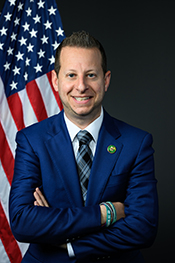
Rep. Jared Moskowitz
Sponsored bills
Maddy summaryThis bill requires national parks to reduce disposable plastic products, primarily targeting plastic water bottles and food containers sold to visitors. Park directors must eliminate these sales where feasible after considering factors like operational costs, waste reduction, infrastructure for refill stations, and impacts on park vendors. Each park must also implement visitor education about water availability and report biennially on progress, including visitor satisfaction and safety metrics. The law directly affects all national park units, concessionaire businesses, and park visitors. It mandates a phased, practical approach without banning all plastics immediately.
Maddy summaryThe DISCLOSE Act of 2023 would increase transparency in political spending by requiring organizations making campaign-related disbursements over $10,000 to disclose the names and addresses of their major donors, including the top five funders for political communications. It would close loopholes allowing foreign nationals to secretly fund election activities through corporations or other entities by expanding the definition of prohibited foreign contributions. The bill would mandate "stand by every ad" disclosure requirements for political communications across all media, including audio, video, and internet ads, requiring clear identification of funders. It would also require reporting of disbursements related to Federal judicial nominations, which currently aren't subject to disclosure requirements. These provisions would apply to corporations, labor organizations, and certain nonprofits that engage in political activity.
Maddy summaryThe IDEA Full Funding Act (HR 4519) mandates specific annual increases in federal funding for special education programs under the Individuals with Disabilities Education Act (IDEA). It requires Congress to appropriate increasing amounts each fiscal year - from $5.87 billion for 2024 up to $55.53 billion for 2033 - to reach 40% of the national average per-pupil expenditure for public schools by 2033. This directly affects all public school districts serving students with disabilities, as federal IDEA funding supports their special education services. The bill sets fixed dollar amounts or percentage targets (whichever is greater) for each fiscal year, aiming to gradually close the long-standing gap between promised and actual federal funding. It does not alter eligibility for services but mandates higher, phased funding levels to meet the 40% target.
Maddy summaryHRES 561 is a non-binding House resolution opposing state laws that criminalize access to essential health care. It specifically condemns using criminal penalties against people for pregnancy outcomes (such as miscarriages), seeking abortion or contraception, or receiving gender-affirming care, and disapproves of punishing health care providers or supporters for facilitating such care. The resolution affirms that patients deserve access to reproductive and gender-affirming health services without fear of prosecution or discrimination. It emphasizes that criminalizing these health care decisions violates patient rights and ethical provider obligations, without creating new legal requirements.
Maddy summaryThis bill prohibits defendants in federal criminal cases from using a victim's LGBTQ+ identity (sexual orientation, gender identity, or expression) as a legal excuse for violence or to reduce sentences - a practice known as the "LGBTQ+ panic defense." It specifically bans arguments that a "nonviolent sexual advance or perception" of the victim's identity justified the crime, while allowing evidence of the defendant's past trauma under standard evidence rules. The law directly affects federal criminal trials where defendants attempt to justify violence against LGBTQ+ victims using prejudice-based excuses. It also requires the Attorney General to report annually on federal prosecutions involving bias-motivated crimes against LGBTQ+ individuals.
Maddy summaryHR 4422 (Global Respect Act) requires the President to publicly identify foreign officials responsible for violence, torture, or arbitrary detention against LGBTQI individuals and block their entry to the U.S., including revoking visas for them and their immediate families. It mandates annual reporting to Congress on the list of sanctioned individuals, the reasons for additions/removals, and efforts to coordinate with other countries on similar sanctions. The bill also updates U.S. human rights reporting requirements to explicitly include data on violence and discrimination against LGBTQI people worldwide. These measures aim to increase accountability for human rights violations against LGBTQI individuals without advocating for specific policy outcomes.
Maddy summaryHR 4340, the Therapeutic Fraud Prevention Act of 2023, prohibits paid providers from offering conversion therapy - defined as any commercial service attempting to change a person's sexual orientation or gender identity - and bans advertising that claims such therapy is effective or harmless. It directly affects therapists, counselors, or organizations offering paid conversion therapy services, including those advertising such services. Key provisions make it unlawful to provide, advertise, or facilitate paid conversion therapy, with enforcement led by the Federal Trade Commission (FTC) under consumer protection laws and allowing states to pursue civil actions. The bill explicitly excludes supportive care for gender transition or identity exploration from its definition of prohibited therapy.
Maddy summaryThis bill authorizes the Department of Homeland Security and Department of Justice to detect, identify, monitor, and mitigate drone threats to specific high-risk facilities including government buildings, airports, critical infrastructure, and locations hosting special events. It establishes a 5-year pilot program allowing state and local law enforcement agencies to use drone detection technology under federal oversight, with strict privacy protections requiring 180-day data retention limits and mandatory training for personnel. The bill requires coordination with the Federal Aviation Administration to minimize impacts on air traffic and mandates regular congressional reporting on how these authorities are being used. It sets an expiration date of 7 years after enactment for these new authorities.
This resolution expresses support for (1) equal rights and protections for all people, regardless of actual or perceived sexual orientation, gender identity, or sex characteristics; and (2) the designation of LGBTQI+ Equality Day to commemorate Supreme Court decisions handed down on June 26 in 2003, 2013, and 2015. The resolution also acknowledges the need for further legislation to ensure that people in the United States are free from all forms of discrimination on the basis of actual or perceived sexual orientation, gender identity, or sex characteristics.