

Maddy summaryHR 3332, the Pacific Partnership Act, requires the U.S. President to develop a formal strategy for engagement with Pacific Island nations by 2026 and again by 2030. The strategy must outline U.S. diplomatic, defense, and economic goals; assess regional threats like natural disasters and foreign military activity; and detail resource plans for addressing these challenges. It mandates consultation with Pacific Island governments, regional organizations like the Pacific Islands Forum, and U.S. allies such as Australia and Japan. The bill does not create new programs but establishes a structured framework for U.S. policy coordination in the region, directly affecting U.S. government agencies and indirectly shaping U.S. relations with Pacific Island nations.
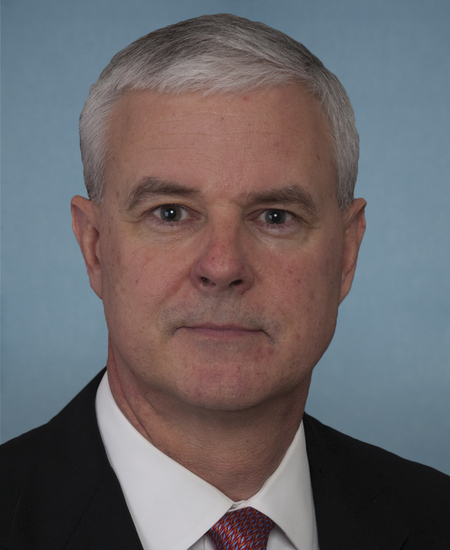
Rep. Steve Womack
Sponsored bills
Maddy summaryHR 3028, the Duty Drawback Clarification Act, clarifies tariff classifications for whisky imports by updating the Harmonized Tariff Schedule. It replaces a general whisky tariff code with specific subheadings based on whisky type (Irish/Scotch, Bourbon, Rye, or "other") and container size (under or over 4 liters), adding 8 new statistical suffixes. This change directly affects whisky importers and U.S. Customs officials by standardizing how these products are classified for duty-free entry (as indicated by "Free" in the tariff). The new classifications take effect 15 days after the bill's enactment.
Maddy summaryThis bill requires the Office of Management and Budget (OMB) to annually report all federal disaster spending to Congress, covering response, recovery, and mitigation efforts across all relevant agencies. The report must detail total spending, break it down by agency and disaster type, and distinguish between loans and grants, including costs from agencies like FEMA, USDA, and the Department of Housing and Urban Development. It aims to improve budget transparency and help Congress identify cost-saving opportunities by providing a single, public source of disaster spending data. The first report is due for fiscal year 2027, with data for the prior calendar year. This is a transparency measure, not a change to how disaster aid is delivered.
Safeguard American Voter Eligibility Act or the SAVE Act This bill requires individuals to provide documentary proof of U.S. citizenship when registering to vote in federal elections. Specifically, the bill prohibits states from accepting and processing an application to register to vote in a federal election unless the applicant presents documentary proof of U.S. citizenship. The bill specifies what documents are considered acceptable proof of U.S. citizenship, such as identification that complies with the REAL ID Act of 2005 that indicates U.S. citizenship. Further, the bill (1) prohibits states from registering an individual to vote in a federal election unless, at the time the individual applies to register to vote, the individual provides documentary proof of U.S. citizenship; and (2) requires states to establish an alternative process under which an applicant may submit other evidence to demonstrate U.S. citizenship. Each state must take affirmative steps on an ongoing basis to ensure that only U.S. citizens are registered to vote, which shall include establishing a program to identify individuals who are not U.S. citizens using information supplied by certain sources. Additionally, states must remove noncitizens from their official lists of eligible voters. The bill allows for a private right of action against an election official who registers an applicant to vote in a federal election who fails to present documentary proof of U.S. citizenship. The bill establishes criminal penalties for certain offenses, including registering an applicant to vote in a federal election who fails to present documentary proof of U.S. citizenship.
Maddy summaryHR 2777, the S-CAP Act of 2025, amends the Internal Revenue Code to increase the maximum number of shareholders allowed for a business to qualify as an S corporation from 100 to 250. This change directly affects small businesses that currently exceed the 100-shareholder limit, allowing them to maintain S-corporation tax status. The key provision modifies Section 1361(b)(1)(A) of the tax code, with the new limit applying to taxable years beginning after December 31, 2025. The bill makes no other changes to S-corporation rules and focuses solely on expanding the shareholder cap.
Maddy summaryThis bill establishes safety standards for poppy seeds by requiring the Health and Human Services Secretary to set maximum allowable levels of morphine, codeine, and other opioid contaminants. If poppy seeds exceed these levels, they would be deemed "adulterated" under food safety law and banned from interstate commerce. The rulemaking process must begin within one year of the bill's enactment and be finalized within two years. This directly affects poppy seed producers, food manufacturers, and distributors who must comply with the new contamination limits.
Maddy summaryHR 1376, the Healthy Poultry Assistance and Indemnification Act of 2025, provides compensation to poultry growers and layer facility owners whose operations were prohibited within USDA-designated "control areas" due to animal health restrictions. It directly affects poultry farmers raising birds bred for meat or eggs (like chickens, turkeys, or ducks), excluding doves and pigeons. The bill requires the Secretary to pay compensation equal to the average income from the farm's five most recent flocks multiplied by the number of prohibited flocks, minus any prior state compensation received, with payments due within 60 days of a claim. This mechanism ensures financial support for farmers impacted by USDA-mandated restrictions without requiring judicial review of payment amounts.
Maddy summaryHR 2222, the "Lowering Egg Prices Act of 2025," modifies federal egg regulations to allow surplus broiler hatching eggs (used to hatch chicks for meat production) to be sold to egg breakers (facilities that process whole eggs into liquid products). The bill directs the FDA and USDA to create new rules within 180 days permitting these eggs to be stored under conditions compatible with hatching while also being sold for processing into liquid egg products. This change aims to increase the supply of eggs available for processing by making it easier to redirect surplus hatching eggs to egg breakers. The bill directly affects broiler hatcheries, egg breakers, and the broader egg processing industry by altering how certain surplus eggs can be handled and sold.
Maddy summaryThe FOCA Act of 2025 prohibits federal agencies from requiring or banning contractors from using union agreements in construction project bids or contracts. It directly affects federal agencies, contractors, and subcontractors working on federally funded or assisted construction projects (like buildings or infrastructure). The law requires bid documents to not favor or penalize contractors based on whether they have union agreements, aiming to promote open competition and prevent discrimination. This changes how agencies structure bids but does not affect union agreements themselves. The bill applies to all new contracts and subcontracts after enactment, with limited exemptions only for public health/safety emergencies or national security.
Maddy summaryThis resolution urges the U.S. Secretary of State to designate Nigeria as a Country of Particular Concern (CPC) under the International Religious Freedom Act of 1998, citing ongoing violence against religious minorities. It specifically calls for Nigeria to protect religious minorities, prosecute perpetrators of attacks, and address displacement of millions caused by religiously motivated violence. The resolution also recommends increased U.S. diplomatic engagement with Nigeria and targeted sanctions against those responsible for religious freedom violations. This follows the State Department's omission of Nigeria from its CPC list in 2021-2023 and its 2024 failure to release an annual report.