

Maddy summaryAB 346 establishes a legal framework for "medical aid in dying" in Nevada, allowing terminally ill adults to self-administer lethal medication under strict conditions. It directly affects patients diagnosed with a terminal condition by two physicians who are 18+, mentally capable, and making a voluntary, informed decision without coercion. Key provisions require two verbal requests, one written request with a witness, physician verification of diagnosis and mental capacity, counseling about alternatives, and a referral to a consulting practitioner for confirmation. The bill also mandates specific documentation, prohibits prescribing based solely on age/disability, and requires death certificates to note the terminal condition while marking a box indicating self-administration of the medication.
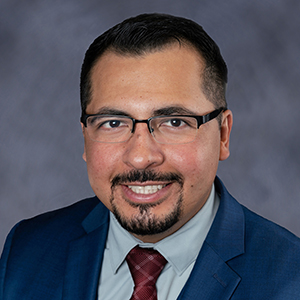
Sponsored bills
Maddy summaryThis resolution (SR 6) ceremonially inducts former Nevada State Senator Joyce Woodhouse into the Senate Hall of Fame. It honors her 40-year career in education (including 12 years in the Nevada Senate) and her service to Nevada, recognizing her work on education funding, healthcare, and job opportunities. The resolution has no policy impact - it is purely a commemorative gesture with no legislative or financial provisions. It was formally adopted by the Nevada Senate on May 7, 2025.
Maddy summaryThis bill (SR 5) is a commemorative resolution inducting Pete Goicoechea into Nevada's Senate Hall of Fame. It honors his 22 years of public service, including 16 years on the Eureka County Board of Commissioners, 10 years in the Nevada Assembly, and 12 years in the Nevada Senate. The resolution recognizes his work supporting rural communities, agriculture, education, and natural resource management. As a ceremonial resolution, it does not create new laws or affect any policies. The resolution was adopted by the Nevada Senate on May 7, 2025.
Maddy summarySB 96 designates January 27 of each year as "International Holocaust Remembrance Day" in Nevada, directly affecting all Nevada residents through state recognition. The bill requires the Governor to issue an annual proclamation encouraging observance, specifically directing state entities, schools, and media to promote public awareness about the Holocaust and other historical genocides. Key provisions include formally adding this day to Nevada’s calendar of recognized observances and mandating the Governor’s proclamation to emphasize education and remembrance. The law builds on Nevada’s prior efforts, such as Assembly Bill 231 (2021), to improve genocide education in schools. This is a non-binding observance bill focused on commemoration and education, not regulatory change.
Maddy summarySB 242 prohibits certain investment companies (like firms that pool investor funds) from signing a contract to buy a residential property listed for sale until the property has been on the market for at least 30 days. This directly affects sellers of residential properties and these specific investment entities, giving sellers the right to cancel any contract that violates the 30-day rule before the deal is fully completed. The law applies to contracts entered into on or after October 1, 2025, and modifies existing property sale regulations without impacting state or local government finances.
Maddy summarySB 158 increases the monetary threshold for work exempt from Nevada's contractor licensing requirements from $1,000 to $5,000, excluding the value of materials from this calculation. It directly affects homeowners performing minor repairs or maintenance (under $5,000 excluding materials) and small contractors who previously needed licenses for such work. Key provisions include raising the exemption limit and clarifying that material costs are not counted toward the threshold. This change reduces regulatory burden for smaller projects while maintaining exemptions for government work, licensed contractors, and other specified cases. The bill has no fiscal impact on state or local governments.
Maddy summarySB 401 extends the maximum termination period for certain city and county redevelopment projects from 30 to 50 years. It specifically applies to cities with 150,000 or more residents located in counties with 100,000-700,000 residents (currently only Reno). The bill amends Nevada law to replace the existing 30-year deadline with a 50-year limit for these projects, allowing more time for redevelopment planning and implementation. This change directly affects redevelopment projects in qualifying jurisdictions without altering existing rules for other areas or mine remediation cases.
Maddy summarySB 243 creates two classes of authorized third parties to handle motor vehicle services: Class I (requiring a DMV license with background checks) and Class II (for existing document preparation services with a local business license). Class I third parties can process registrations, titles, permits, and notarize documents, while Class II handles applications and basic submissions. Both must charge set convenience fees, remit all collected fees daily to the state, and use consistent vehicle terminology on emissions testing forms. The bill also updates towing rules for vehicles in residential complexes, requiring specific procedures when towing at a property owner's request.
Maddy summaryThis resolution (SJR 11) expresses the Nevada Legislature's symbolic support for Israel and recognizes the state's partnership with Israel, citing economic ties (including $1.7 trillion in Nevada exports to Israel over 20 years) and cultural contributions. It has no legal effect but formally acknowledges Nevada's relationship with Israel through resolutions and will be sent to Israeli diplomatic officials and Nevada leaders. The Nevada Legislature passed it as a ceremonial gesture during the 83rd Session, emphasizing solidarity without creating new laws or policies.
Maddy summaryACR 3 is a ceremonial resolution passed by the Nevada Legislature to honor the National Conference of State Legislatures (NCSL) on its 50th anniversary. The resolution expresses gratitude for NCSL's role in supporting state legislators, fostering bipartisan cooperation, and strengthening state-federal legislative relationships over five decades. It has no policy impact or direct effect on residents, government operations, or funding. The Nevada Assembly and Senate formally adopted the resolution on March 27, 2025, with a copy to be sent to NCSL's leadership. This is a symbolic gesture, not a policy change.