

Maddy summaryThe Restoring Patient Protections and Affordability Act of 2025 extends enhanced premium tax credits through 2028, making health insurance more affordable for lower- and middle-income individuals. It extends the 2026 open enrollment period through May 1, 2026, and restores funding for navigator programs that help people enroll in health insurance plans. The bill requires health insurance issuers to notify enrollees about changes to premium assistance and establishes $1,000 daily penalties for failing to comply with these notification requirements. Additionally, it limits surprise premium increases for people with household incomes below 400% of the poverty line and prevents premium spikes for those with ACA or employer coverage. These changes directly affect millions of people enrolled in health insurance plans through the Affordable Care Act marketplaces.
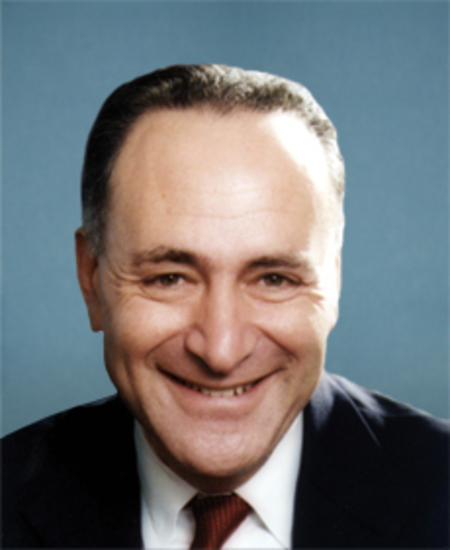
Sen. Charles E. Schumer
Sponsored bills
Maddy summaryThis bill repeals sections 10101 through 10108 of the 2025 Farm Bill (Public Law 119-21) and restores the previous law that existed before those sections were enacted. It directly affects food security programs for American families and farmers by reverting to the prior provisions of the Farm Bill. The key mechanism is a simple repeal and restoration of pre-existing law, without creating new programs or altering current funding structures.
Maddy summaryThe Background Check Expansion Act requires most private firearm transfers between unlicensed individuals to go through a licensed dealer, who must conduct a background check as if the dealer were selling the firearm. Exceptions include transfers between close family members (like parents and children), law enforcement, temporary safety-related transfers (e.g., preventing domestic violence), and transfers for hunting or target shooting with specific safeguards. Licensed dealers must provide a notice about the background check requirement and have the buyer sign a certification form. The bill does not create a national gun registry and preserves states' authority to enact stricter firearm laws. It takes effect 180 days after enactment.
Maddy summarySRES 501 is a ceremonial Senate resolution recognizing November 2025 as National Native American Heritage Month. It encourages the American public to observe the month through programs and activities that celebrate Native American cultural contributions, heritage, and history. The resolution does not create new legal obligations or funding, serving solely as a symbolic acknowledgment of Native American communities' enduring impact on U.S. society.
Maddy summaryThis bill, S 3174 (VA CBA Act of 2025), preserves existing labor agreements between the Department of Veterans Affairs (VA) and employee unions. It ensures all collective bargaining agreements in effect on March 26, 2025, remain fully enforceable through their original terms. The bill also cancels two executive orders (14251 and 14343) that had excluded VA employees from federal labor-management programs, and prohibits using federal funds to implement those orders for VA. This directly affects VA employees and their unions by maintaining their current bargaining rights and removing prior restrictions on labor relations.
Maddy summaryThis non-binding Senate resolution condemns President Trump's November 1, 2025, social media claim that criticism of him (specifically referencing comedian Seth Meyers' commentary) is "illegal." It reaffirms that the First Amendment protects criticism of the president and urges Trump administration officials to avoid using regulatory or enforcement powers (like FCC actions) to punish critics. The resolution specifically references Trump's prior attacks on late-night comedians and FCC Chairman Brendan Carr's threats against broadcasters.
Maddy summaryThis bill requires U.S. companies exporting advanced integrated circuits (high-performance chips used in AI/data centers) to "countries of concern" (including China, Hong Kong, and Macau) to first offer them to U.S. customers for 15 days. Companies must certify they have no backlog of U.S. orders for similar chips and aren’t providing better terms to foreign buyers. It also creates a "trusted U.S. person" program, allowing certain companies to export without licenses if they meet security, U.S. manufacturing sourcing, and ownership requirements. The law directly affects chip exporters, U.S. tech companies purchasing these chips, and foreign entities seeking access to advanced semiconductors.
Maddy summaryThis bill (S 3141, the SAFE Act) prohibits federal Executive agencies from initiating or carrying out layoffs or staff reductions during a government funding gap (shutdown). It directly affects federal employees and agencies by banning actions like reduction-in-force (RIF) proposals, notices, or implementations when appropriations lapse. The law requires any such prohibited action taken after September 30, 2025, to be nullified, with no effect. It explicitly excludes voluntary separation programs under existing law and applies retroactively from the specified date.
Maddy summarySRES 481 is a non-binding Senate resolution urging the Trump administration to use the USDA’s existing $4.5 billion contingency funds and interchange authority to fund the Supplemental Nutrition Assistance Program (SNAP) for November 2025. The resolution states that SNAP is an entitlement program requiring government funding, and the USDA legally has the authority to draw from these reserves to avoid benefit disruptions. This would directly support the 42 million Americans who rely on SNAP, including 16 million children, 8 million seniors, 4 million people with disabilities, and 1.2 million veterans. The resolution does not change the law but calls for immediate action to maintain food assistance during a potential funding gap.
This joint resolution terminates the national emergency declared by President Donald J. Trump on April 2, 2025, which imposed a 10% tariff on most imports to the United States and additional duties on specified trading partners.