

Maddy summaryThis bill updates administrative procedures for the Public Safety Officers' Benefits Program to speed up claim processing and expand disability coverage. It requires the Bureau of Justice Assistance to notify claimants about missing information within 90 days and issue interim payments if claims aren't resolved within 270 days, while also mandating annual audits of backlogged claims. The legislation adds benefits for permanent partial disabilities that prevent officers from working in their previous capacity and creates a faster approval process for claims supported by World Trade Center health certifications.
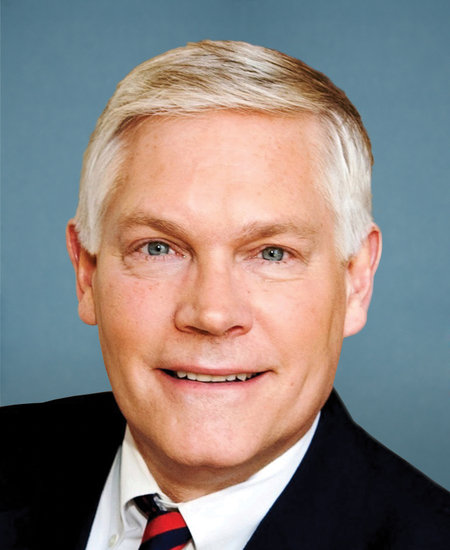
Rep. Pete Sessions
Sponsored bills
Maddy summaryThis bill requires the Federal Reserve, Office of the Comptroller of the Currency, and FDIC to provide detailed annual reports on their interactions with international financial regulatory forums. The reports must include information about the forums they participate in, their funding sources, how their work aligns with U.S. interests, and the positions taken by U.S. representatives. The bill specifically targets five major international financial regulatory bodies including the Basel Committee on Banking Supervision and Financial Stability Board. These reporting requirements will be added to the agencies' existing annual reports to Congress. The legislation aims to increase transparency about U.S. financial regulatory engagement with international bodies.
Maddy summaryHR 6552, the Bank-Fintech Partnership Enhancement Act, mandates a study by the Federal Reserve, Comptroller of the Currency, and FDIC into how partnerships between banks and financial technology companies support new banking formations and community bank health. The study must examine specific benefits like reduced time-to-market for products, lower compliance costs, and improved technological capabilities, then identify potential legal or regulatory changes to foster such partnerships. The regulators must submit a report to Congress within six months of the bill's enactment. This is a procedural bill focused on research, not direct policy changes affecting businesses or consumers.
Maddy summaryThe TIER Act of 2025 adjusts financial regulatory thresholds to account for economic growth. It raises key asset thresholds for large banks and financial institutions - from $250 billion to $370 billion in most cases (e.g., in the Federal Reserve Act and Financial Stability Act). The bill also establishes a new mechanism requiring periodic, automatic adjustments to these thresholds every five years based on U.S. GDP growth, starting in 2031. These changes directly affect large bank holding companies and financial firms subject to federal oversight under current regulations. The adjustments aim to keep regulatory standards aligned with the evolving size of the economy.
Maddy summaryHR 6554, the Community Bank Representation Act, creates a new "Community Bank Member" position on the Federal Reserve Board of Governors. This member must have primary experience in community banking and is tasked with developing policy recommendations and overseeing regulation for banks with less than $17 billion in assets. The bill also requires the Federal Reserve to annually adjust this $17 billion threshold using changes in nominal U.S. GDP. The new member must report semi-annually to relevant congressional committees on the Federal Reserve's regulatory efforts for community banks.
Maddy summaryHR 4130, the Small Business Relief Act, exempts certain small businesses from mandatory securities registration requirements under the Securities Exchange Act of 1934. Specifically, it amends Section 12(g)(1) to exclude "qualified institutional buyers or institutional accredited investors" from the registration threshold, meaning these businesses won't need to register with the SEC if they meet the criteria. The bill also ensures Section 36 of the Act doesn't apply to these changes, reinforcing the exemption. This directly affects small businesses that qualify as institutional accredited investors, reducing their regulatory burden under federal securities law.
Maddy summaryThis bill permanently exempts fixed-income securities (like bonds, notes, and certificates of deposit) from a specific SEC disclosure rule (Rule 15c2-11) that was being applied to debt markets without proper regulatory process. It directly affects businesses raising capital through fixed-income markets, which the bill states are critical for thousands of companies. The exemption removes requirements originally designed for equity markets but mistakenly applied to debt markets. This change makes permanent an existing SEC exemption granted in 2023 and 2024. The bill aims to maintain clear regulatory separation between equity and fixed-income markets.
Respect State Housing Laws Act This bill eliminates a provision that requires a 30-day notice period before a landlord may begin eviction proceedings against a tenant in federally assisted or federally backed housing.
Maddy summaryHRES 1073 is a non-binding resolution designating February 21-28, 2026, as "National FFA Week" to recognize the National Future Farmers of America (FFA) Organization’s role in developing agricultural education leaders and to celebrate the 50th anniversary of Alaska’s State FFA Association. It does not create new laws or affect any specific groups or policies; instead, it formally expresses the House’s support for this commemorative week. The resolution highlights FFA’s mission to prepare students for leadership and careers in agriculture, food, and natural resources. As a symbolic gesture, it has no direct legislative or financial impact on constituents.
Maddy summaryThis bill directs U.S. agencies to support Iranian people's access to uncensored information and hold Iranian officials accountable for human rights abuses. It requires the State Department and FCC to report on technologies (like satellite networks and mesh systems) that could bypass internet restrictions in Iran, and authorizes $2 million annually to develop such tools. The bill also establishes a new "Iran Kleptocracy Initiative" at FinCEN to track corruption, freeze assets of Iranian regime officials and state-owned businesses, and coordinate with international partners. These measures apply to U.S. policy toward Iran but do not alter Iran's domestic laws; they focus on U.S. sanctions, technology development, and anti-corruption efforts targeting the Iranian regime.