

Maddy summaryThis bill would withhold federal funding from states and local governments that permit pre-trial release without requiring money, such as release on personal recognizance or unsecured bonds. Within 30 days of enactment, the Attorney General must identify these jurisdictions and notify federal agencies, which would then terminate funding for covered grant programs within 90 days. Covered programs include crime control grants (like the Byrne Justice Assistance Grant), victim services, legal aid, and education support for incarcerated students. Funding would be restored within 180 days if a jurisdiction stops allowing such release.
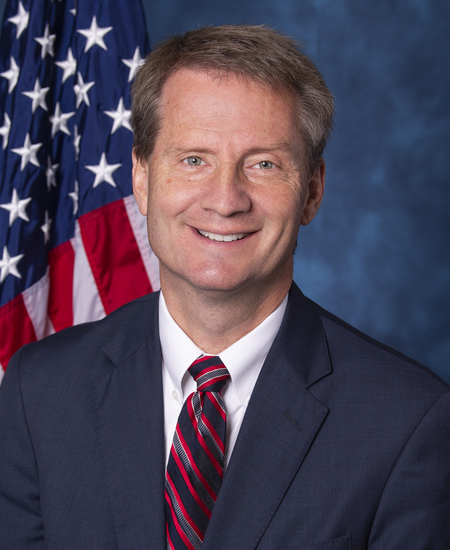
Rep. Tim Burchett
Sponsored bills
Maddy summaryThis bill redirects federal funding toward mandatory treatment facilities for unhoused individuals with serious mental illness or addiction, while tying grant money to local enforcement of public drug use bans, camping restrictions, and sex offender registration. It prohibits federal support for "harm reduction" programs and safe consumption sites, requires states to prioritize treatment over "housing first" approaches, and mandates data sharing between health programs and law enforcement. The bill defines "unhoused individuals" as those posing public risks or unable to care for themselves for 3+ months. It applies to federal grant programs for homelessness services, mental health treatment, and housing assistance.
Maddy summaryThis bill creates federal crimes targeting vandalism and assaults on public transit systems. It makes damaging vehicles or facilities with graffiti punishable by up to 5 years in prison (10 years for repeat offenses or $1,000+ damage), and assaults on workers or passengers punishable by 5-20 years (15-20 years with weapons, injury, or prior convictions). Courts must order full restitution for property damage. The law applies only to transit systems using federal funds, affecting interstate commerce, or involved in commerce.
Maddy summaryHR 6019 repeals a requirement that Senate offices must be notified when legal requests seek Senate data. Specifically, it removes Section 213 of the 2026 appropriations act, which mandated that Senate offices be informed about legal processes requesting disclosure of Senate data. This change directly affects Senate offices by eliminating a procedural notification step for legal requests involving their data. The bill makes no other policy changes, solely removing this specific administrative requirement.
Maddy summaryHR 5107, the Common-Sense Law Enforcement and Accountability Now in DC Act (CLEAN DC Act), repeals D.C. Law 24-345 (the 2022 Comprehensive Policing and Justice Reform Amendment Act). This bill directly affects Washington, D.C.'s policing and justice systems by reversing all changes made under that 2022 law. The key mechanism is a straightforward repeal, restoring all prior District laws as if the 2022 reform had never been enacted. The bill does not introduce new provisions but undoes existing reforms to the District’s law enforcement framework.
Maddy summaryHRES 581 is a procedural resolution that establishes rules for the House to consider H.R. 185, the Epstein Files Transparency Act. It waives all points of order against the bill, adopts a specific amendment (the full text of the Epstein Files Transparency Act), and limits debate to one hour equally divided between the Judiciary Committee's chair and ranking minority member. The resolution also requires the Attorney General to release unclassified DOJ records related to Jeffrey Epstein within 30 days, with limited exceptions for privacy or national security.
Maddy summaryThe Social Security Guarantee Act of 2025 would require the Treasury Secretary to issue a legally binding "benefit guarantee certificate" to every Social Security beneficiary. These certificates would guarantee the exact monthly benefit amount an individual is entitled to under current law and ensure annual cost-of-living adjustments (COLAs) are accurately calculated based on the individual's personal cost-of-living increase. The certificates would represent a federal obligation to pay these guaranteed benefits, with adjustments automatically applied as required by existing Social Security rules. This bill directly affects all current and future Social Security beneficiaries by providing a concrete, enforceable guarantee of their benefit amounts and COLAs.
Maddy summaryThe National Cemetery Access Act (HR 5942) requires national cemeteries managed by the Department of Defense, the Department of Veterans Affairs, or the National Park Service to be open to the public on all federal holidays specified in 5 U.S.C. § 6103(a), such as New Year's Day and Independence Day. This directly affects veterans' families and the public who visit these sites on those holidays, ensuring consistent access without closures. The bill mandates standard opening hours on designated federal holidays but does not change the list of holidays or create new benefits.
Maddy summaryThis bill requires all new passenger vehicles manufactured for sale in the U.S. to include AM radio as standard equipment (not an optional add-on) by 2027-2028, depending on manufacturer size. It mandates that AM radio receivers must be easily accessible to drivers and allows compliance through digital AM broadcast technology. During a transition period, manufacturers must clearly label vehicles without AM radio but cannot charge extra for this feature. The bill also mandates a GAO study on AM radio's role in emergency alerts and includes a 10-year sunset provision for the rule. It preempts state laws regarding AM radio access in vehicles.
Maddy summaryHR 5968, the Promoting Classical Learning Act of 2025, requires military service academies to accept scores from the Classic Learning Test (CLT) alongside the SAT or ACT for applicant admissions. It also mandates that Department of Defense Education Activity (DODEA) schools administer the CLT to all 11th graders. Additionally, the bill requires tribally controlled schools and Bureau of Indian Education (BIE)-operated schools to give the CLT to 11th graders. The bill directly affects applicants to military service academies and 11th-grade students in these specific federal school systems.