

Maddy summaryThis bill directs the Secretary of Defense to study whether the military justice system needs a specific law against hazing. The Department must examine how to add a new section to the Uniform Code of Military Justice and create a clear definition for what counts as hazing. Within 180 days of passing, the Secretary must submit a report with their findings and recommendations to Congress. This action directly impacts the Department of Defense and the legislative committees overseeing military affairs.
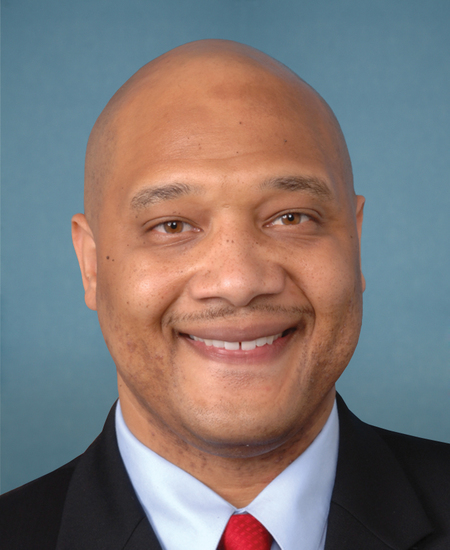
Rep. André Carson
Sponsored bills
Maddy summaryThis joint resolution seeks to officially reject a final rule issued by the Department of Education regarding federal student loan programs. If passed, the measure would prevent the new regulations from taking effect, leaving the previous rules in place. The bill directly impacts borrowers, lenders, and the Department of Education by nullifying the specific changes outlined in the "Reimagining and Improving Student Education" proposal. It is a procedural action that uses the Congressional Review Act to disapprove the agency's policy without altering the underlying law.
Maddy summaryThis resolution honors the victims of the May 18, 2026, mass shooting at the Islamic Center of San Diego and expresses condolences to their families. It specifically recognizes the bravery of security guard Amin Abdullah and community members Nader Awad and Abul Izz, who died while protecting others. The measure also condemns the violence and Islamophobia that led to the attack and affirms support for the affected Muslim community. As a symbolic gesture, the bill does not create new laws or funding but serves to officially acknowledge the tragedy and unite against hate.
Maddy summaryThe SCREEN for Type 1 Diabetes Act of 2026 directs the Centers for Disease Control and Prevention to launch a national public awareness campaign focused on type 1 diabetes detection, screening, and management. This initiative will provide written materials and public service announcements across various media platforms, including social media and television, while consulting with health organizations, schools, and community groups to ensure the content is culturally and linguistically appropriate. The bill authorizes $5 million annually from 2027 to 2031 to fund grants for nonprofit entities and state or local health departments to distribute these resources and increase screening access in communities with high incidence rates. Additionally, the law requires the Secretary of Health and Human Services to submit a report to Congress within one year detailing the campaign's activities and its impact on diabetes detection and management.
Maddy summaryThis bill, titled the No Presidential Self-Serving Lawsuits Act of 2026, prevents the current or former President of the United States from filing civil lawsuits against the federal government. It specifically invalidates an existing settlement agreement between a former President and the Internal Revenue Service and bars the use of federal funds to create compensation for such lawsuits. Additionally, the legislation authorizes the Treasury Secretary to recover any money already spent in violation of these new restrictions. The primary goal is to stop a President from using taxpayer money to settle legal disputes with the government they lead.
Maddy summaryThis bill, the Provider Reimbursement Stability Act of 2026, aims to create more predictable payment adjustments for physicians and other healthcare providers under the Medicare program. It directly affects medical practices and providers who receive reimbursement for services through the physician fee schedule. The legislation increases a threshold for certain budget neutrality calculations from $20 million to $54.3 million in 2027, with automatic increases every five years thereafter. It also requires the government to correct payment estimates when actual service usage differs significantly from projections, mandates regular updates to cost calculations for practice expenses, and limits how much Medicare payment rates can change from year to year to a maximum of 2.5 percent.
Maddy summaryThis bill authorizes the U.S. Mint to produce commemorative $5 gold and $1 silver coins marking the 25th anniversary of the September 11, 2001, terrorist attacks. The coins must feature designs honoring victims and first responders (including the inscription "Never Forget") and will be sold only during 2027-2028. All surcharges ($35 per gold coin, $10 per silver coin) collected from sales will fund the National September 11 Memorial and Museum at the World Trade Center, with no net cost to the federal government. The coins are legal tender but primarily intended for collectors, not circulation.
Maddy summaryThe Smithsonian American Women’s History Museum Act authorizes the creation of a new Smithsonian museum dedicated to women’s history, to be located within the National Mall Reserve in Washington, D.C. If the site is managed by another federal agency, the bill requires that agency to transfer the land after notifying Congress and relevant committees. The museum must ensure exhibits and programs accurately represent diverse women’s experiences by consulting a broad range of experts and community voices. The Smithsonian will submit biennial reports to Congress detailing how the museum meets these representation standards.
Maddy summaryThis bill reauthorizes and strengthens the Civil Rights Cold Case Records Collection program. It establishes that all federal, state, and local government records related to historical civil rights cases must carry a presumption of immediate public disclosure, with full access intended for public understanding. Key provisions include allowing the Review Board to reimburse state/local governments for digitizing or copying records to add to the national collection, removing an exception that previously blocked state records from being included, and extending the Review Board's term from 7 to 11 years. The bill directly affects government agencies holding these records and the public seeking historical transparency about civil rights cases.
Maddy summaryThis bill protects funding and staffing at the Department of Veterans Affairs (VA). It prevents the government from holding back or redirecting VA funds without new law, and requires the VA to notify Congress if funding shortfalls approach. The bill exempts the VA from hiring freezes through 2029, mandates reinstating veterans fired between 2025 and the bill’s enactment, and requires special legal authorization for layoffs (including probationary employees). The VA must also submit annual compliance reports to Congress.