

Maddy summaryNebraska's LB 37, the Railroad Safety Act, requires railroads to adopt specific safety measures for trains carrying hazardous materials. It limits train lengths carrying such materials to 8,500 feet on main rail lines, mandates wayside safety detectors (including hot bearings and dragging equipment monitors) every 20 miles, and requires annual reports to the Public Service Commission detailing detector locations and status. This directly affects railroads operating in Nebraska, particularly those transporting hazardous substances or dangerous goods. The bill replaces older provisions about blocked crossings and aligns Nebraska's rail safety standards with federal requirements.
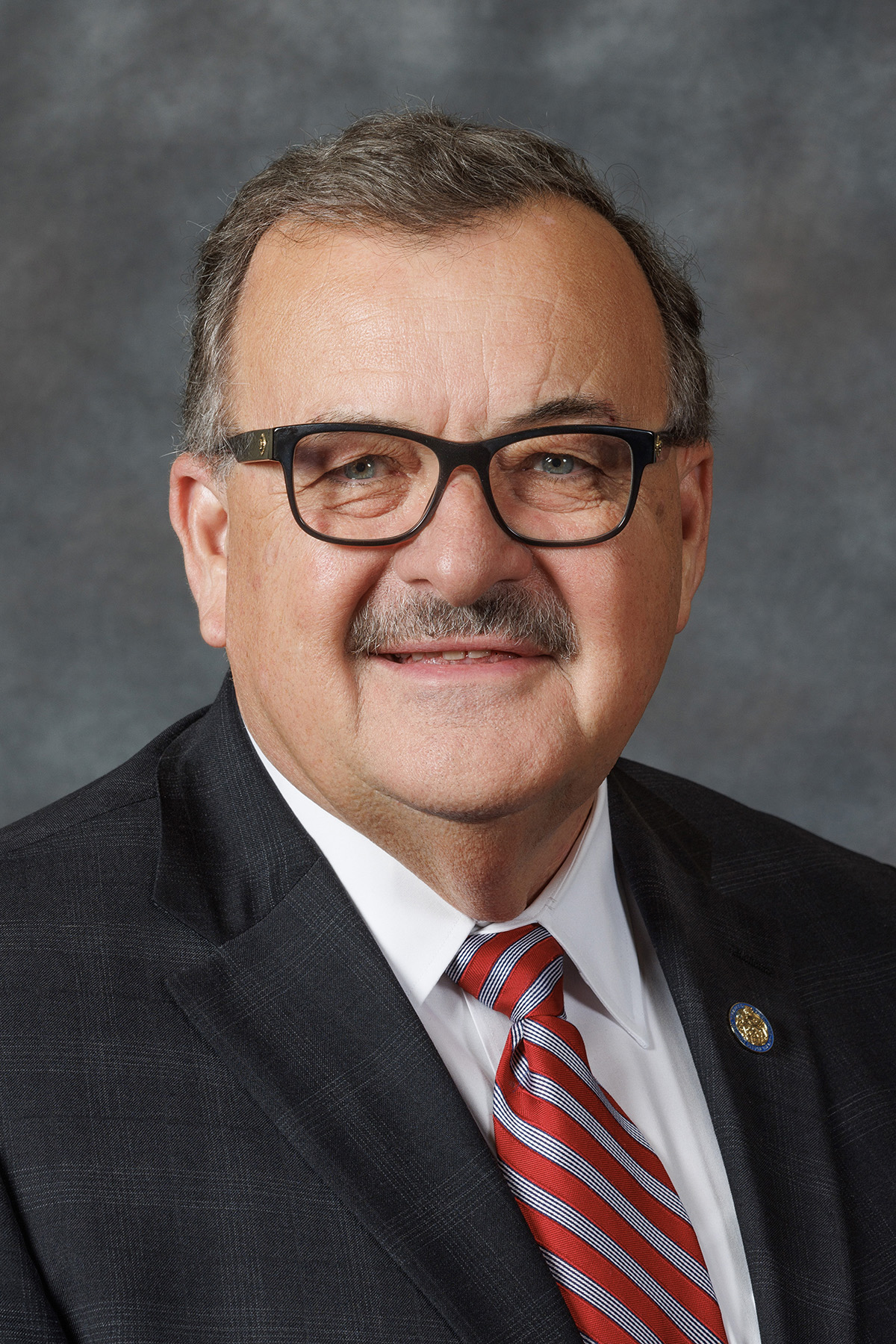
Rep. Mike Jacobson
Sponsored bills
Maddy summaryNebraska's LB 693 amends the state's deceptive trade practices law to prohibit receiving compensation for certain conduct related to veterans benefits assistance. Specifically, it makes it illegal for anyone to charge fees for helping veterans navigate benefits applications or referrals if that conduct misleads or deceives veterans. The bill defines terms and adds this prohibition to the Uniform Deceptive Trade Practices Act, directly affecting third-party assistance providers who charge fees for veterans benefits support. This change aims to prevent deceptive practices by requiring transparency in veterans benefits assistance services.
Maddy summaryThis legislative resolution congratulates Jeff and Shae Caldwell for receiving the 2025 Champion of Small Business award from the Nebraska Business Development Center. It recognizes their efforts in revitalizing North Platte's Main Street, expanding their business portfolio, and creating specialized jobs through their various commercial ventures. The bill directs the Legislature to send a copy of this acknowledgment to the Caldwells as a formal gesture of appreciation for their contributions to the local economy.
Maddy summaryThis legislative resolution congratulates Brittany McDaniel, a communications and theatre teacher at North Platte High School, for receiving the 2026 Nebraska School Activities Association Champions for Coaches Award for Play Production. The bill formally recognizes her dedication to students and community, noting she was nominated by students, administrators, and community members for her leadership in speech and theatre programs. The resolution directs that a copy be sent to McDaniel as official acknowledgment of her achievement.
Maddy summaryThis bill allocates $2 from the General Fund for each of the fiscal years 2026-27 and 2027-28 to the Attorney General's office. The funds are designated to support the implementation of Legislative Bill 525, which was passed during the 2026 legislative session. A portion of the appropriation, limited to $1 per fiscal year, is specifically restricted for permanent and temporary salaries and per diems. The legislation ensures financial resources are available to carry out the provisions of the related bill, though the specific details of LB 525 are not included in this text.
Maddy summaryThis legislative resolution directs Nebraska's Education Committee to conduct an interim study on whether offering bachelor's degrees with fewer than 120 credit hours could benefit the state. The study examines how reducing degree requirements might help address growing job demands for college graduates and workforce shortages, particularly in regions outside the eastern half of Nebraska where most current degree-granting institutions are located. The committee will analyze which geographic areas, industries, student populations, and postsecondary institutions would best benefit from alternative degree pathways, potentially including community colleges. The committee will submit its findings and recommendations to the Legislative Council or Legislature after completing the study.
Maddy summaryThis legislative resolution directs the Banking, Commerce and Insurance Committee to conduct an interim study on auctioneer licensing and continuing education requirements. The study will examine current rules, review education programs, compare other states' approaches, and consider how online auctions affect competency standards. It will also look at consumer protection issues and determine if changes to laws or regulations are needed to improve education quality while maintaining oversight. The committee will consult with auctioneers, firms, educators, regulators, and consumers before submitting findings and recommendations to the Legislature. This bill does not change any laws directly but initiates research to inform potential future policy adjustments.
Maddy summaryThis legislative resolution (LR 310) proposes an interim study to examine Nebraska's Tourism Commission's current structure and whether its duties should be combined with the Department of Economic Development. The study, to be conducted by the Banking, Commerce and Insurance Committee, will review administrative costs, evaluate if consolidation would create a more unified approach to tourism promotion and business development, and compare Nebraska's model to other states. It directly affects how Nebraska promotes tourism - a critical industry for the state's economy - and assesses whether merging the commission into a larger department would improve efficiency and support small businesses and rural attractions. The resolution does not change laws but seeks recommendations for potential future legislative action to better support commerce.
Maddy summaryLB 836 amends Nebraska's banking laws to adjust how the state charges for examinations of financial institutions and calculates annual assessments. It affects banks, credit unions, trust companies, savings institutions, and digital asset depositories operating in Nebraska, requiring them to pay fees based on factors like asset size, loan volume, or transaction activity. The bill harmonizes existing fee structures by revising sections 8-601, 8-603, and 8-606 to standardize assessment calculations and clarify charges for electronic data processing center examinations. These changes aim to align fee collection with oversight costs while maintaining existing assessment frameworks.
Maddy summaryNebraska Legislative Bill 719 updates the definition of "Project" under the Nebraska Rural Projects Act. It clarifies that a "Project" includes expenses for developing new industrial rail business parks (covering site work, rail spurs, utility infrastructure, and tenant support) or projects within 30 miles of the state's largest artificial reservoir for water storage. This change directly affects rural business park developers and projects near major reservoirs seeking state funding. The bill replaces the previous definition with this detailed description without altering eligibility criteria or creating new programs.