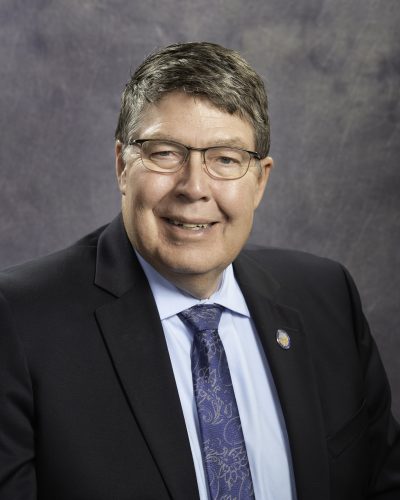
SB 553 introduces new policies concerning residential development, airline travel, and legislative committees. It allows local governments to establish rules for residential developers to share costs for extending or enhancing capital facilities or intersection improvements. The bill also prohibits expiration dates on airline travel credits, assigns ownership to the possessor, limits associated fees, and allows for cash redemption of small remaining balances. Additionally, it establishes a $1 fee on airline tickets for travel to or from Montana, with the collected revenue designated to combat human trafficking.
HB 483 aims to reduce property taxes by revising school funding laws, while preserving the existing 95 school equalization mills. The bill fixes state and county school equalization mills and vocational-technical education mills, and exempts school levies from general property tax increase limits. It also increases guaranteed tax base multipliers for fiscal year 2026 and raises state reimbursement rates for school transportation, which helps lower local property tax burdens. Additionally, the bill requires reports from the Office of Public Instruction and Department of Revenue on the impacts of property reappraisal on school funding and property taxes.
SB 471 revises vehicular traffic laws to enhance pedestrian safety at crossings by creating the offense of "endangerment of pedestrians." It establishes a tiered system of fines for drivers who fail to yield the right-of-way to pedestrians, with higher penalties for violations occurring at crosswalks equipped with activated pedestrian-actuated devices. Drivers are also made liable for the cost of repairing or replacing any pedestrian-actuated devices they damage. Additionally, the bill clarifies driver responsibilities at flashing pedestrian-actuated devices, requiring them to yield and remain stopped until the pedestrian has crossed, or proceed with caution if unable to stop safely.
SB 264 amends Montana law concerning motor vehicle exhaust noise. This bill eliminates a specific legal defense for motor vehicle operators cited for exceeding the 95-decibel noise limit. Previously, a driver could not be convicted if they had reasonable grounds to believe their vehicle complied with the noise standard. With this change, that defense is no longer available to those charged with a violation.
SB 428 revises how local authorities and county commissions can set speed limits on roads. It allows local authorities to adjust speed limits in various areas, such as urban districts, outside urban districts, and school zones, typically requiring an engineering and traffic investigation. A key change is that boards of county commissioners can now set certain decreased speed limits on county roads, including in school zones, without first conducting an engineering and traffic investigation. The bill also specifies signage requirements for altered limits and mandates consultation with relevant bodies for school zones.
Senate Joint Resolution 16 is a resolution from the Montana Legislature urging the federal government to establish safety standards for automated vehicles. It specifically calls on the U.S. Congress and the federal Department of Transportation to adopt laws and rules ensuring these vehicles can operate safely in all weather conditions, including snow and ice, and all road conditions, such as mountain passes and open range areas. The resolution highlights Montana's unique challenges, such as a high rate of animal-related car crashes, as a particular concern for automated driving systems.
Senate Joint Resolution 19 (SJ 19) requests an interim study on ways to improve passenger transportation and public transit services throughout Montana. The study aims to benefit various residents, including senior citizens, people with disabilities, students, and tourists, particularly in areas currently underserved by transportation options. It will investigate potential solutions, such as establishing a passenger transportation commission and reviewing laws to accommodate autonomous vehicles. The Legislative Council is requested to assign a committee or staff to conduct this study, with final results and recommendations due to the 70th Legislature by September 15, 2026.
SB 309 eliminates the Scenic-Historic Byways Advisory Council, which was previously responsible for assisting in the design and review of the state's scenic-historic byways program. This council, composed of up to 11 members with expertise in areas like tourism, history, and transportation, also helped develop criteria for designating roads. Under this bill, the Montana Department of Transportation and the commission would no longer have this specific advisory body for these functions. The scenic-historic byways program itself and the commission's authority to designate roads remain in effect.
HB 512 mandates that all new school buses purchased on or after January 1, 2026, must be equipped with lap-shoulder belts for each passenger. School districts using these buses would be required to adopt and enforce a seat belt usage policy and ensure belts are properly maintained. The bill provides exceptions for school districts that cannot afford such buses, following a public vote. Additionally, it limits the liability of the state, counties, and school districts in personal injury cases where passengers fail to use or improperly use the belts, provided an enforceable policy is in place.
Montana's SJ 3 is a joint resolution urging the U.S. Congress to revise federal commercial driver's license (CDL) requirements. It specifically requests that Congress exempt small haulers (e.g., pickup trucks carrying nonhazardous materials) and school bus drivers from needing CDLs, citing burdens on small businesses and rural school districts. The resolution does not change any laws but formally asks Congress to adjust federal rules to reduce these requirements. Montana's delegation and relevant federal committees will receive copies of the resolution.