Issue · Technology

Technology

Every technology bill, vote, and legislator stance in Montana, automatically classified by Maddy, our AI policy reader.

Total bills
19
2025 Regular Session
Top supporter
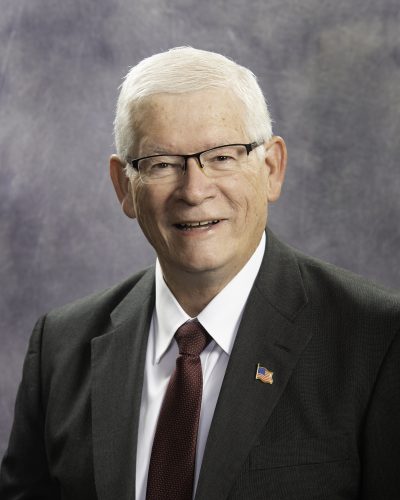
Brad Barker
90% support rate
Top opponent
Kelly Kortum
42% support rate
Ranked legislators
10
5 support · 5 oppose
Key legislators

Who's moving technology in Montana

Legislators moving technology in Montana
Legislator Party Stance Support rate Votes
Brad Barker
Brad Barker House · District 55
R
Strong +
90% 240
Ed Buttrey
Ed Buttrey House · District 21
R
Strong +
87% 245
Katie Zolnikov
Katie Zolnikov House · District 44
R
Strong +
87% 246
Greg Oblander
Greg Oblander House · District 38
R
Strong +
86% 238
Ken Walsh
Ken Walsh House · District 69
R
Strong +
86% 242
Kelly Kortum
Kelly Kortum House · District 64
D
Mixed −
42% 255
James Reavis
James Reavis House · District 47
D
Mixed −
44% 241
Mary Caferro
Mary Caferro House · District 81
D
Mixed −
45% 245
Andrea Olsen
Andrea Olsen Senate · District 48
D
Mixed −
47% 279
Denise Joy
Denise Joy House · District 46
D
Mixed −
47% 267
Showing 1–10 of 19 bills

All technology bills

introduced · Montana · Legislature Feb 6, 2025

LC 676: Revise laws to protect children from obscene content through electronic devices

This Montana bill requires all smartphones and tablets activated in the state on or after January 1, 2026, to include built-in filters that block obscene content for users under 18. The law mandates that devices automatically enable these filters when a user indicates they are a minor during setup, while allowing adults to disable the filters with a password. Manufacturers face civil liability if their devices fail to include compliant filters and minors access obscene content, though parents and guardians are exempt from individual liability. The Attorney General can pursue penalties of up to $5,000 per violation and recover legal costs for enforcing these requirements.
introduced · Montana · Legislature Jan 9, 2025

LC 1339: Limit government use of AI systems

This bill restricts how Montana state and local governments can use artificial intelligence systems by banning certain harmful applications and requiring transparency. It prohibits using AI for cognitive behavioral manipulation, discriminatory classification, deceptive purposes, or most public space surveillance, with exceptions for locating missing persons and existing facial surveillance programs. The law also mandates that any AI-generated public materials must be labeled as AI-produced and requires a trained human official to review and approve any AI decisions affecting individual rights or privileges. These provisions aim to establish clear boundaries and accountability measures for government AI use while allowing continued use in other contexts.
introduced · Montana · Legislature Feb 20, 2025

LC 64: Provide requirements for public library resources containing material of a sexual or graphic sexual nature

This bill requires Montana public libraries to place books and digital resources containing sexual or graphic sexual material only in the young adult or adult sections, regardless of the material's intended reading age. It also allows community members to request that such materials be moved to these restricted sections and mandates that libraries implement age-based content protections for digital resources, permitting children to access age-appropriate digital content only with parental or guardian consent. The legislation amends existing state library laws to enforce these placement standards and gives library boards the duty to maintain collections that match the age appropriateness of each library section.
introduced · Montana · Legislature Feb 23, 2025

LC 3431: Clarify government employee privacy rights

This bill clarifies that public employees in Montana do not have a reasonable expectation of privacy for electronic communications sent or received through agency-provided systems like work email. It states that using government equipment for personal messages voluntarily waives any privacy rights, and these communications remain subject to public records laws and agency policies. Additionally, the bill requires that agency legal counsel does not need to review such communications when responding to public information requests for privacy concerns. The law applies to all Montana public agencies and their employees who use official electronic communication tools.
introduced · Montana · Legislature Jan 8, 2025

LC 1649: Provide for digital advertising tax

This bill introduces a 10% tax on digital advertising services in Montana, targeting companies with at least $25 million in worldwide annual revenue from such services. The tax is calculated based on the portion of a company's digital advertising revenue generated within the state, using an apportionment formula that compares state revenue to total U.S. revenue. Affected businesses must file annual tax returns by April 15, pay estimated taxes quarterly if expected state revenue exceeds $1 million, and keep records for five years for potential audits. The bill also grants the state department authority to create administrative rules for implementation and includes provisions for penalties related to false reporting.
Sub-Topics Business Taxes Revenue
introduced · Montana · Legislature Nov 19, 2024

LC 506: Revise law related to the use of motion-tracking devices while hunting

This bill prohibits hunters in Montana from using electronic motion-tracking devices that detect and relay the movement of game animals during the same day they hunt. The law specifically targets technology designed to track wildlife and transmit location data to hunters, while explicitly exempting radio-tracking collars attached to hunting dogs. Hunters are also barred from sharing the location of animals with others on the same day they use such tracking equipment. Violations can result in fines, jail time, and suspension of hunting licenses. The measure takes effect immediately upon passage.
introduced · Montana · Legislature Feb 24, 2025

LC 1023: Establish the offense of trespass by unmanned aerial vehicle

This bill creates a new criminal offense for operating an unmanned aerial vehicle within 200 feet of another person's property or residence without their permission. The law imposes a $500 fine on individuals who knowingly fly drones in violation of this rule. Several exceptions are included for government agencies, law enforcement, utility workers, and broadband providers conducting authorized inspections or emergency responses. The bill takes effect immediately upon passage and approval.
Sub-Topics Broadband Access
introduced · Montana · Legislature Jan 30, 2025

LC 1463: Ban mRNA vaccinations in Montana for humans

This bill prohibits the administration of gene-based vaccines, including mRNA vaccines, to humans within Montana. It defines gene-based vaccines to include those using mRNA, modified mRNA, self-amplifying mRNA, or DNA technology. Healthcare providers who violate the ban face misdemeanor charges and a $500 fine for each incident, and their professional licenses may be reviewed by the state licensure board. The legislation applies to all humans within the state regardless of age or medical condition.
Sub-Topics Medical Licensing
died · Montana · Legislature May 23, 2025

LC 896: Outlawing central bank digital currency

Bill LC 896 aimed to prohibit the state's central bank from issuing a digital currency and to ban its use within the state. It would have directly affected the central bank, financial institutions, and residents by making central bank digital currency illegal. The key provision would have been a legal ban on creating, distributing, or using such a currency. The bill was drafted in 2024 but died in the legislative process in 2025 without becoming law.
died · Montana · House May 20, 2025

HB 697: Clarify government employee privacy rights

HB 697 clarifies that public employees in Montana do not have an expectation of privacy in electronic communications sent or received through systems provided and managed by their public agency. This means that any communications, including personal ones, made using public agency equipment are subject to public records laws and agency policies. As a result, public agencies would not be required to review these communications for privacy implications when responding to public information requests.
Showing 1 to 10 of 19 bills
1 2 Next