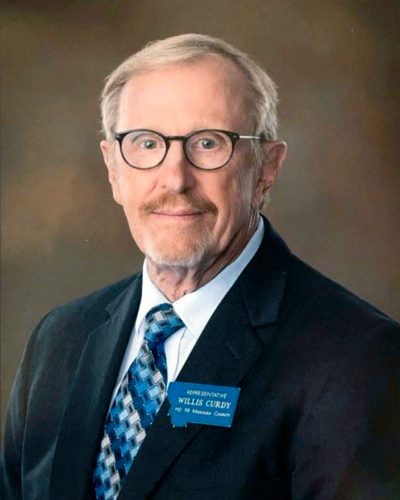
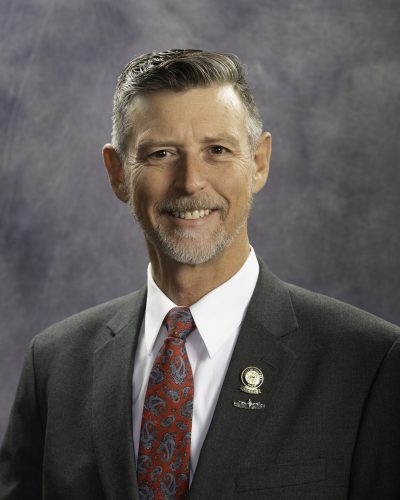
HB 511 creates a $5 million grant program to fund firefighting training facility projects for local fire departments in Montana. The bill provides grants for building, upgrading, or repairing training facilities and purchasing equipment, with limits of $250,000 per project and $500,000 per county. Applicants must provide a 1% cash or service match for grants over $25,000 and follow safety standards, while the Department of Military Affairs administers the program. Funding is authorized for the 2025-2029 biennium and expires June 30, 2031.
SB 394 would have expanded Montana's workers' compensation system to cover posttraumatic stress disorder (PTSD) for eligible first responders. It defines "first responder" to include firefighters, law enforcement officers, detention center/prison staff, and emergency care providers, requiring a diagnosis per the latest DSM-5 manual that links PTSD directly to work duties. The bill amended existing laws to allow PTSD claims under workers' compensation, subject to standard procedural requirements. However, this bill was vetoed by the Governor on June 9, 2025, so it did not become law.
SB 565 creates a permanent Montana Endowment for Early Childhood, funded by quarterly state transfers and fees from renewed childcare facility licenses. It establishes a 7-member board (including state agency staff and community representatives) to manage the endowment and allocate funds from the Montana Early Childhood Account. The bill directs funds toward grants for childcare workforce development, quality improvements (like safety upgrades), affordability programs (including subsidies), and emergency assistance for childcare providers. These funds directly support early childhood programs, providers, and families accessing childcare services across Montana.
HB 749 proposed to revise the procurement process for state contracts related to public assistance and human services programs. It would have required applicable state departments to use a scoring system that gives priority to contractors based on specific criteria. These criteria included a provider's demonstrated experience within the service area, their length of time operating in the state, their ability to leverage existing relationships, and the number of in-state jobs they propose to create or maintain. This bill aimed to influence how contracts for services such as housing and energy assistance are awarded.
HB 779 aimed to revise discrimination laws by adopting the International Holocaust Remembrance Alliance (IHRA) working definition of "antisemitism." It would have required the Department of Labor and Industry to consider this definition when reviewing discrimination complaints. Additionally, the bill proposed that this definition be considered for sentence enhancement in cases where offenses are committed due to a victim's race, religion, or national origin. It also would have explicitly recognized antisemitism, as defined by the IHRA, as a form of discrimination under the state's civil rights laws.
HB 360 proposed establishing the Child Care Workforce Recruitment and Retention Support Payment Program, administered by the Department of Public Health and Human Services. This program would have provided monthly payments to eligible child-care facilities, including licensed day-care centers and registered family or group day-care homes, based on their number of child-care workers. The funds were intended to help these facilities recruit and retain qualified child-care workers. Day-care centers and group homes could use the money for personnel costs like wage supplements and bonuses, while family day-care homes also had options for facility costs, equipment, professional development, and mental health support for children. The bill included an appropriation of $59.9 million annually from the general fund for fiscal years 2026 and 2027.
HB 452 creates a new specific criminal offense for assaulting an employee of a public utility. The bill defines different levels of assault, including causing bodily injury, causing serious bodily injury, or creating reasonable apprehension of serious bodily injury with a weapon. It establishes distinct penalties for these offenses, which include imprisonment terms ranging from 8 to 20 years and fines up to $50,000, depending on the severity of the assault. This legislation aims to provide specific legal consequences for acts of violence against individuals working for public utilities.
HB 552 revises Montana's workers' compensation laws to include coverage for Posttraumatic Stress Disorder (PTSD). This bill directly affects first responders, such as firefighters, law enforcement officers, dispatchers, and employees of county detention centers or prisons. For a claim to be compensable, the PTSD must be diagnosed according to the Diagnostic and Statistical Manual of Mental Disorders and be caused by events arising out of their employment, excluding personnel-related actions. This creates an exception for first responders' PTSD claims within the state's existing policy that generally excludes stress claims from workers' compensation.
HB 422 proposed to amend Montana's covenant laws to allow specific types of agreements aimed at encouraging workforce housing affordability. The bill would have permitted covenants that restrict the sale, lease, or an owner's share of equity appreciation on residential properties. These restrictions would apply to individuals with specific incomes or occupations. The intent was to ensure the long-term affordability and attainability of housing for the workforce by allowing these covenants to remain with the property through future ownership.
HB 319 aimed to prohibit employers from requiring employees to attend training sessions related to "controversial social vision." The bill defined "controversial social vision" as any agenda, concept, or theory not broadly accepted in society or that generates strong opposition from mainstream political, religious, or social groups. Additionally, it sought to amend election law to prevent an elector's employer, an agent of the employer, or a union officer from being designated as an agent for a disabled elector.