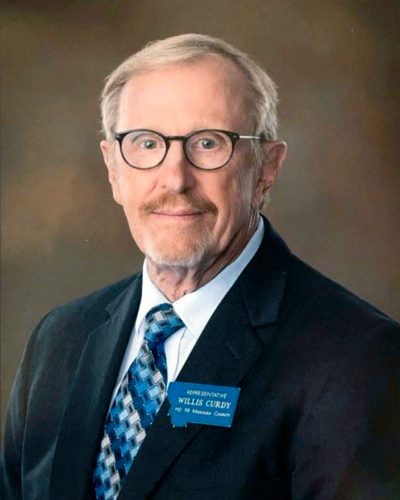
HB 511 creates a $5 million grant program to fund firefighting training facility projects for local fire departments in Montana. The bill provides grants for building, upgrading, or repairing training facilities and purchasing equipment, with limits of $250,000 per project and $500,000 per county. Applicants must provide a 1% cash or service match for grants over $25,000 and follow safety standards, while the Department of Military Affairs administers the program. Funding is authorized for the 2025-2029 biennium and expires June 30, 2031.
SB 394 would have expanded Montana's workers' compensation system to cover posttraumatic stress disorder (PTSD) for eligible first responders. It defines "first responder" to include firefighters, law enforcement officers, detention center/prison staff, and emergency care providers, requiring a diagnosis per the latest DSM-5 manual that links PTSD directly to work duties. The bill amended existing laws to allow PTSD claims under workers' compensation, subject to standard procedural requirements. However, this bill was vetoed by the Governor on June 9, 2025, so it did not become law.
HB 779 aimed to revise discrimination laws by adopting the International Holocaust Remembrance Alliance (IHRA) working definition of "antisemitism." It would have required the Department of Labor and Industry to consider this definition when reviewing discrimination complaints. Additionally, the bill proposed that this definition be considered for sentence enhancement in cases where offenses are committed due to a victim's race, religion, or national origin. It also would have explicitly recognized antisemitism, as defined by the IHRA, as a form of discrimination under the state's civil rights laws.
HB 51 proposes to increase the supplemental employer contribution rate paid by employers within the Montana University System (MUS) to the Teachers' Retirement System (TRS). Currently, MUS employers contribute 4.72% of the total compensation for employees participating in the MUS Retirement Program. This bill would raise that contribution rate to 14.21%. The increased contributions are intended to help amortize the past service liability of the Teachers' Retirement System for university system members by July 1, 2033, with the changes taking effect on July 1, 2025.
HB 697 clarifies that public employees in Montana do not have an expectation of privacy in electronic communications sent or received through systems provided and managed by their public agency. This means that any communications, including personal ones, made using public agency equipment are subject to public records laws and agency policies. As a result, public agencies would not be required to review these communications for privacy implications when responding to public information requests.
HB 373 aimed to revise the allocation of excess state lottery revenue, dedicating it to education funding instead of the state general fund. The Office of Public Instruction would distribute these funds quarterly to school districts based on a per-quality-educator formula. Districts would deposit these funds into their school flexibility funds, which could be used for various expenditures, including teacher salaries, benefits, housing, technology enhancements, and facility improvements.
HB 452 creates a new specific criminal offense for assaulting an employee of a public utility. The bill defines different levels of assault, including causing bodily injury, causing serious bodily injury, or creating reasonable apprehension of serious bodily injury with a weapon. It establishes distinct penalties for these offenses, which include imprisonment terms ranging from 8 to 20 years and fines up to $50,000, depending on the severity of the assault. This legislation aims to provide specific legal consequences for acts of violence against individuals working for public utilities.
HB 422 proposed to amend Montana's covenant laws to allow specific types of agreements aimed at encouraging workforce housing affordability. The bill would have permitted covenants that restrict the sale, lease, or an owner's share of equity appreciation on residential properties. These restrictions would apply to individuals with specific incomes or occupations. The intent was to ensure the long-term affordability and attainability of housing for the workforce by allowing these covenants to remain with the property through future ownership.
HB 319 aimed to prohibit employers from requiring employees to attend training sessions related to "controversial social vision." The bill defined "controversial social vision" as any agenda, concept, or theory not broadly accepted in society or that generates strong opposition from mainstream political, religious, or social groups. Additionally, it sought to amend election law to prevent an elector's employer, an agent of the employer, or a union officer from being designated as an agent for a disabled elector.
HB 621 allows local first responder entities, including police departments, sheriff's offices, fire departments, and emergency medical service providers, to establish peer support programs. These programs must have a written policy that outlines qualifications for peer supporters, defines peer support sessions, and ensures confidentiality for participants. The bill prohibits qualified peer supporters from testifying about the content of peer support sessions, with exceptions if an employee has committed or plans a crime, or indicates intent to harm themselves or others.