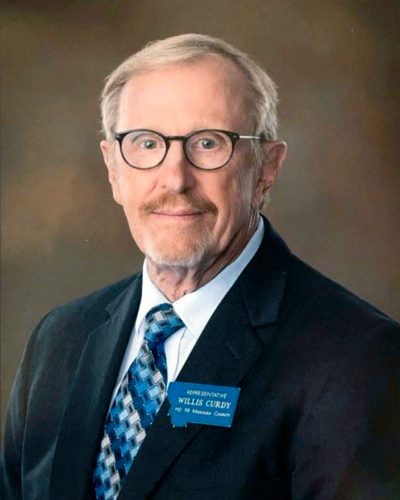
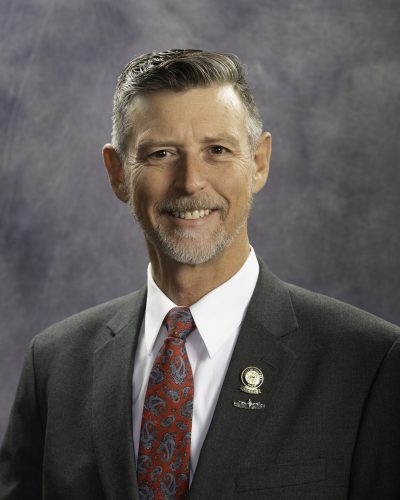
HB 640 would revise the Firefighters' Unified Retirement System (FURS) to allow certain airport authority employees to participate. The bill defines "public safety officer" as an airport authority employee who serves as both a full-paid firefighter and a sworn peace officer. It would permit airport authorities to elect to join FURS for these public safety officers, who are currently covered by the Public Employees' Retirement System. Existing eligible employees would have 90 days to choose whether to remain in PERS or join FURS.
HB 749 proposed to revise the procurement process for state contracts related to public assistance and human services programs. It would have required applicable state departments to use a scoring system that gives priority to contractors based on specific criteria. These criteria included a provider's demonstrated experience within the service area, their length of time operating in the state, their ability to leverage existing relationships, and the number of in-state jobs they propose to create or maintain. This bill aimed to influence how contracts for services such as housing and energy assistance are awarded.
HB 297, known as the "Healthy Families and Workplaces Act," aimed to establish a requirement for paid sick leave for employees. It would have required employers with 10 or more employees to provide at least one hour of paid sick leave for every 40 hours worked, with an annual usage cap of 80 hours. Employees could carry over up to 40 unused hours to the following year. The bill also defined authorized uses for paid sick leave, protected employees from retaliation, and authorized the Department of Labor and Industry to enforce its provisions. Employers with existing paid leave policies that met or exceeded these requirements would have been exempt.
HB 360 proposed establishing the Child Care Workforce Recruitment and Retention Support Payment Program, administered by the Department of Public Health and Human Services. This program would have provided monthly payments to eligible child-care facilities, including licensed day-care centers and registered family or group day-care homes, based on their number of child-care workers. The funds were intended to help these facilities recruit and retain qualified child-care workers. Day-care centers and group homes could use the money for personnel costs like wage supplements and bonuses, while family day-care homes also had options for facility costs, equipment, professional development, and mental health support for children. The bill included an appropriation of $59.9 million annually from the general fund for fiscal years 2026 and 2027.
HB 805 aims to revise existing workers' compensation laws. The bill would make individuals who are unlawfully employed aliens ineligible to receive workers' compensation benefits. Additionally, it mandates that an insurer must close a workers' compensation claim if the claimant leaves the United States or certain territories while their claim is active. These changes directly affect individuals applying for workers' compensation and the insurers responsible for processing claims.
HB 273, the "Montana Medical Debt Patient Protection Act," aimed to limit how health care providers and third-party collectors pursue medical debt from patients in Montana. The bill would have prohibited certain collection actions, including wage garnishment, placing liens on a patient's primary residence, and reporting adverse information to credit agencies. It also mandated a 180-day waiting period after the first bill before "extraordinary collection actions," such as filing lawsuits or selling debt, could begin, along with requiring a 30-day notice to the patient. Additionally, it sought to provide patients with an opportunity to appeal insurance decisions before a bill went to collections.
HB 697 clarifies that public employees in Montana do not have an expectation of privacy in electronic communications sent or received through systems provided and managed by their public agency. This means that any communications, including personal ones, made using public agency equipment are subject to public records laws and agency policies. As a result, public agencies would not be required to review these communications for privacy implications when responding to public information requests.
HB 373 aimed to revise the allocation of excess state lottery revenue, dedicating it to education funding instead of the state general fund. The Office of Public Instruction would distribute these funds quarterly to school districts based on a per-quality-educator formula. Districts would deposit these funds into their school flexibility funds, which could be used for various expenditures, including teacher salaries, benefits, housing, technology enhancements, and facility improvements.
HB 552 revises Montana's workers' compensation laws to include coverage for Posttraumatic Stress Disorder (PTSD). This bill directly affects first responders, such as firefighters, law enforcement officers, dispatchers, and employees of county detention centers or prisons. For a claim to be compensable, the PTSD must be diagnosed according to the Diagnostic and Statistical Manual of Mental Disorders and be caused by events arising out of their employment, excluding personnel-related actions. This creates an exception for first responders' PTSD claims within the state's existing policy that generally excludes stress claims from workers' compensation.
HB 484 proposed to increase the state's minimum hourly wage from $6.15 to $12.06, affecting many hourly workers and their employers. The bill maintained the existing mechanism for annual cost-of-living adjustments to the minimum wage. It also retained a lower minimum wage of $4 per hour for businesses with annual gross sales of $110,000 or less. If enacted, these provisions would have become effective on July 1, 2025.