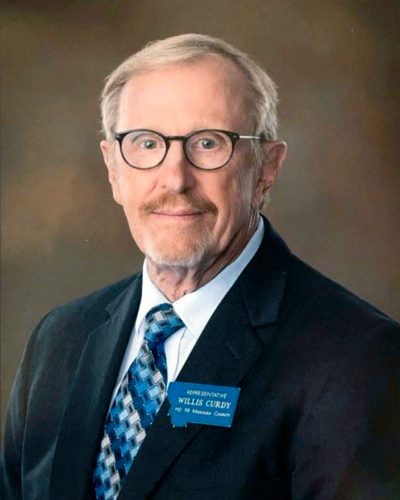
HB 511 creates a $5 million grant program to fund firefighting training facility projects for local fire departments in Montana. The bill provides grants for building, upgrading, or repairing training facilities and purchasing equipment, with limits of $250,000 per project and $500,000 per county. Applicants must provide a 1% cash or service match for grants over $25,000 and follow safety standards, while the Department of Military Affairs administers the program. Funding is authorized for the 2025-2029 biennium and expires June 30, 2031.
This bill establishes a state grant program to help Montana fire departments purchase safety equipment and improve health and safety conditions for firefighters. The program allows eligible fire departments, companies, or districts to apply for up to $10,000 in grants for items such as personal protective equipment, saunas, shower facilities, and cleaning devices for gear. Funding comes from charitable donations and a $10 nonrefundable application fee paid by each applicant, with priority given to departments with smaller budgets, those in rural areas, and those serving diverse regions of the state. The bill also authorizes the state disaster and emergency services division to administer the program and adopt rules to implement it.
SB 394 would have expanded Montana's workers' compensation system to cover posttraumatic stress disorder (PTSD) for eligible first responders. It defines "first responder" to include firefighters, law enforcement officers, detention center/prison staff, and emergency care providers, requiring a diagnosis per the latest DSM-5 manual that links PTSD directly to work duties. The bill amended existing laws to allow PTSD claims under workers' compensation, subject to standard procedural requirements. However, this bill was vetoed by the Governor on June 9, 2025, so it did not become law.
SB 345 would change how medical evidence is evaluated in Montana workers' compensation cases. It removes automatic preference for treating physicians' opinions, requiring courts to weigh medical testimony based on the provider's qualifications, experience with the specific worker, and credibility. The bill also limits discovery about independent medical examiners (IMEs) to their training, exam volume, and payments from insurers, aiming to reduce bias concerns. These changes directly affect workers seeking compensation, insurers requesting medical evaluations, and medical providers involved in these cases. The bill was introduced in 2025 but died in committee before becoming law.
HB 640 would revise the Firefighters' Unified Retirement System (FURS) to allow certain airport authority employees to participate. The bill defines "public safety officer" as an airport authority employee who serves as both a full-paid firefighter and a sworn peace officer. It would permit airport authorities to elect to join FURS for these public safety officers, who are currently covered by the Public Employees' Retirement System. Existing eligible employees would have 90 days to choose whether to remain in PERS or join FURS.
HB 51 proposes to increase the supplemental employer contribution rate paid by employers within the Montana University System (MUS) to the Teachers' Retirement System (TRS). Currently, MUS employers contribute 4.72% of the total compensation for employees participating in the MUS Retirement Program. This bill would raise that contribution rate to 14.21%. The increased contributions are intended to help amortize the past service liability of the Teachers' Retirement System for university system members by July 1, 2033, with the changes taking effect on July 1, 2025.
HB 697 clarifies that public employees in Montana do not have an expectation of privacy in electronic communications sent or received through systems provided and managed by their public agency. This means that any communications, including personal ones, made using public agency equipment are subject to public records laws and agency policies. As a result, public agencies would not be required to review these communications for privacy implications when responding to public information requests.
HB 552 revises Montana's workers' compensation laws to include coverage for Posttraumatic Stress Disorder (PTSD). This bill directly affects first responders, such as firefighters, law enforcement officers, dispatchers, and employees of county detention centers or prisons. For a claim to be compensable, the PTSD must be diagnosed according to the Diagnostic and Statistical Manual of Mental Disorders and be caused by events arising out of their employment, excluding personnel-related actions. This creates an exception for first responders' PTSD claims within the state's existing policy that generally excludes stress claims from workers' compensation.
HB 621 allows local first responder entities, including police departments, sheriff's offices, fire departments, and emergency medical service providers, to establish peer support programs. These programs must have a written policy that outlines qualifications for peer supporters, defines peer support sessions, and ensures confidentiality for participants. The bill prohibits qualified peer supporters from testifying about the content of peer support sessions, with exceptions if an employee has committed or plans a crime, or indicates intent to harm themselves or others.
HB 807 amends state law to prohibit individuals from being required to receive certain vaccines. Specifically, it mandates that vaccines whose use is allowed under an emergency use authorization (EUA) or those still undergoing safety trials cannot be a requirement. This applies to persons, governmental entities, employers, and public accommodations, preventing them from denying services, employment, or access based on non-receipt of such vaccines. The bill integrates this new prohibition into existing law concerning discrimination based on vaccination status.