

Maddy summaryThis bill requires insurance companies to cover damage to siding on homes and buildings under homeowners' and dwelling-owners' insurance policies starting in 2026. The law applies to insurers offering these policies in the state and mandates that they provide coverage for siding damage on real property. If damage affects only part of the siding and matching replacement materials are unavailable, the bill specifies how insurers must handle repairs or payments to ensure a uniform appearance for homeowners' policies or provide equivalent compensation for dwelling-owners' policies.
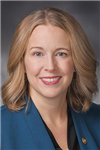
Rep. Jaclyn Zimmermann
Sponsored bills
Maddy summaryHB 874 creates the "Missouri Teachers Classroom Supply Assistance Program," providing state funds to help public school teachers buy classroom supplies for students. Starting in the 2026-27 school year, the state Department of Elementary and Secondary Education will distribute funds to school districts based on the previous year's average daily attendance. Each teacher in a district or charter school will receive a dedicated debit card (displaying the program name and tax ID) by August 15th each year, with funds limited to classroom materials and supplies - not equipment. Teachers must submit receipts for all purchases to their school district, which must retain them for five years to verify compliance.
Maddy summaryHB 872 exempts the retail sale of eligible food from Missouri's state sales tax, effective January 1, 2026. For now (through December 31, 2025), a reduced 1% tax applies, with the revenue directed to school district funds. The exemption covers only food qualifying for SNAP benefits (like groceries) and vending machine sales, excluding restaurants and eateries where prepared food makes up over 80% of sales. Local sales taxes remain unaffected by this change.
Maddy summaryHB 1587 exempts most retail food sales from Missouri's state sales tax at a 1% rate until December 31, 2025, after which the exemption becomes permanent unless renewed. The bill specifies that "food" includes items redeemable with SNAP benefits (like groceries) but excludes restaurants and similar establishments where over 80% of sales are prepared food for immediate consumption. Revenue from the 1% rate during the transition period must fund school districts, and the exemption automatically expires three years after enactment unless the legislature reauthorizes it. If reauthorized, the exemption would then sunset 12 years after reauthorization.
Maddy summaryHB 871 requires Missouri insurance companies and state health programs (like MO HealthNet and Medicaid managed care) to cover medically necessary health care services. Specifically, these insurers cannot deny coverage for a service if two health care professionals determine it is medically necessary to diagnose, treat, prevent, or relieve a health condition. The law applies to all health benefit plans sold or renewed in Missouri after January 1, 2026. It does not specify which services qualify as "medically necessary" but mandates this two-professional review process for coverage decisions. The bill affects all private insurers and state-sponsored health plans offering coverage for health care services in Missouri.
Maddy summaryHB 873 establishes Missouri's "Free School Meals Program," requiring eligible public, charter, and private religious schools participating in the USDA National School Lunch Program to provide free breakfast and lunch to all students. Schools must meet specific poverty rate thresholds (based on USDA eligibility data) to qualify for the program. The state will reimburse schools for the difference between the federal meal reimbursement rate and the actual federal payment received, covering up to one free breakfast and one free lunch per student daily. This program directly affects schools serving students in districts with high poverty rates, ensuring no student pays for meals while aligning with federal nutrition standards.
Maddy summaryHB 112 requires all public schools (as defined by state law) to provide every enrolled student with one free breakfast and one free lunch daily during school days. This applies universally to all students attending classes, regardless of family income, directly affecting every public school student in the state. The key provision mandates daily meal provision without requiring income-based eligibility checks. The bill focuses on making breakfast and lunch free for all students as a standard school service. It does not specify funding mechanisms or implementation details beyond the meal requirement.