

Maddy summaryHB 1374 updates self-defense laws to clarify when physical force or deadly force is legally justified. It specifically states people do not need to retreat before using force to defend themselves or others in their home, workplace, vehicle, or private property they lawfully occupy. The bill also specifies scenarios where deadly force is permitted, such as against unlawful entry into a dwelling, and shifts the burden of proof: defendants claiming self-defense must first raise it, and if claiming protection of a dwelling, the state must prove their belief wasn't reasonable. The bill is currently pending after being postponed in the House on May 15, 2025.
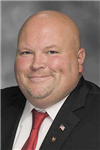
Rep. Bennie Cook
Sponsored bills
Maddy summaryHB 316 modifies Missouri's definition of "emergency vehicle" to explicitly include vehicles operated by state, county, or municipal park rangers. This change ensures park rangers' vehicles qualify for the same traffic exemptions as police, fire, and ambulance services - such as the right to exceed speed limits or ignore traffic signals during emergencies - when responding to urgent calls. The bill directly affects park rangers operating these vehicles and drivers who must yield the right-of-way to them under existing traffic laws. It does not create new policies but updates the legal definition to formally recognize park rangers' emergency response role.
Maddy summaryHB 1437 modifies workers' compensation rules by requiring construction industry employers (those building, demolishing, altering, or repairing structures) to have five or more employees to be subject to the law, aligning them with standard employer requirements. Previously, construction employers may have been subject to different thresholds, but this bill clarifies they must meet the same five-employee standard as other businesses. It directly affects construction companies with five or more staff engaged in building or repair work. The change ensures consistent application of workers' compensation coverage requirements across the construction industry.
Maddy summaryHB 310 designates the last Saturday of April each year as "Emmett Kelly Day" in Missouri. The bill honors Emmett Kelly, a famous circus performer known as "Weary Willie" who was born in Houston, Missouri. It does not create new laws or affect any regulations; it is purely a commemorative designation for the state. The bill encourages Missourians to recognize Kelly's life and legacy.
Maddy summaryHJR 83 proposes a constitutional amendment to dedicate highway user fees (including vehicle license fees, fuel taxes, and 73% of motor vehicle sales tax revenue) to a new "state road fund." This fund would pay state road bonds, maintain highways, reimburse counties for road construction, and cover other highway-specific costs as outlined in the amendment. All revenue must be used exclusively for transportation purposes, with strict allocation rules preventing diversion to other state programs. The amendment requires voter approval to take effect, as it modifies Missouri's Constitution.
Maddy summaryHB 541 modifies Missouri's hospital designation rules for trauma, STEMI (heart attack), and stroke centers. It replaces existing requirements with new provisions allowing hospitals to receive state designation without physical site reviews if nationally certified (e.g., by the American College of Surgeons for trauma centers). The bill mandates the Department of Health to conduct site reviews every three years for these centers, with specific processes for probation, correction plans, and revocation after two consecutive failures to meet standards. This directly affects hospitals seeking or maintaining these specialized designations, ensuring alignment with national guidelines and streamlining the review process.
Maddy summaryHB 1173 renames a specific roadway segment in Texas and Phelps County to "State Route 137" and prohibits any local government from designating that same roadway with a different name. The bill directly affects road users and local government signage for this particular stretch of road, which runs north to its intersection with Highway 63. It contains no substantive policy changes beyond the official naming designation.
Maddy summaryHB 312 prohibits individuals convicted of specific sex crimes against children (such as child sexual exploitation, possession of child pornography, or similar offenses from other jurisdictions) from being within 500 feet of Missouri state parks, playgrounds, public pools, athletic fields for children, children's museums, or Missouri Department of Conservation nature centers. Violating this restriction is a felony, with first offenses classified as class E and repeat offenses as class D. The bill includes an exception allowing parents or guardians to be present at conservation nature centers during children's programs with facility manager permission. It directly affects individuals with these specific convictions, focusing on preventing proximity to locations where children gather for recreation or education.
Maddy summaryHB 1578 requires a written agreement (memorandum of understanding) between a Missouri county sheriff (or city law enforcement chief) and any federal law enforcement agency before that federal agency can conduct law enforcement duties within the county or city. The bill gives local law enforcement officials the authority to negotiate the terms of this agreement, which must be signed by both the local official and the state Department of Public Safety director. This policy change directly affects county sheriffs, city law enforcement chiefs, and federal agencies operating in Missouri, establishing a mandatory procedural step for federal law enforcement activities. The bill aims to clarify cooperation protocols but does not alter existing state or federal law enforcement authority.
Maddy summaryHB 1300 updates Missouri's Health Professional Student Loan Repayment Program to support healthcare workers in underserved areas. The bill creates a dedicated state fund to manage loan repayments for graduates of medical, dental, pharmacy, and chiropractic programs who commit to practicing in designated shortage areas (such as federally recognized health professional shortage zones or areas with extraordinary need). Eligibility requires Missouri residency, U.S. citizenship/permanent residency, enrollment in final-year studies or current licensure in the relevant field, and submission of an application. Participants who fail to complete their service obligation must repay the state the full amount paid plus interest, damages, and collection costs.