

Maddy summaryHB 2470 creates a new category of "livestock reproductive specialist" for individuals who hold at least a master's degree in animal sciences with relevant coursework. These specialists can perform advanced reproductive procedures like in vitro fertilization (IVF) and embryo transfer (ET) on livestock, but cannot diagnose illnesses, prescribe medications, or perform other veterinary medical services. The bill directly affects livestock operations and breeders seeking to use these reproductive technologies without requiring a full veterinary license. It establishes specific educational requirements and clarifies that these specialists operate under distinct rules from licensed veterinarians or veterinary technicians.
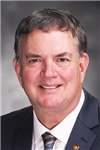
Rep. Jeff Farnan
Sponsored bills
Maddy summaryHB 1541 revises how ambulance district directors are elected and structured in Missouri counties. It requires most counties to divide ambulance districts into six election districts (with population balance), where voters elect directors from their district, resulting in staggered terms (1, 2, or 3 years). In specific counties adjacent to large charter counties, directors are elected at-large for three-year terms, with existing directors continuing until term expiration. The bill also sets candidate qualifications (e.g., residency, age), allows voter-approved changes to board size (e.g., increasing to seven members), and outlines vacancy procedures.
Maddy summaryHB 836 establishes a licensing system for radon measurement, mitigation, and laboratory services in Missouri. It requires professionals and businesses to meet EPA-recognized certification standards and be licensed by a newly created "Board of Radon Safety." The bill defines key terms like "radon mitigation" (reducing radon levels in buildings) and "measurement professional" to set clear standards for service providers. This directly affects radon industry workers and companies offering these services, ensuring they meet specific qualifications before operating.
Maddy summaryHB 664 requires Missouri state agencies to obtain legislative approval before new administrative rules take effect. Specifically, agencies must submit proposed rules to the Joint Committee on Administrative Rules, which can hold hearings and suspend rules costing over $250,000 until the full General Assembly votes on them. Rules cannot become effective until the legislature approves them via a concurrent resolution, with a 30-day waiting period after committee review. This change ensures all significant agency rules undergo direct legislative scrutiny before implementation.
Maddy summaryHB 833 creates a $250 annual state income tax credit for Missouri volunteer first responders who serve for at least one month during the tax year. It directly affects volunteer firefighters, EMS personnel, and reserve peace officers who meet state training requirements and provide verified service (via a supervisor's statement). The credit is prorated for partial-year service (e.g., $20.83 per month) but limited to one role per year and non-refundable. The program expires automatically six years after implementation unless reauthorized by the legislature.
Maddy summaryHB 927 designates June as "Fathership Month" in Missouri to promote awareness of fathers' roles in children's lives and establishes the "Missouri Fathership Project" within the Department of Social Services. The bill creates a grant program to fund community organizations that hire "fathership project specialists" who help fathers rebuild relationships with children, navigate court systems, and overcome barriers to reunification. These specialists serve as direct liaisons for fathers in family court cases, developing personalized plans to address relationship breakdowns and support compliance with court-ordered case plans. The initiative directly affects fathers seeking to reconnect with children, particularly those involved in family court or child support cases, and is funded through state appropriations and dedicated grants.
Maddy summaryHB 837 changes how Missouri allocates state funds to regional planning commissions. It requires local governments to match state funds dollar-for-dollar and sets specific annual funding caps: $130,000 for the East-West Gateway and Mid-America Regional Councils, and $50,000 for 17 other named commissions (like Ozark Foothills, Green Hills, and Southeast Missouri). Starting in 2026, these maximum grants will automatically adjust each year for inflation using the consumer price index. The bill directly affects all 19 regional planning commissions receiving state funds under this structure.
Maddy summaryHB 835 adds a new exemption for in-home licensed day care providers, allowing them to care for up to two children who are related (within the third degree of kinship) to the provider without counting those children toward their licensed capacity limit. This directly affects small in-home day care operators who already hold a license but want to include family members in their care. The bill requires all unlicensed facilities to disclose their unlicensed status to parents and obtain written acknowledgment, while maintaining existing exemptions for family care (up to six children), religious programs, and other specific settings. It does not change licensing requirements for most facilities but clarifies how related children can be counted in licensed in-home care.
Maddy summaryHB 1070 updates child care licensing rules for in-home day care facilities. It allows licensed in-home providers with a single adult caregiver to care for up to two children under one year old, expanding capacity limits. The bill also adds new exemptions from licensing requirements, such as for businesses providing child care to customers/employees (with conditions) and religious organizations operating preschools or schools. Unlicensed facilities must now disclose their status to parents and obtain a signed acknowledgment from guardians. Facilities receiving state or federal funds (except for certain food programs) remain required to be licensed.
Maddy summaryHB 834 creates a new process for emergency suspension of professional licenses (e.g., for doctors, engineers, or other licensed occupations) when a licensee faces criminal charges related to their work and public safety is at immediate risk. It requires licensing boards to quickly submit evidence to an administrative body, which must review the case within five days and issue a temporary suspension order if justified. The law mandates strict timelines: boards must serve notice within 24 hours, hold a hearing within 45 days, and determine if the suspension should continue based on evidence. This directly affects licensed professionals charged with crimes relevant to their profession, adding a formal emergency step before full disciplinary action.