

Maddy summaryThis bill, titled the USDA Loan Modernization Act, would expand eligibility for guaranteed and direct farm loans under the Consolidated Farm and Rural Development Act. It allows individuals who own at least 50 percent of a farm and are qualified operators to qualify for farm ownership, operating, and emergency loans, replacing the previous requirement that they own a majority interest. The legislation also permits certain business entities to qualify for loans if at least 75 percent of their ownership is held by qualified farm operators, and it recognizes entities that operate farms without owning them if a majority owner meets the 50 percent threshold. These changes directly affect farmers and agricultural businesses seeking financing from USDA Rural Development programs.
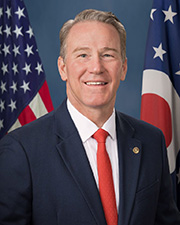
Sen. Jon Husted
Sponsored bills
Maddy summarySRES 612 is a non-binding Senate resolution acknowledging the fourth anniversary of Russia’s February 2022 invasion of Ukraine. It reaffirms U.S. support for Ukraine’s sovereignty and territorial integrity within its 1991 borders, condemns Russia’s attacks on civilians and infrastructure, and emphasizes the need for sustained U.S. and transatlantic security guarantees. The resolution does not create new laws or funding but expresses congressional support for Ukraine’s defense and calls for continued international cooperation. It specifically highlights Russia’s targeting of Ukrainian children and U.S. companies as part of its aggression. As a symbolic gesture, it has no legal effect on policy or funding.
Maddy summaryThis bill, titled the Railway Safety Act of 2026, establishes new safety requirements for trains carrying hazardous materials and strengthens emergency response capabilities. It directly affects Class I railroads, emergency response agencies, and communities near rail lines by mandating stricter tank car standards, limiting train speeds in urban areas, and requiring railroads to provide real-time information about hazardous materials shipments to first responders. Key provisions include phasing out older tank cars for flammable liquids by 2027, requiring two-person crews on freight trains, increasing penalties for safety violations, and creating a new emergency response assistance fund to help communities respond to hazardous materials incidents.
Maddy summaryThe SAVES Act of 2025 establishes a five-year pilot program at the Department of Veterans Affairs (VA) to fund nonprofit organizations that provide service dogs to eligible veterans with specific disabilities, such as blindness, mobility issues, PTSD, or traumatic brain injury. Nonprofits must apply competitively, meet training and animal welfare standards (including ADA compliance), and provide service dogs at no cost to veterans, with the VA covering all program expenses. The VA will also provide ongoing veterinary insurance for the dogs, which continues even after the pilot ends. This program is funded with $10 million annually for five years, targeting veterans as defined by VA medical criteria.
Maddy summaryThis bill exempts specific metal recovery processes from certain waste regulations. It clarifies that facilities recycling vanadium and other critical minerals from spent petroleum catalyst (used in oil refining) are not subject to the Boilers and Industrial Furnaces (BIF) requirements under the Solid Waste Disposal Act. The exemption covers the entire recycling chain: de-oiling, thermal treatment (e.g., roasting), and metallurgical recovery (e.g., furnaces). It also allows third-party transfers of spent catalyst for metals reclamation under existing transfer-based waste exclusions. This change aims to eliminate redundant regulations for environmentally safe domestic recovery of critical minerals like vanadium.
Maddy summaryThis bill amends the Workforce Innovation and Opportunity Act to establish "employer-directed skills development" as a defined training program. It requires employers to pay a minimum portion of program costs (10% for small businesses with ≤50 employees, 25% for 50-100 employees, 50% for larger businesses) and commit to hiring participants upon successful completion. The bill updates performance metrics to track participation in these programs and revises administrative processes to prioritize employer referrals for training. These changes directly affect employers, workforce boards, and job seekers by shifting training design toward employer-specific needs with cost-sharing requirements.
Maddy summaryThis Senate resolution designates January 1 to February 1, 2026, as "National Trafficking and Modern Slavery Prevention Month" to raise public awareness about human trafficking and modern slavery. It does not create new laws or policies but formally supports observance through educational programs and community activities during this period. The resolution emphasizes collaboration between government agencies, victim advocates, and nonprofits to address trafficking, linking the timeframe to the Emancipation Proclamation anniversary (January 1) and National Freedom Day (February 1). It is a symbolic, non-binding measure intended to highlight ongoing efforts to combat trafficking, referencing existing federal anti-trafficking laws like the Trafficking Victims Protection Act.
Maddy summaryThis bill amends the Build America, Buy America Act to require that all yellow organic pigments used in road, highway, and airport surface marking paints be classified as "construction materials" for federal procurement purposes. Starting immediately upon enactment, these pigments count as construction materials for water-based paints, with full coverage for all paint formulas taking effect two years later. The bill mandates that such pigments must be "produced in the United States," meaning all manufacturing steps - from initial material combination through chemical synthesis - must occur domestically. This directly affects paint manufacturers and government agencies purchasing road-marking materials, requiring them to source pigments made entirely within U.S. borders.
Maddy summaryThe CLOSE Act terminates temporary pandemic unemployment benefit programs established under the CARES Act, including Pandemic Unemployment Assistance and Federal Pandemic Unemployment Compensation, after a 30-day grace period following enactment. It also cancels (rescinds) unused federal funds that were allocated for these programs but not yet spent. This directly affects states administering these benefits and individuals who received pandemic-era unemployment support. The bill stops future payments and returns unobligated funds to the Treasury without altering benefits already paid.
Maddy summarySRES 593 is a Senate resolution honoring the 67 victims of the January 29, 2025 mid-air collision between a U.S. Army Black Hawk helicopter and American Airlines Flight 5342 over the Potomac River. It specifically recognizes the lives of all victims, including 11 U.S. figure skating athletes, their families, and 3 Army soldiers, as well as the 1,700+ first responders who assisted in the recovery efforts. The resolution offers condolences to affected families, acknowledges the bravery of emergency personnel, and commits the Senate to using safety lessons from the crash to prevent future incidents. As a commemorative resolution, it does not create new laws or provide direct benefits but serves to formally memorialize the tragedy and honor those impacted.