

Maddy summaryThis bill amends the Department of Energy Organization Act to define "critical energy resources" as those essential to U.S. energy systems with vulnerable supply chains. It directs the Energy Secretary to assess supply chain risks, diversify sources, boost domestic production of these resources, develop alternatives, and improve recycling. The law specifically requires evaluating reliance on imports, adversarial nation tactics (like price manipulation), and impacts on energy technology development. The Department of Energy and energy sector stakeholders will implement these measures, directly affecting how the federal government manages energy security. The bill focuses on concrete policy actions, not outcomes or political advocacy.
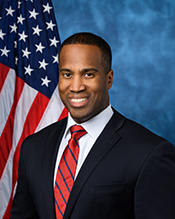
Rep. John James
Sponsored bills
Maddy summaryHR 7457, the Nigeria Religious Freedom and Accountability Act of 2026, designates Nigeria as a Country of Particular Concern (CPC) under U.S. law due to ongoing religious persecution. The bill mandates the U.S. Secretary of State to impose targeted sanctions (including visa bans and asset freezes under the Global Magnitsky Act) on specific Fulani militias, officials like former Kano Governor Rabiu Musa Kwankwaso, and groups like MACBAN, and requires annual reports on Nigeria’s compliance with religious freedom standards. Key provisions include urging Nigeria to repeal blasphemy laws, protect religious minorities, investigate violence, and facilitate the return of internally displaced persons. The bill directly affects the Nigerian government, perpetrators of religious violence, and vulnerable religious communities, particularly Christians.
Maddy summaryHRES 1037 is a symbolic resolution designating February 4, 2026, as "National Cancer Prevention Day" to raise awareness about cancer prevention. It does not create new laws or affect any individuals, organizations, or policies. The resolution expresses the House's support for this designation, recognizes efforts to reduce cancer risks, and acknowledges cancer's impact on families and communities. As a non-binding resolution, it has no legal effect and serves only to highlight prevention efforts.
Maddy summaryThis bill prevents state or local governments from banning or restricting energy connections (like installation, modification, or access) based on the type or source of energy, such as electricity, natural gas, or renewable fuels. It directly affects consumers choosing energy providers and energy companies seeking to offer services. The key provision prohibits local laws, regulations, or policies that limit energy services sold in interstate commerce, covering all energy types listed in the bill’s definitions. It does not create new programs but limits regulatory authority at the state or local level. The law aims to ensure open access to diverse energy sources without source-based restrictions.
Safeguard American Voter Eligibility Act or the SAVE America Act This bill requires individuals to provide documentary proof of U.S. citizenship when registering to vote, and requires photo identification to vote, in federal elections. Specifically, the bill prohibits states from accepting and processing an application to register to vote in a federal election unless the applicant presents documentary proof of U.S. citizenship. The bill specifies what documents are considered acceptable proof of U.S. citizenship, such as identification that complies with the REAL ID Act of 2005 that indicates U.S. citizenship. Further, the bill (1) prohibits states from registering an individual to vote in a federal election unless, at the time the individual applies to register to vote, the individual provides documentary proof of U.S. citizenship; and (2) requires states to establish an alternative process to demonstrate U.S. citizenship. Each state must take affirmative steps on an ongoing basis to ensure that only U.S. citizens are registered to vote, which shall include establishing a program to identify individuals who are not U.S. citizens using information supplied by certain sources. Additionally, states must remove noncitizens from their official lists of eligible voters. The bill (1) provides for a private right of action for certain violations, and (2) establishes criminal penalties for certain offenses. Individuals voting in federal elections must present an eligible photo identification document. An individual who votes by absentee ballot must submit a copy of their identification document with both the request for, and the submission of, the absentee ballot.
Maddy summaryHR 7212 establishes a federal regulatory framework under the Food, Drug, and Cosmetic Act for "cannabinoid hemp products," directly affecting their manufacturers, distributors, retailers, and consumers. It mandates FDA registration for facilities and product listing, along with adherence to new manufacturing, testing, and labeling requirements for oral, inhalable, and topical cannabinoid hemp products. Key provisions include setting cannabinoid content limits, prohibiting certain ingredients and marketing practices (like appealing to children), requiring child-resistant packaging, and establishing a minimum purchase age of 21. The bill grants the FDA authority to enforce these rules through mandatory recalls, refusal of non-compliant imports, and penalties for violations, including selling "prohibited cannabinoid products" or to underage individuals. Additionally, it creates an advisory committee to provide recommendations on cannabinoid content limits and other regulatory matters.
Maddy summaryHR 3453, the Empower Charter School Educators to Lead Act, creates new federal grants to help educator-led teams plan and open charter schools. It provides up to $100,000 per team for pre-charter planning, targeting groups led by educators with at least 4.5 years of school-based experience (including after-school programs) and a demonstrated ability to lead. To qualify, teams must submit a community needs assessment and a plan showing how their proposed school will address those needs. The bill reserves 5% of relevant funding for these educator-led grants, adjusting existing ESEA grant formulas to prioritize this new support. This directly affects educators seeking to start charter schools and the communities where those schools would operate.
Maddy summaryHR 909, the Crime Victims Fund Stabilization Act of 2025, modifies how funds from the False Claims Act are deposited into the Crime Victims Fund. It specifies that from 2025 through 2029, certain False Claims Act proceeds (specifically those for qui tam plaintiff payments and government damage reimbursements) cannot be deposited into the fund. This change directly affects the composition of the Crime Victims Fund by excluding these specific revenue streams during the specified period. The bill does not create new benefits or alter victim services; it only adjusts fund allocation rules for existing False Claims Act revenues.
Maddy summaryHR 6964 amends the National Security Act of 1947 to require the National Security Strategy to include "strategies and capabilities needed to ensure the safety and security of schools" at all levels - elementary, secondary, and colleges. It mandates a joint assessment by the Education and Homeland Security Secretaries of threats to these schools, including consultation with state leaders, and requires a report to Congress within 180 days of enactment. The bill directly affects all public and private elementary, secondary, and higher education institutions across the United States. This legislation shifts school safety into the formal national security framework without altering existing funding or operational procedures.
Maddy summaryThe IMPROVE Safety for Schools Act requires schools receiving federal funding to provide parents with information about gun safety devices and their purchase. It creates a tax credit of up to $300 for purchasing firearm safety devices (secure gun storage), with income limitations that reduce the credit for higher earners. The bill also prohibits disclosure of tax return information related to this credit to federal agencies. Additionally, it includes provisions for de-escalation training for school staff and school safety specialist positions at schools. This bill directly affects local educational agencies, parents of schoolchildren, and taxpayers who purchase firearm safety devices.