Confidentiality Opportunities for Peer Support Counseling Act or the COPS Counseling Act This bill sets forth requirements related to peer support counseling programs. A peer support counseling program is a program provided by a law enforcement agency that provides counseling services from a peer support specialist to a law enforcement officer of the agency. Among other things, the bill does the following: generally prohibits the disclosure of the contents of a peer support communication, and requires the Department of Justice to develop best practices and professional standards for peer support counseling programs.
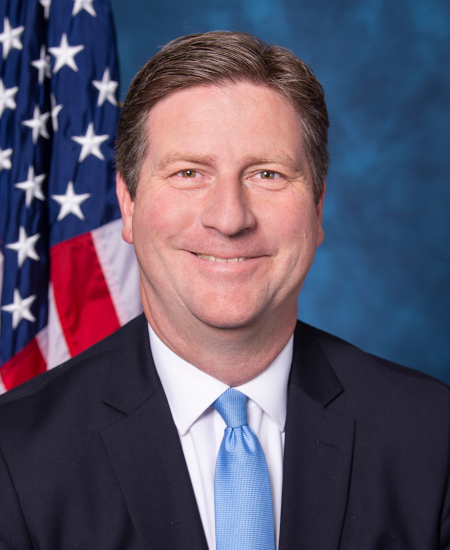
Rep. Greg Stanton
Sponsored bills
Raise the Age Act This bill establishes new restrictions on the sale or transfer of certain semiautomatic firearms to individuals under 21 years of age. Specifically, this bill makes it unlawful for a licensed gun dealer, importer, manufacturer, or collector to sell or deliver a semiautomatic center-fire rifle that has (or has the capacity to accept) an ammunition feeding device with a capacity of more than five rounds to an individual who the licensee knows or has reasonable cause to believe is under age 21. The prohibition does not apply if the individual under age 21 is a full-time law enforcement officer or active-duty member of the Armed Forces. The bill also requires the Federal Bureau of Investigation to report on the operation of its public access line, including a description of information sharing protocols and recommendations for improving such protocols.
This resolution expresses that the House of Representatives applauds the Biden administration for reaffirming the U.S. commitment to the Paris Agreement on climate change and to our collective responsibility to globally combat climate change; encourages the Biden administration to implement measures to ensure global climate change remains a top priority for this and future administrations and to cement the United States as a global leader in the fight to mitigate its most severe consequences; voices strong commitment as legislators toward achieving the climate goals of the Paris Agreement, fulfilling the forthcoming pledges from the COP26 in Glasgow, Scotland, and advancing other international efforts to keep global warming to no more than 1.5 degrees Celsius and realize global net-zero carbon emissions by 2050 using a whole-of-government approach; and recognizes the critical responsibility of the United States and other developed nations to ensure all societies have the capabilities to transition to a clean energy economy, the resources to protect against climate-induced disasters, and the necessary assistance to endure climate-related challenges to food security, regional migration, and public health.
Social Security 2100: A Sacred Trust This bill makes changes to Social Security benefits, taxes, and other aspects of the program, including by raising the primary insurance amount, increasing the maximum taxable earnings that are subject to Social Security payroll taxes, and requiring Social Security account statements to be mailed unless the individual recipient opts for electronic delivery.
Original National Domestic Violence Awareness Month Resolution of 2021 This resolution supports the goals and ideals of National Domestic Violence Awareness Month. Further, it expresses the sense of the House of Representatives that Congress should continue to raise awareness of and support programs to end domestic violence.
Public Service Freedom to Negotiate Act of 20 21 This bill provides minimum collective bargaining rights and procedures for public employees and prohibits strikes by certain public safety workers. The Federal Labor Relations Authority (FLRA) shall determine for each state whether the laws of such state substantially provide for each of the minimum standard collective bargaining rights and procedures specified by this bill, including the right of public employees and supervisory employees to self-organize, form or join a labor organization, or collectively bargain. The FLRA must issue rules and take actions to establish and administer bargaining rights and procedures for those states that do not substantially provide for them. No employers, emergency services employees, or law enforcement officers may engage in a lockout, strike, or any other organized job action that is likely to result in a measurable disruption of the delivery of emergency or public safety services. Furthermore, no labor organization may be the cause of a violation of such prohibition.
State, Local, Tribal, and Territorial Fiscal Recovery, Infrastructure, and Disaster Relief Flexibility Act This bill allows states, tribes, territories, and localities to use certain COVID-19 relief funds for new categories of spending, including for natural disasters and infrastructure projects. It also makes changes to expenditure deadlines and other aspects of this funding. Specifically, recipients may use funds for emergency relief from natural disasters and associated negative economic impacts of natural disasters. In addition, recipients may use a portion of their COVID-19 relief funds for designated infrastructure projects, such as nationally significant freight and highway projects. Furthermore, the bill allows recipients to expend COVID-19 relief funds on these types of infrastructure projects until September 30, 2026. Under current law, recipients must expend the funds by December 31, 2024. Other changes in the bill include (1) modifying eligibility and allocation requirements for funding set aside for counties and Indian tribes that are near public lands, (2) allowing Indian tribes an additional year to expend their COVID-19 relief funds, and (3) establishing a process for government entities to decline COVID-19 relief funds and requiring any declined funds to be used to reduce the federal deficit.
EB-5 Reform and Integrity Act of 2021 This bill reauthorizes the EB-5 Regional Center program through FY2026 and makes various changes to the program, such as imposing various oversight requirements. (EB-5 visas provide permanent resident status to qualified alien investors. A regional center allows EB-5 aliens to pool investments to meet various investment and job creation requirements.) Oversight-related provisions include requiring each center to (1) notify the Department of Homeland Security (DHS) of proposed changes to the center's structure, (2) maintain certain records and make such records available to DHS for audits, (3) obtain approval for each particular investment offering, and (4) annually report to DHS. The bill prohibits certain individuals and entities from involvement in a center, such as (1) a person who had committed a violation involving fraud in the previous 10 years, (2) a non-U.S. national not admitted for permanent residence, or (3) a foreign government official. DHS shall deny petitions, such as a petition to certify a regional center or to classify an alien as an alien investor, if approval would threaten U.S. national interest. The bill provides various enforcement authority to DHS and U.S. Citizenship and Immigration Services, including the ability to permanently bar an individual from participating in the regional center program. The bill establishes the EB-5 Integrity Fund to fund program enforcement activities. The bill contains various provisions related to EB-5 petitions, such as a provision authorizing DHS to extend an alien's conditional permanent residence status.

Sara's Law and the Preventing Unfair Sentencing Act of 2021 This bill modifies federal sentencing options for individuals who commit criminal offenses as juveniles. Specifically, the bill authorizes federal sentencing courts to do the following: impose a sentence below the mandatory minimum for a juvenile who was convicted of a violent offense against a person who engaged in certain conduct (e.g., trafficking, abuse, or assault) against the juvenile, impose a sentence below the mandatory minimum by up to 35% to reflect the juvenile's age and prospect for rehabilitation, and reduce a prison term imposed on a defendant convicted as an adult for an offense committed as a juvenile if the defendant has served at least 20 years in custody and is not a danger to public safety.
Protecting Miranda Rights for Kids Act This bill establishes procedural requirements related to the custodial interrogation of a minor. Among the requirements, the custodial interrogation of a minor must comply with the following: an arresting officer must notify the minor's parent, guardian, or legal custodian of the arrest and provide the location where the minor is being detained; and a minor who is subject to a custodial interrogation must consult with legal counsel in person before waiving the privilege against self-incrimination or the right to counsel. If a custodial interrogation does not comply with the requirements, then a statement by a minor during the custodial interrogation and any evidence derived from that statement are inadmissible.