

Maddy summarySF 568 expands Minnesota's definition of "veteran" to include two specific groups: Hmong veterans naturalized under the federal Hmong Veterans' Naturalization Act of 2000, and veterans who served with irregular forces in Laos during the Secret War (1961-1975) as U.S. citizens or permanent residents. It also establishes an advisory task force of up to seven members - including Secret War veterans, academics, and community representatives - to advise the commissioner of veterans affairs on eligibility criteria for the expanded definition. This change directly affects these veterans by enabling them to access state veteran benefits and services previously unavailable under Minnesota law. The task force will develop concrete criteria to determine qualification, ensuring the expanded definition aligns with historical service.
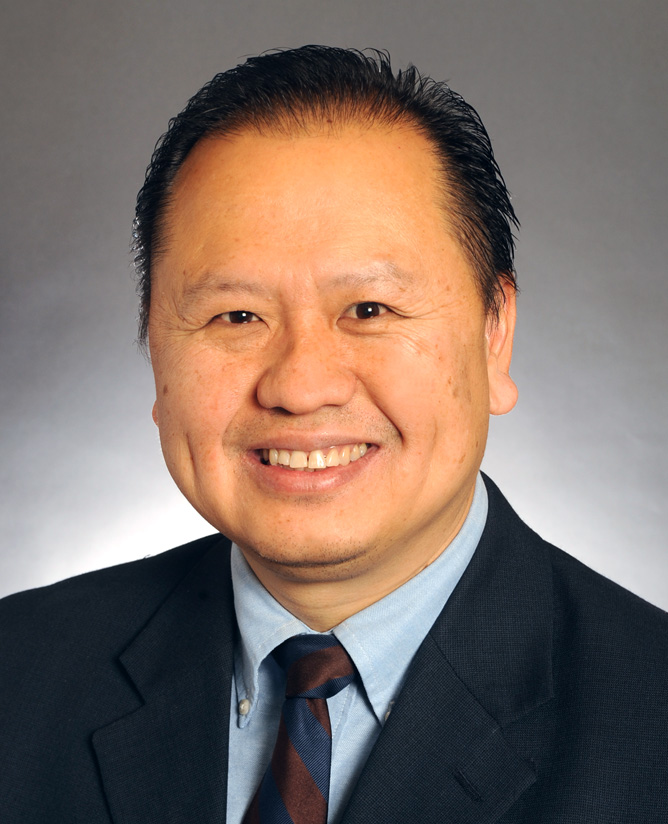
Sen. Foung Hawj
Sponsored bills
Maddy summarySF 1346 requires companies with permits to harvest or destroy aquatic plants in Minnesota's public waters to follow new safety rules when using scuba diving equipment. It mandates annual third-party hazard surveys by qualified safety professionals, requires divers to hold nationally certified training, and blocks permits for businesses with recent scuba-related safety violations. The bill directly affects commercial aquatic plant management companies operating in Minnesota, adding safety documentation and certification requirements to their permit process. These provisions aim to reduce diving-related injuries by ensuring proper equipment, training, and risk assessments.
Maddy summaryThis bill establishes the Minnesota Sustainable Foraging Task Force to develop science-based recommendations for foraging regulations on state lands. The task force, requiring diverse membership including Indigenous knowledge holders, scientists, foraging advocates, and conservation representatives, must review existing rules and gather data on foraging impacts by December 1, 2026. It will propose specific guidelines balancing ecological sustainability with public access, create educational materials, and explore permit models including volunteer options. The bill directly affects Minnesotans who forage on state lands and aims to inform future regulations through data-driven, culturally inclusive recommendations.
Maddy summaryThis bill appropriates $375,000 for fiscal year 2026 and $375,000 for fiscal year 2027 from the arts and cultural heritage fund to The Sanneh Foundation. The funding supports three specific programs: family nutritional distribution in the seven-county metropolitan area, senior community programming, and multicultural women's athletic programming. The bill directly affects The Sanneh Foundation as the recipient of these state funds, with no broader policy changes beyond the financial allocation. It is a straightforward funding measure with no legislative policy provisions.
Maddy summaryThis bill funds wetland replacement for road projects in Minnesota. It appropriates $15 million from bond proceeds and $11.5 million from the general fund in fiscal year 2026, plus $7.5 million annually in 2026-2027, to the Board of Water and Soil Resources. The board will use these funds to acquire land, restore wetlands, or purchase credits to replace wetlands drained or filled during public road repairs, reconstruction, or rehabilitation under Minnesota law. The program requires fair market value for land purchases and allows agreements with federal agencies or local entities to meet wetland replacement requirements.
Maddy summarySF 3276 appropriates $3 million from the general fund to the Blck Press Center for Broadcast Journalism, a nonprofit organization, for a one-time project. The funds will be used to acquire property, predesign, design, construct, renovate, furnish, and equip a media training and education facility in St. Paul. This bill directly affects the Blck Press Center by providing capital for its new facility, which will serve media training programs. The appropriation is limited to fiscal year 2026 and must be spent on the specified facility construction and equipment.
Maddy summarySF 485 establishes a statewide moratorium on new billboards in Minnesota, prohibiting state agencies and local governments from issuing permits for any new signage after the law takes effect. Existing billboards are declared "nonconforming uses," meaning they can remain but cannot be replaced or expanded under standard zoning rules. The bill amends Minnesota Statutes to prevent municipalities from using "amortization" (gradual phase-outs) to eliminate existing billboards, while preserving the moratorium. This directly affects billboard owners, local permitting authorities, and communities concerned with roadside aesthetics and tourism.
Maddy summaryThis bill appropriates $250,000 from the arts and cultural heritage fund for fiscal year 2026 and another $250,000 for fiscal year 2027 to fund a grant for Youth and Family Circle. The grant supports outdoor programs for youth in Minnesota, specifically aimed at celebrating the state's outdoor culture and heritage. The funds are directed to the Minnesota Humanities Center's Board of Directors to administer the grant to the organization.
Maddy summaryThis bill appropriates $700,000 for fiscal year 2026 and $700,000 for fiscal year 2027 from the arts and cultural heritage fund to the Minnesota Humanities Center. The funds are designated as a grant to the nonprofit organization People in Action for statewide Somali-based collaborative programs. The funding must support arts education, workshops, mentor programs, community presentations, and engagement events across Minnesota. This directly affects People in Action and Somali communities through expanded arts and cultural programming.
Maddy summaryThis bill appropriates $1,000,000 from the workforce development fund for a one-time grant to Ramsey County (in partnership with St. Paul) for workforce development programming. It directly affects youth and young adults aged 18-30 through specific programs like "Learn and Earn," which includes technology training and a driver's license academy. The funding is available until June 30, 2028, and must be used for approved workforce development initiatives as outlined in the bill. The appropriation is limited to fiscal year 2026 and requires the county to partner with St. Paul.