

Maddy summarySenate Bill 479 modifies how sales tax revenue from vehicle repair and replacement parts is distributed in Minnesota. It directs 43.5% of this tax revenue to the highway user tax distribution fund each year, with increasing percentages (starting at 3.5% in 2024 and rising to 56.5% by 2030) going to the transportation advancement account. The remaining revenue after these allocations is deposited into the state general fund. This change affects state transportation funding by shifting more resources toward road maintenance and improvement programs over time.
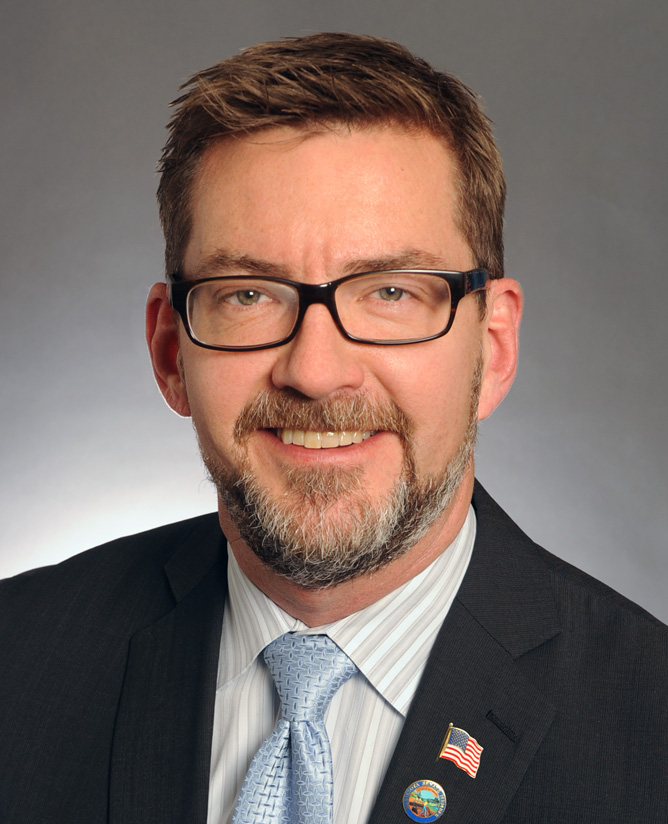
Sen. Scott Dibble
Sponsored bills
Maddy summaryThis bill appropriates $153 million from Minnesota's general fund to the state transportation commissioner for matching federal funds under the federal Infrastructure Investment and Jobs Act (IIJA). It directly enables Minnesota to access additional federal infrastructure funding for transportation projects by providing the required state match. The funds are a one-time appropriation available until June 30, 2029, and must comply with existing requirements from 2023 legislation. This allows Minnesota to leverage federal IIJA dollars for road, bridge, and transit projects without creating new state programs.
Maddy summaryThis bill modifies Minnesota's sales tax exemption rules for land clearing equipment and services. It removes the tax exemption for short-term equipment (less than 12 months' useful life) used in landscaping, gardening, and lawn care services. It also clarifies that land clearing services for remodeling, improving, or expanding existing structures are no longer exempt from sales tax. These changes apply to sales and purchases after June 30, 2025.
Maddy summarySF 271 modifies licensing requirements for substance abuse counselors in Minnesota and strengthens protections for individuals objecting to religious elements in treatment. It requires counselors to complete 40 hours of continuing education every two years, including specific training on diversity, ethics, and secular treatment approaches for clients with religious objections. The bill prohibits courts or treatment programs from forcing individuals to participate in religious components of care, mandates documentation of religious objections, and requires offering equivalent non-religious alternatives. This directly affects licensed counselors (through updated education rules) and people in substance use disorder treatment programs (particularly those with religious objections to treatment). The bill amends multiple statutes including 241.415 (release plans for offenders) and 244.0513 (treatment program requirements).
Maddy summarySF 294 modifies Minnesota's driver's license road skills examination process. It requires the driver's license department to provide real-time online appointment availability showing next available dates/times at each location, with options to search by address. The bill also increases cancellation fees: $50 for same-day cancellations (up from $20) and keeps $20 for cancellations between 24-72 hours. These changes apply to individuals scheduling road skills exams for driver's license applicants, effective August 1, 2025.
Maddy summaryThis bill appropriates $10 million in bond proceeds to fund Minnesota's Safe Routes to School grant program, which helps communities improve walking and biking infrastructure around schools. The funds will be distributed by the commissioner of transportation to support projects like safer crosswalks, bike lanes, and pedestrian pathways near schools. It directly affects students, families, and school districts by making it easier and safer for children to travel to school on foot or by bike. The bill authorizes the state to issue up to $10 million in bonds to finance these grants under existing law (Minnesota Statutes § 174.40).
Maddy summaryMinnesota Senate File 450 is a resolution urging Congress to pass federal legislation granting statehood to Washington, D.C. It cites that D.C. residents (nearly 700,000 people) pay federal taxes, serve in the military, and face the same responsibilities as state residents but lack voting representation in Congress, despite a 2016 referendum showing 86% support for statehood. The resolution directs Minnesota's Secretary of State to send copies to the U.S. President, Congress, and Minnesota's federal representatives. It does not create new laws but formally supports the existing congressional bill (H.R. 51/S. 51) that would admit D.C. as the 51st state with two Senators and one House member. This is a symbolic gesture by Minnesota lawmakers, not a binding policy change.
Maddy summaryThis bill authorizes the state to sell up to $100 million in bonds to fund Minnesota's Corridors of Commerce program, which supports transportation infrastructure projects. The funds would be appropriated to the Commissioner of Transportation for use under Minnesota Statutes § 161.088. The bill specifies that bond proceeds must be used solely for the designated program and follows state bond sale procedures outlined in Minnesota law. It directly affects state transportation funding and projects managed under the Corridors of Commerce program.
Maddy summaryThis bill appropriates $9 million from state bond proceeds to fund hangar construction at Minnesota airports. The funds will be deposited into a dedicated revolving account managed by the commissioner of transportation, as authorized under Minnesota law. The state will issue bonds up to $9 million to cover this appropriation, following standard bond issuance procedures for capital projects. This is a funding mechanism for infrastructure, not a policy change affecting specific groups or services.
Maddy summaryThis bill appropriates $25 million from state bond sales to fund Minnesota's Small Cities Assistance Program, which helps small municipalities with infrastructure projects. The funds will be administered by the commissioner of transportation under existing law (Minnesota Statutes §162.145). The state will sell up to $25 million in bonds to cover this appropriation, following standard bond procedures. The program directly supports small cities for road, bridge, and other local infrastructure improvements.